Beyond the Biceps: Can Creatine Really Boost Your Brain?

Table of Contents
For decades, creatine has been a staple in every serious athlete’s gym bag, celebrated for its proven ability to boost strength, power, and muscle growth. But in recent years, scientists have been looking past the biceps and focusing on a far more complex organ: the brain. The exciting question they’re asking is: can this powerhouse supplement for your muscles also sharpen your mind?
The answer, it turns out, is a promising “yes,” but with some important details to understand. This guide will break down the science behind creatine’s role in brain health, exploring its potential benefits for memory, focus, and mental energy, so you can understand if it’s a good fit for your wellness goals.

How Does Creatine Work in the Brain?
Your brain is an energy-hungry organ, consuming about 20% of your body’s total energy. It runs on a molecule called Adenosine Triphosphate (ATP). Every time you think, remember, or solve a problem, you’re using ATP. Creatine’s primary role is to act as a rapid recycling system for this energy currency.
As described in a 2021 review in the journal Nutrients, creatine helps your body rapidly regenerate ATP from its byproduct, ADP. By increasing the available pool of creatine in your brain, you give it more raw material to create energy on demand. This is especially important during mentally taxing activities that can drain your cognitive resources, like complex problem-solving or fighting off sleep deprivation.
The Evidence: What Do the Studies Say?
While the research is still evolving, several key areas show significant promise for creatine’s cognitive benefits.
1. Improved Memory, Especially in Older Adults
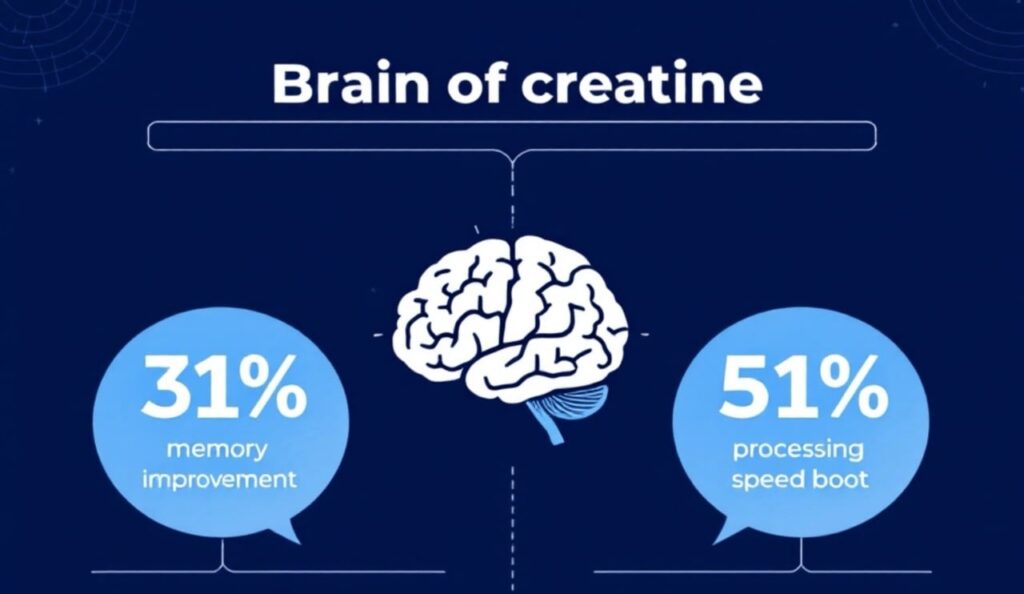
One of the most well-supported benefits of creatine is its effect on memory. A comprehensive systematic review and meta-analysis published in Nutrition Reviews looked at multiple randomized controlled trials. The conclusion was clear: creatine supplementation significantly improved measures of memory performance in healthy individuals.
The effect was particularly strong in older adults (ages 66-76), suggesting that as our natural brain bioenergetics decline with age, creatine can provide a much-needed boost to help maintain cognitive function.
2. Enhanced Processing Speed Under Stress
Do you ever feel like your brain slows down when you’re tired, stressed, or juggling too many tasks? That’s where creatine may shine. Your brain’s creatine levels can become depleted during periods of high mental stress.
Supplementation helps maintain these levels, which can support faster cognitive processing. This is why some of the most dramatic results have been seen in situations like sleep deprivation or complex problem-solving, where the brain’s energy demands are highest.
3. Potential Support for Vegetarians and Vegans
Creatine is naturally found in animal products like red meat and fish. As a result, vegetarians and vegans typically have lower baseline creatine levels. One early but influential study from 2003 found that creatine supplementation had a significant positive effect on both working memory and intelligence scores in vegetarian subjects, suggesting that those with lower initial levels may see more pronounced benefits.
What Creatine Might NOT Do
It’s important to have realistic expectations. The science is very promising, but creatine is not a miracle “smart drug.” A 2024 meta-analysis published in Frontiers in Nutrition, while showing benefits in some areas, found no significant overall impact on measures of attention or executive function when all studies were combined. The benefits appear to be most reliable for memory and for maintaining performance under stress, rather than fundamentally boosting every aspect of cognition.
Frequently Asked Questions (FAQ)
How much should I take for cognitive benefits? Most studies use a standard dose of 3-5 grams of creatine monohydrate per day. There is no need for a “loading phase” for cognitive benefits. Consistency is more important than timing.
Is creatine safe for long-term use? Creatine is one of the most studied supplements on the market. Decades of research have shown it to be overwhelmingly safe for long-term use in healthy individuals. As the independent research organization Examine.com concludes, it has a very strong safety profile. Always consult your doctor before starting any new supplement, especially if you have pre-existing kidney conditions.
Will it make me bloated or gain weight? Creatine pulls water into muscle cells, which can cause an initial increase of 1-2 lbs on the scale due to water retention. This is primarily a muscular effect and is less of a concern when taking it for cognitive benefits alone. If bloating occurs, it can often be minimized by ensuring you drink plenty of water.
Conclusion: A Tool for Your Cognitive Toolkit
The evidence is compelling: creatine is far more than just a muscle-building supplement. It is a powerful tool for supporting brain energy, which can translate into real-world improvements in memory and mental resilience, especially under stress or as we age.
While it won’t replace the foundational pillars of good health—like proper sleep, a balanced diet, and regular exercise—creatine offers a safe, science-backed way to support your cognitive health and help your brain perform at its best.
brain health, cognitive function, creatine, guide, memory, science, supplements