

Disclaimer: Some of the links on this page are affiliate links. As an Amazon Associate and affiliate for other networks, we may earn a commission from qualifying purchases at no additional cost to you.
The Nightly Brain Wash
Lyf.Fit Audio Overview
1. The Brain-Heart Axis: The Neurobiology of Restorative Sleep
The "Brain-Heart Axis" (BHA) represents a sophisticated, bidirectional communication network where cortical, limbic, and brainstem centers dynamically modulate cardiac autonomic tone, while afferent signals from the heart reciprocally influence cerebral activity and emotional regulation. This axis is the strategic foundation for the transition from daytime vigilance to the metabolic repair states of deep sleep. High-performance restoration is not a passive event but an active shift in "homeodynamics"—a state of dynamic, scale-free stability—where the nervous system reallocates resources from external engagement to internal recovery.
The Autonomic Nervous System (ANS) governs this shift through the coordination of its two primary branches. The Sympathetic Nervous System (SNS) acts as the biological "accelerator," while the Parasympathetic Nervous System (PNS) functions as the "brake." Maintaining BHA integrity requires the system to attenuate sympathetic output and amplify vagal tone to initiate non-REM sleep stages.
Autonomic States: SNS vs. PNS Sleep Impact
| Feature | Sympathetic Nervous System (SNS) | Parasympathetic Nervous System (PNS) |
|---|---|---|
| Common Descriptor | "Fight, Flight, or Freeze" | "Rest, Digest, and Restore" |
| Primary Hormones | Cortisol and Adrenaline | Acetylcholine |
| Heart Rate (HR) | Increases | Slows |
| Blood Pressure | Elevates | Decreases |
| Pupils | Dilated | Constricted |
| Digestion | Slowed/Inhibited | Stimulated |
| Muscle Tension | Heightened (Hyperarousal) | Relaxed |
| Sleep Impact | Fragments sleep; reduces deep/REM | Promotes deep non-REM and repair |
Autonomic Shift Infographic
High-resolution clinical infographic outlining the components of the brain-heart axis.
The Nervous System Switch
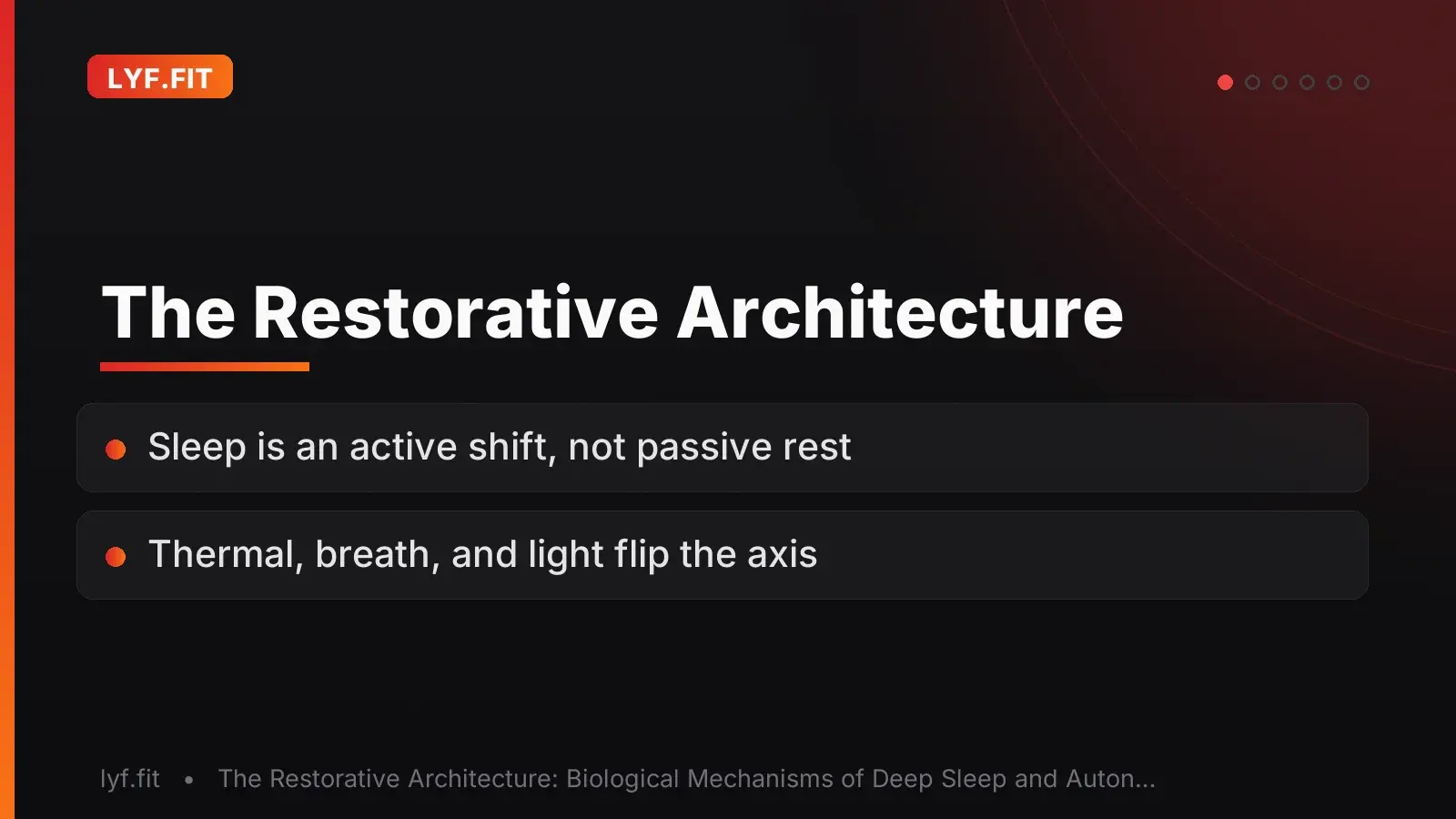
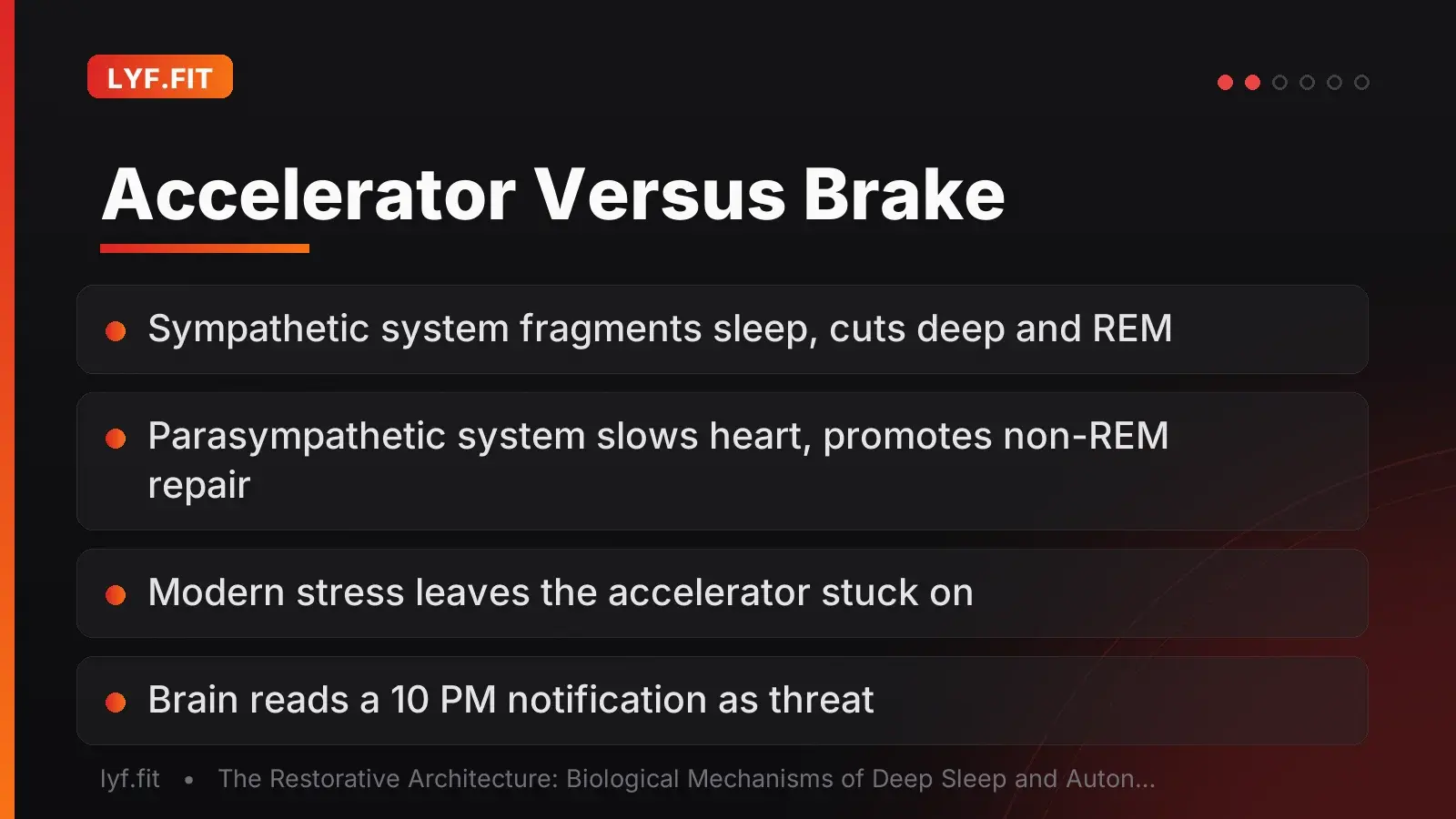
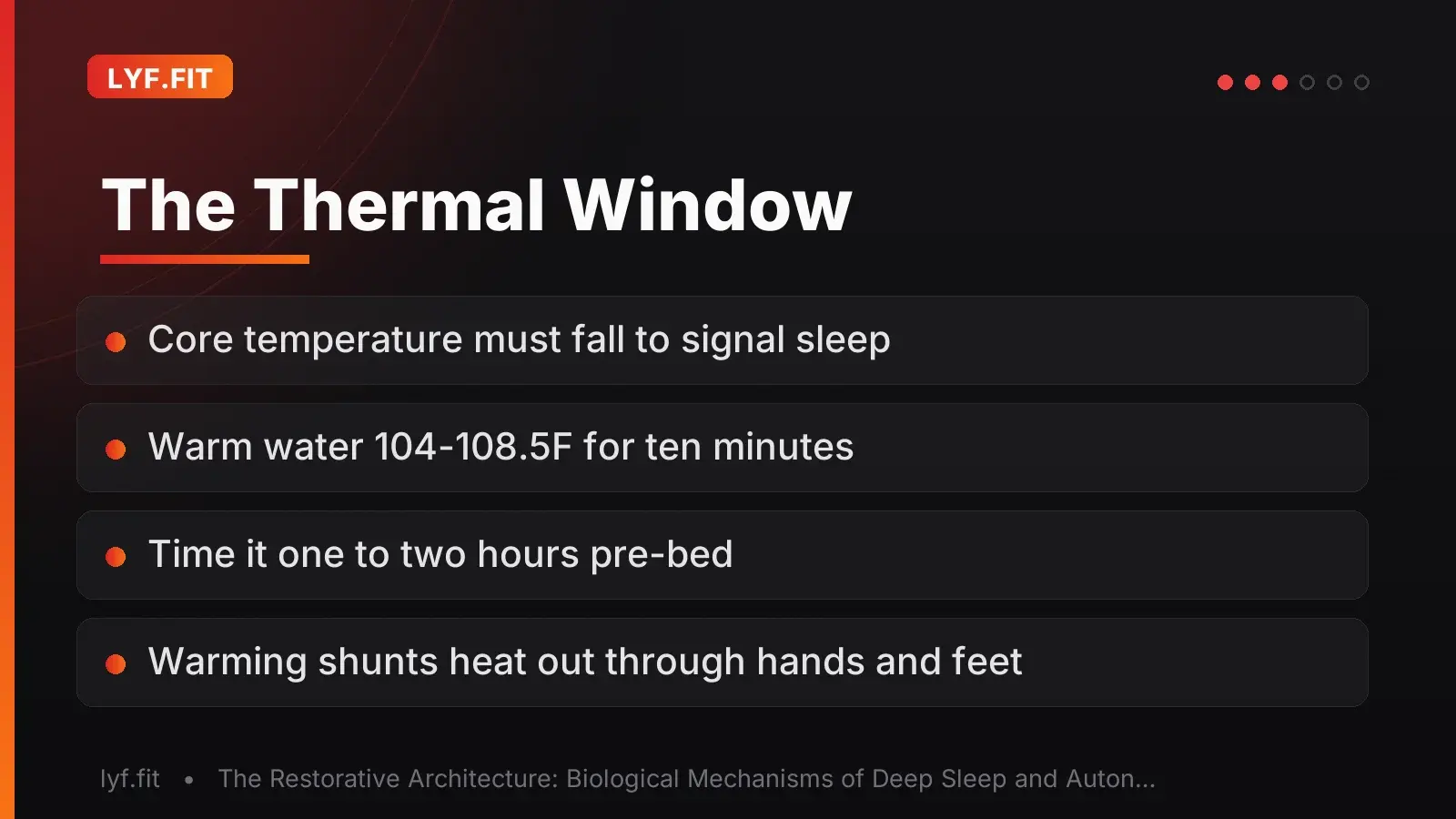
Clinical slideshow presentation mapping the autonomic shift required for restorative sleep.
The "So What?" Layer: In the modern high-stress environment, chronic sympathetic activation frequently remains "stuck on" late into the evening. The human brain does not distinguish between a physical predator and a 10 PM work notification; it perceives psychological stress as a biological threat. This perceived danger locks the "biological brake," preventing the transition into the parasympathetic state. Consequently, the brain is denied its essential "wash cycle," leading to the accumulation of metabolic waste and neurological fatigue.
Connective Tissue: To break this cycle and trigger recovery, we must pull the physiological levers of the nervous system, beginning with the thermal signaling that resets the master clock.
2. Thermal Signaling: The Core Temperature Decline Protocol
Regulation of core body temperature is a primary cue for the Suprachiasmatic Nucleus (SCN) and a prerequisite for entering deep, non-REM sleep stages. The human circadian rhythm requires a specific decline in core temperature to signal the brain that the restorative window has opened. When this thermal drop is inhibited—by environmental heat or metabolic dysfunction—sleep onset latency increases and sleep efficiency is compromised.
The most effective method to modulate this decline is the Passive Body Heating (PBH) protocol. By strategically warming the body, we trigger a compensatory cooling mechanism that accelerates the drop in core temperature.
Mechanism of Action:
- Vasodilation of Arteriovenous Anastomoses (AVAs): Warm water exposure increases blood perfusion to the palms of the hands and soles of the feet, which contain highly specialized vascular structures known as AVAs.
- Distal-to-Proximal Gradient: This perfusion augments the "distal-to-proximal" skin temperature gradient.
- Heat Dissipation: By shunting internal heat to the extremities via the AVAs, the body effectively dissipates core heat to the environment.
- Circadian Trigger: The resulting rapid decline in core temperature serves as a potent biological signal for the SCN to initiate sleep.
Protocol Parameters:
- Water Temperature: 40–42.5 °C (104–108.5 °F).
- Timing: 1–2 hours before bedtime.
- Duration: As little as 10 minutes.
The "So What?" Layer: The efficacy of this thermal handoff depends heavily on the sleeping environment. The "Ideal Thermostat" window is 60–77°F, with 65°F (18.3°C) representing the clinical gold standard. Deviating from this range—particularly in warmer environments—attenuates the core temperature drop, resulting in a 5–10% decrease in sleep quality and a significant increase in fragmented, non-restorative rest.
Connective Tissue: While thermal regulation sets the stage, we must pivot from thermal cues to the primary neural highway for immediate autonomic control: the vagus nerve.
3. Respiratory Biofeedback: Achieving Heart-Rate Resonance
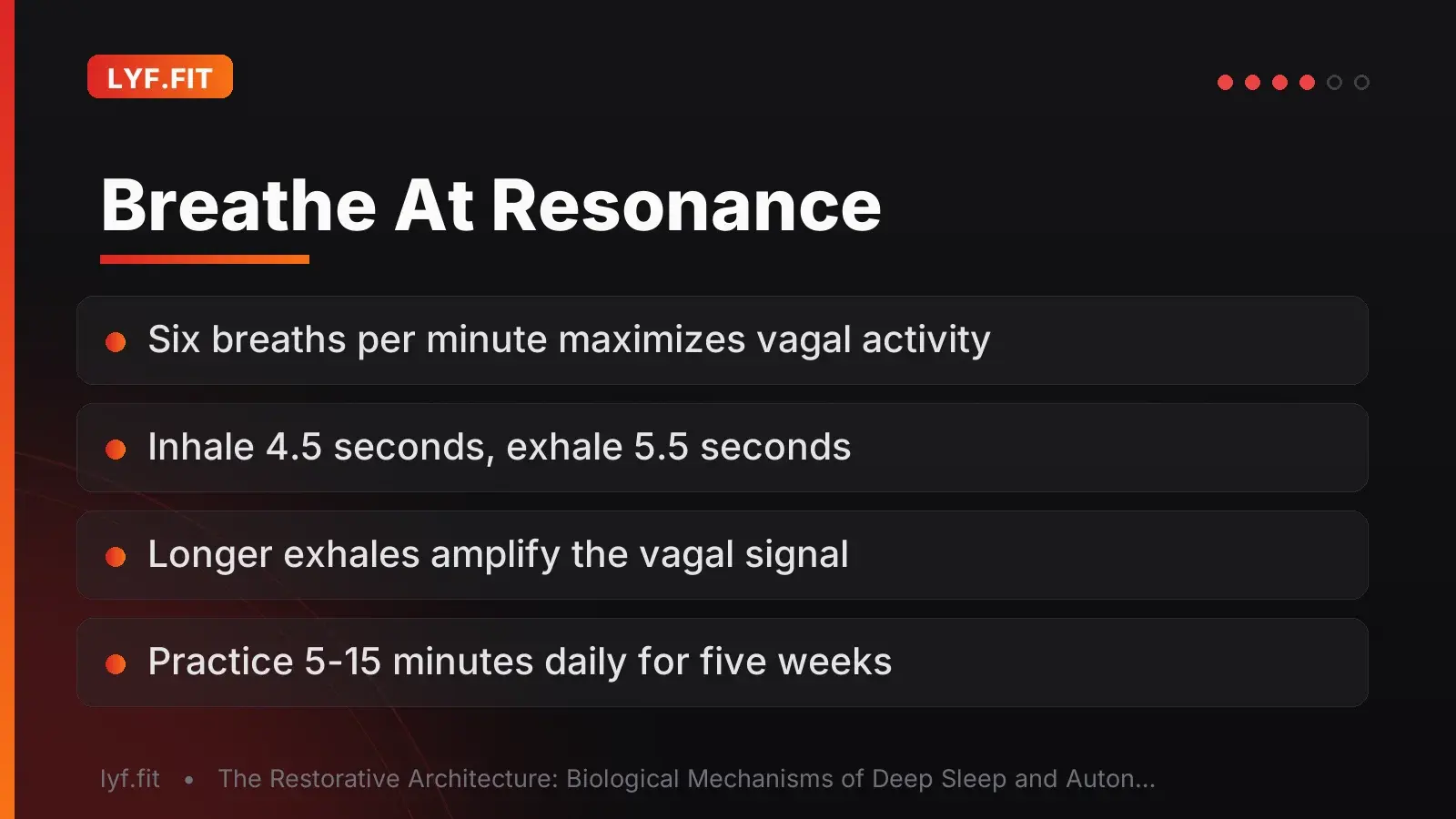
"Resonance Frequency" breathing is far more than a relaxation exercise; it is a "workout for the nervous system" that strengthens the Brain-Heart Axis. By aligning the respiratory rhythm with the heart's natural oscillations, we maximize Heart Rate Variability (HRV). This practice "rewires" the brain’s ability to manage stress by strengthening the functional connectivity between the medial prefrontal cortex and the amygdala.
Slow-Paced Breathing Protocol
To achieve parasympathetic dominance and maximize Cardiac Vagal Activity (CVA), utilize the following cadence:
- Breathing Rate: 6 breaths per minute (cpm).
- Inhalation: 4.5 seconds (nasal).
- Exhalation: 5.5 seconds (pursed lips).
Biological Mechanism: The 5.5-second exhalation target is vital because Cardiac Vagal Activity (CVA) is maximized during exhalation. By extending the exhale, we exploit the heart's natural deceleration phase, amplifying the vagal signal and maximizing the "Resonance Score"—the amplitude of heart rate waves.
The "So What?" Layer: Unlike standard meditation, which may feel relaxing but does not always optimize autonomic metrics, Resonance Breathing provides a quantifiable biofeedback metric. Consistent practice (5–15 minutes daily for 5 weeks) improves the "vagal tank" capacity, shifting the BHA from a state of reactive stress to one of proactive resilience. The Resonance Score serves as a superior metric for tracking the restorative status of the body compared to subjective feelings of "calm."
Connective Tissue: Having mastered internal signals through breath, we must now address the primary external signal that anchors the master clock: the melanopic light protocol.
4. Circadian Anchoring: The Melanopic Light Protocol
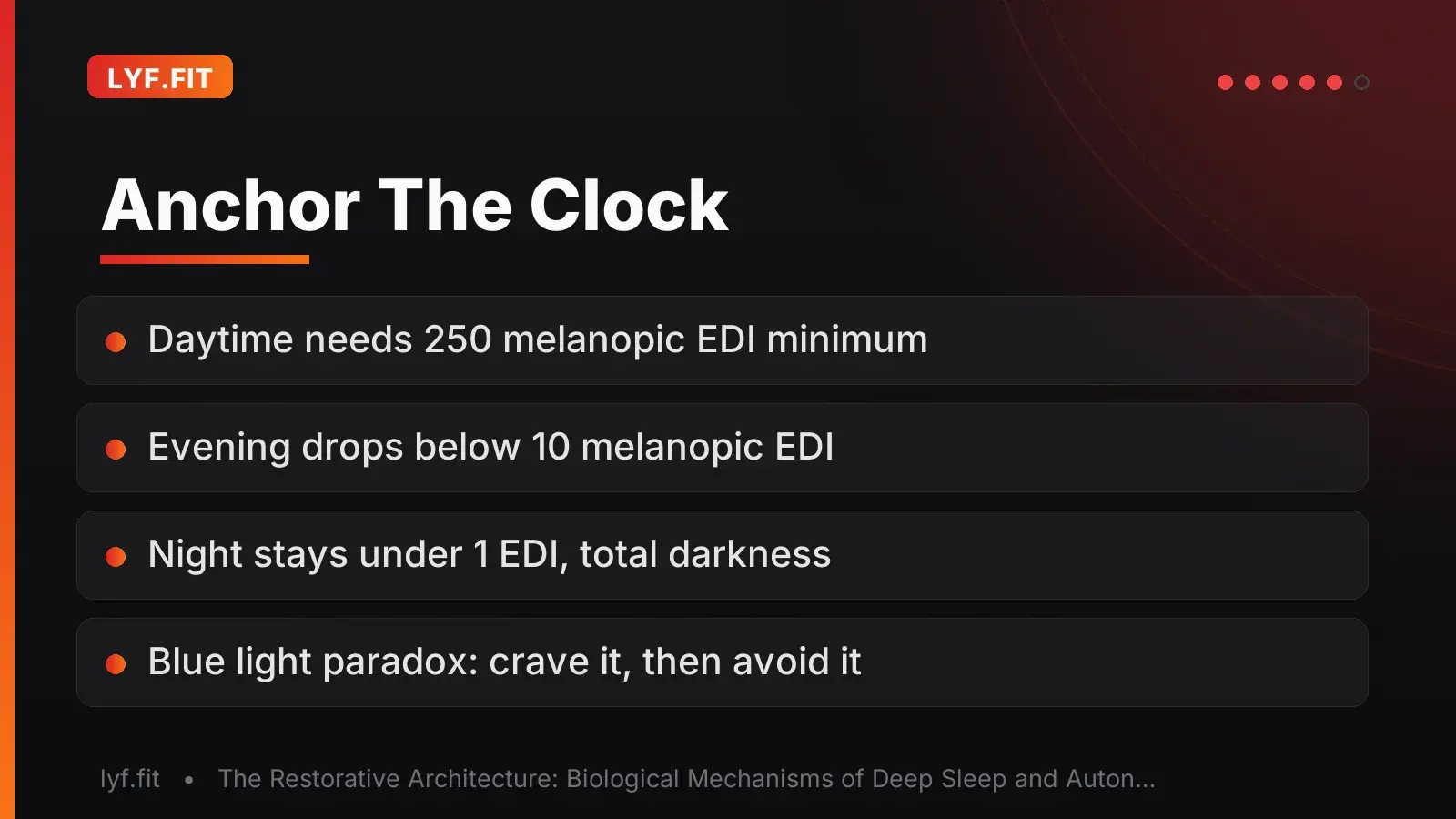
The Suprachiasmatic Nucleus (SCN) relies on light as the primary zeitgeber (time-giver) to synchronize the body's internal rhythms. However, a common clinical oversight is the "Daytime Light Deficit." Most professionals spend their day in "biological twilight," receiving insufficient light to anchor the clock, which inevitably leads to nighttime sleep failure.
The biological hardware for this process involves intrinsically photosensitive retinal ganglion cells (ipRGCs). These cells contain the photopigment melanopsin, which is highly sensitive to blue-enriched light (480nm). Critically, these cells send non-visual signals directly to the SCN; they are not for "seeing" the world, but for "timing" the body.
The 24-Hour Melanopic Strategy:
- Morning/Daytime: High-melanopic light (minimum 250 melanopic EDI). This suppresses melatonin, triggers a healthy cortisol surge, and boosts serotonin for mood regulation.
- Evening: Transition to low-melanopic light (maximum 10 melanopic EDI). This allows the natural, uninhibited onset of melatonin.
- Night: Total darkness (below 1 melanopic EDI). This ensures undisturbed metabolic waste clearance (the glymphatic "wash cycle") in the brain.
The "So What?" Layer: This creates the "Blue Light Paradox": the wavelengths people avoid at night are the exact ones they "crave" during the day. Without high-melanopic exposure during working hours, the circadian anchor is loose. Melatonin production will be weak and delayed regardless of how dark the bedroom is, as the master clock lacks the high-contrast signal required to define "day" versus "night."
Connective Tissue: When light signals are properly synchronized with thermal and respiratory inputs, the physiological "handoff" from alertness to restoration is complete.
5. Summary Protocol: The Clinical Roadmap to Deep Recovery
Synthesizing these mechanisms allows for a "Sleep Architecture" strategy that is proactive rather than reactive. By managing these biological inputs, we ensure the Brain-Heart Axis is optimized for peak performance and recovery.
Restoration Checklist
- The Thermal Window: Warm bath/shower (40–42.5 °C) for 10+ minutes, 1–2 hours before bed.
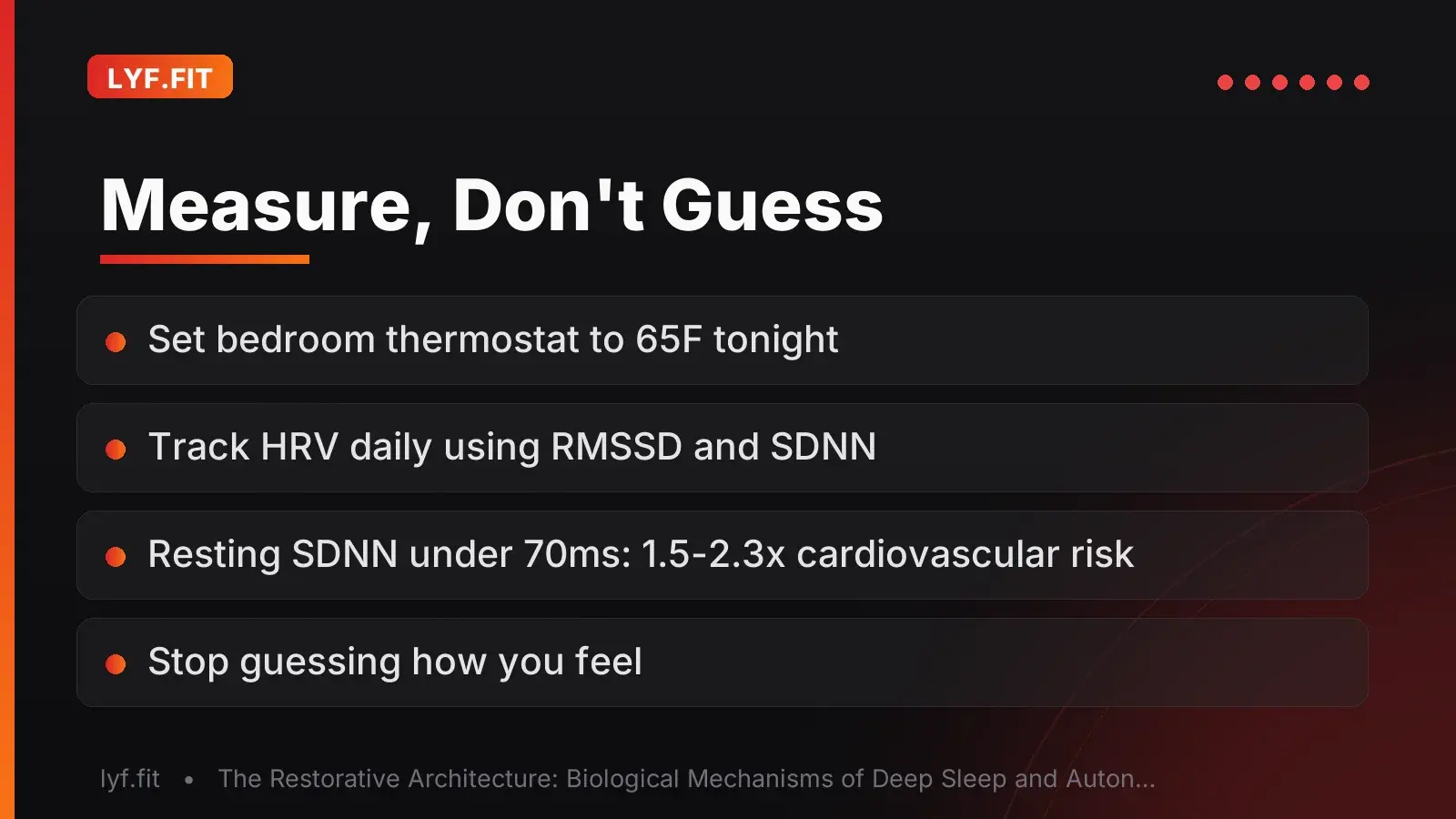
- The Environmental Anchor: Set the bedroom thermostat to 65°F. dim lights to below 10 EDI two hours before sleep.
- The Vagal Trigger: 6 cpm breathing (4.5s inhale / 5.5s exhale) for 5–15 minutes to maximize CVA.
- The Metric of Success: Monitor HRV (RMSSD and SDNN) daily to assess BHA integrity.
The "So What?" Layer: Heart Rate Variability is a "trans-diagnostic proxy" for systemic health and BHA integrity. Monitoring these metrics is proactive; a decline in HRV can predict major adverse cardiovascular events (MACE) or autonomic complications 24–48 hours in advance. Specifically, individuals with a resting SDNN below 70ms face a 1.5x to 2.3x higher risk of major cardiovascular events. By tracking these metrics of recovery, we move from guessing how we feel to knowing how we are functioning at a cellular level.
Flashcards
1 / 5Knowledge Check
1 / 5Which branch of the autonomic nervous system must become dominant to allow for restorative, deep sleep?
Clinical Sources & Citations
- Haghayegh et al., 2019 (The University of Texas at Austin / PubMed) - Passive Body Heating and Sleep Onset.
- Meru Health - Resonance Score and Biofeedback Clinical Data.
- Frontiers in Cardiovascular Medicine - Heart Rate Variability and Brain-Heart Axis Integrity.
- Laborde et al., 2019 (Journal of Clinical Medicine) - Slow-Paced Breathing Protocols.
- The Ottawa Hospital / Sleepopolis - Thermostat and Environmental Thermal Regulation.
- Innerscene - Melanopic Light Data and Circadian Health.
- ANCSLEEP - Autonomic Nervous System and Sleep Fragmentation Impact.
Stop completely guessing.
Use our interactive PWA tools to calculate your exact macros, 1RM, and running pace offline.