
Disclaimer: Some of the links on this page are affiliate links. As an Amazon Associate and affiliate for other networks, we may earn a commission from qualifying purchases at no additional cost to you.
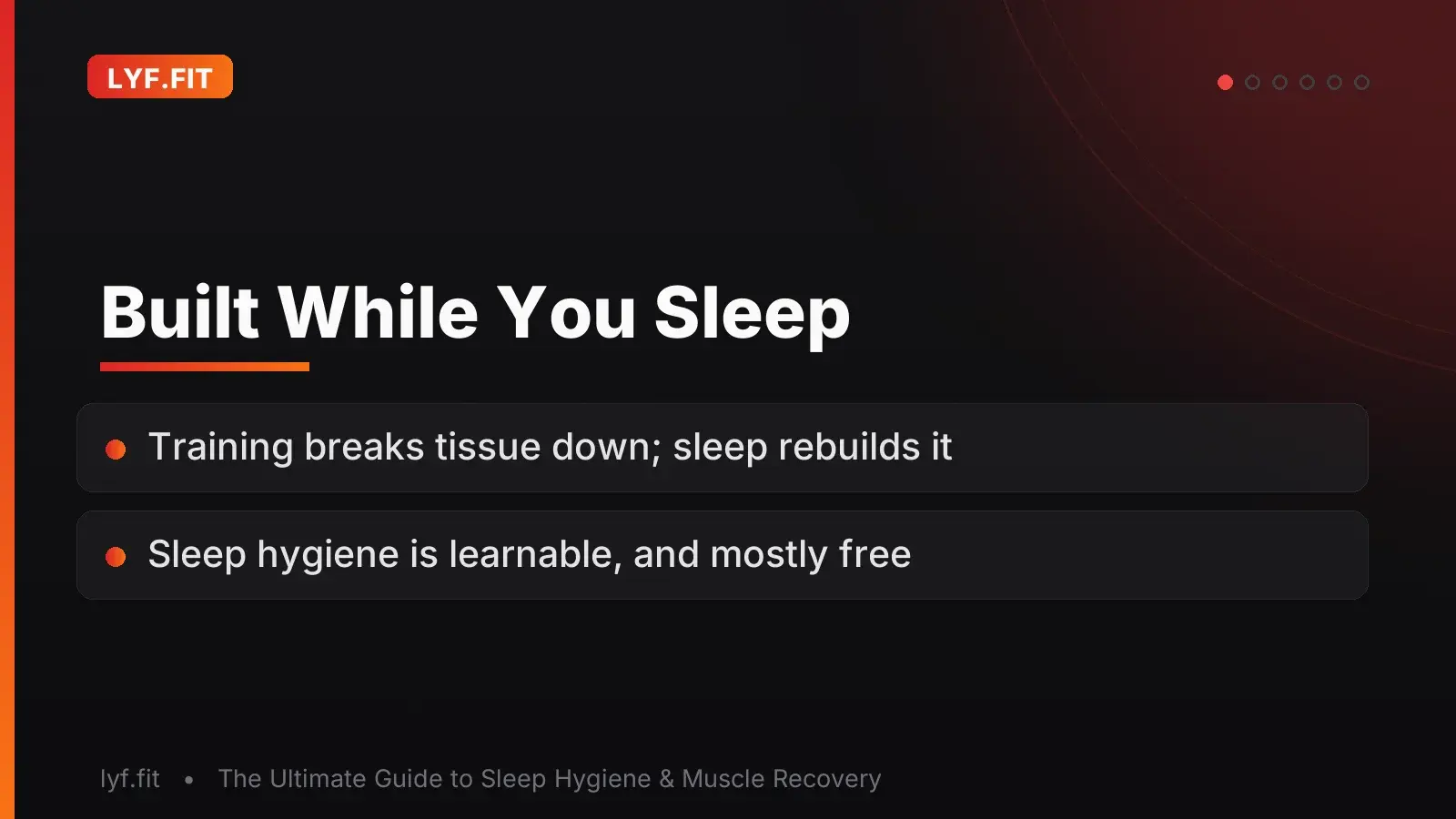
Muscle is not built in the gym—it is built while you sleep. Training supplies the stimulus by breaking tissue down; the repair, hormonal reset, and nervous-system recovery that turn that stimulus into strength and size happen overnight, mostly during deep sleep. If you train hard but sleep five or six broken hours, you are quietly capping your own results.
Sleep is the ultimate, 100% natural, side-effect-free performance enhancer. If you are training hard but ignoring your sleep hygiene, you are leaving your best results on the table. The good news: sleep hygiene is a set of learnable habits, and most of them cost nothing.
How does sleep actually repair your muscles?
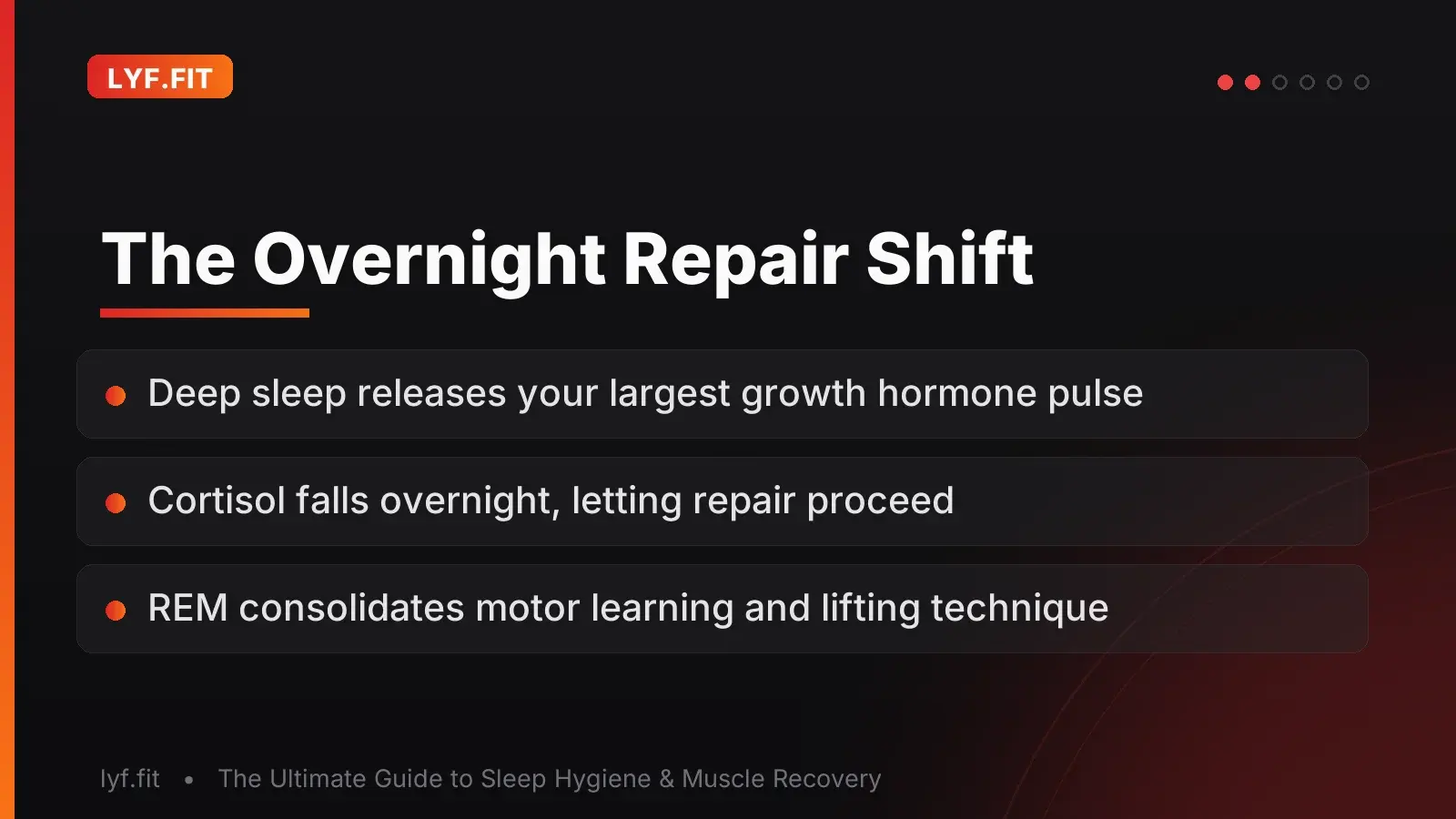
During deep sleep (Non-REM Stage 3, also called slow-wave sleep), your body releases its largest pulse of human growth hormone (HGH). HGH drives tissue repair and supports the anabolic environment that muscle building depends on. Without adequate deep sleep, this hormone pulse is blunted and repair slows.
Furthermore, lack of sleep drastically increases cortisol, the primary stress hormone. Chronically elevated cortisol is catabolic, meaning it actively breaks down muscle tissue for energy and encourages the storage of visceral belly fat. In a well-rested night, cortisol falls to its lowest point and lets HGH do its work.
REM sleep matters too. It consolidates motor learning, so the technique you drilled today—a cleaner squat groove, a smoother deadlift setup—gets wired in overnight. Deep sleep rebuilds the tissue; REM sharpens the software running it. For the wider picture of why downtime is a training variable, see our guide to the science of rest.
💡 Pro-Tip: Track Your Daily Habits Make sure you are drinking enough water throughout the day to keep your tissues hydrated for overnight repair. Use our Daily Water Tracker to ensure you hit your baseline.
What happens to your gains when you are sleep-deprived?
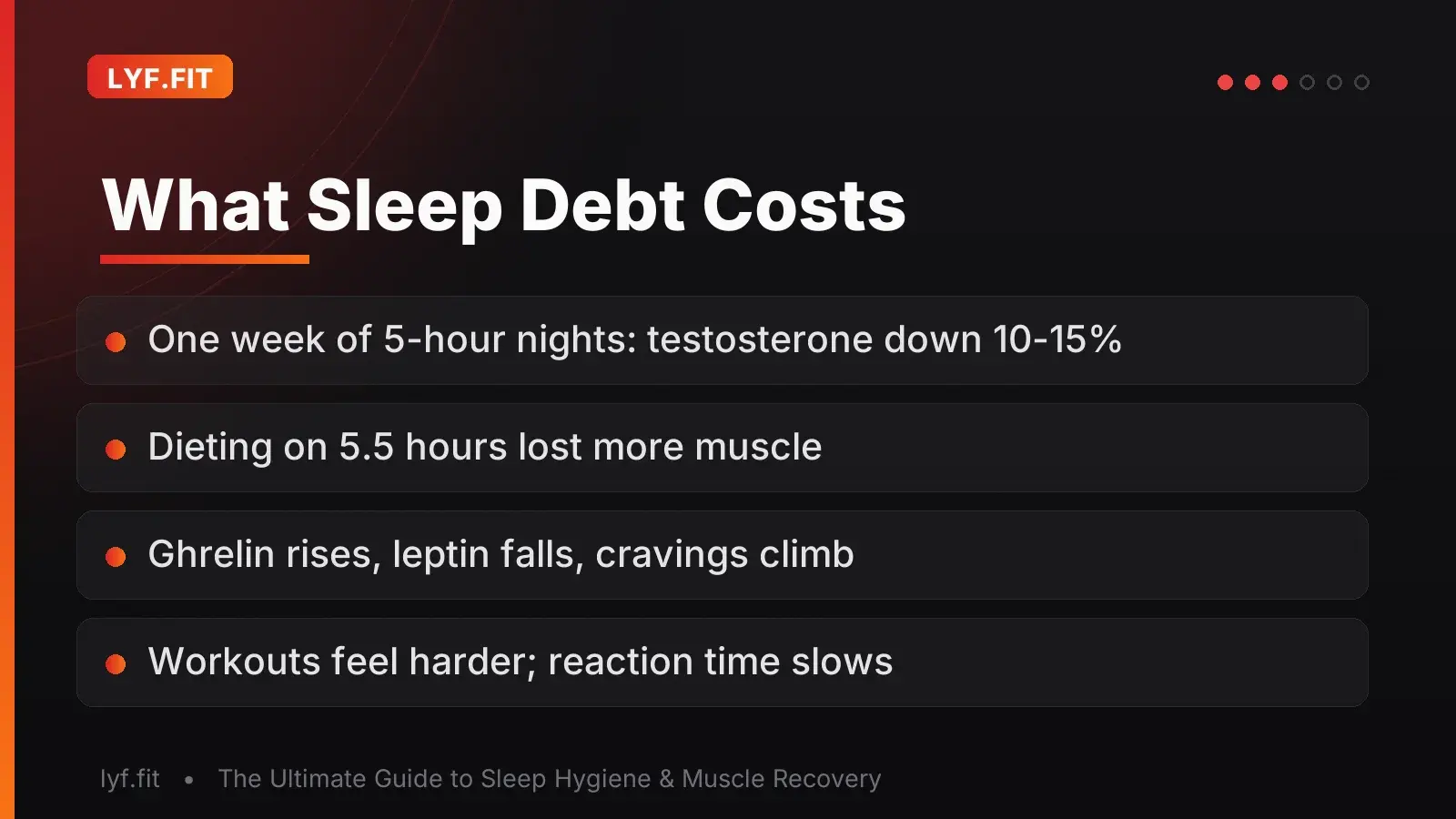
Sleep debt hits the exact systems that build muscle. Research on young men found that restricting sleep to about 5 hours a night for a single week lowered daytime testosterone by roughly 10–15%. Short sleep also appears to suppress muscle protein synthesis—the process that actually assembles new muscle—while keeping cortisol high.
It gets worse if you are dieting. In one calorie-restriction study, people limited to about 5.5 hours of sleep lost a greater share of their weight as muscle rather than fat, compared with a group sleeping 8.5 hours. Short sleep also blunts insulin sensitivity, which can slow how quickly muscles refill glycogen after training, leaving you flat for the next session.
Then there is appetite. Under-sleeping raises the hunger hormone ghrelin and lowers the satiety hormone leptin, so cravings climb and adherence falls apart—one reason poor sleep is so tightly linked to weight regain. Add slower reaction time and higher perceived effort, and both your recovery and your workout quality take the hit.
| Overnight process | Well-rested (7–9 hr) | Chronically short (≤6 hr) |
|---|---|---|
| Growth hormone pulse | Large, during deep sleep | Blunted |
| Cortisol | Falls overnight, low at waking | Stays elevated |
| Muscle protein synthesis | Supported | Suppressed |
| Testosterone | Normal daytime levels | ~10–15% lower after a week of short sleep |
| Hunger hormones | Balanced | Ghrelin up, leptin down (more cravings) |
| Reaction time / perceived effort | Sharp; workouts feel normal | Slower; workouts feel harder |
How much sleep do lifters actually need?
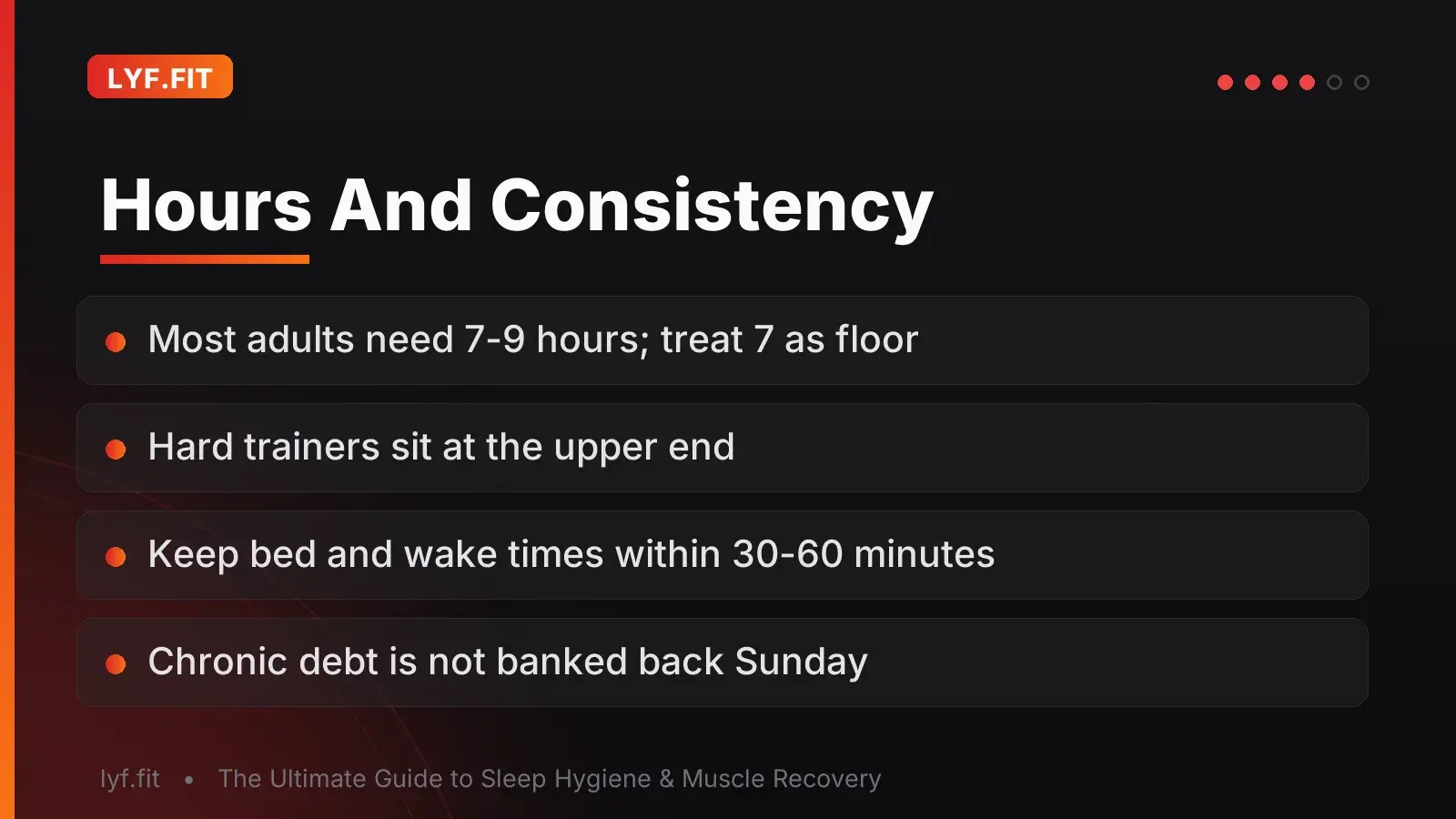
Most adults need 7–9 hours, and if you train hard you likely sit at the upper end of that range. Athletes appear to benefit from even more: when researchers extended college basketball players toward 10 hours in bed, sprint times and shooting accuracy improved. You do not need 10 hours, but treating 7 as a hard floor rather than an aspiration is a reasonable rule.
Consistency counts as much as duration. Going to bed and waking within the same 30–60 minute window every day—weekends included—stabilizes your circadian rhythm and improves sleep quality at any given hour count. A single late night can be partly repaid, but chronic debt is not something you fully "bank back" on Sunday. Aim for a regular schedule you can actually keep.
What does a good pre-sleep wind-down look like?
Your nervous system does not flip from training mode to sleep mode on command. A 30–60 minute wind-down eases you from a "sympathetic" (fight or flight) state into a "parasympathetic" (rest and digest) one. Keep it boring and repeatable so it becomes a cue.
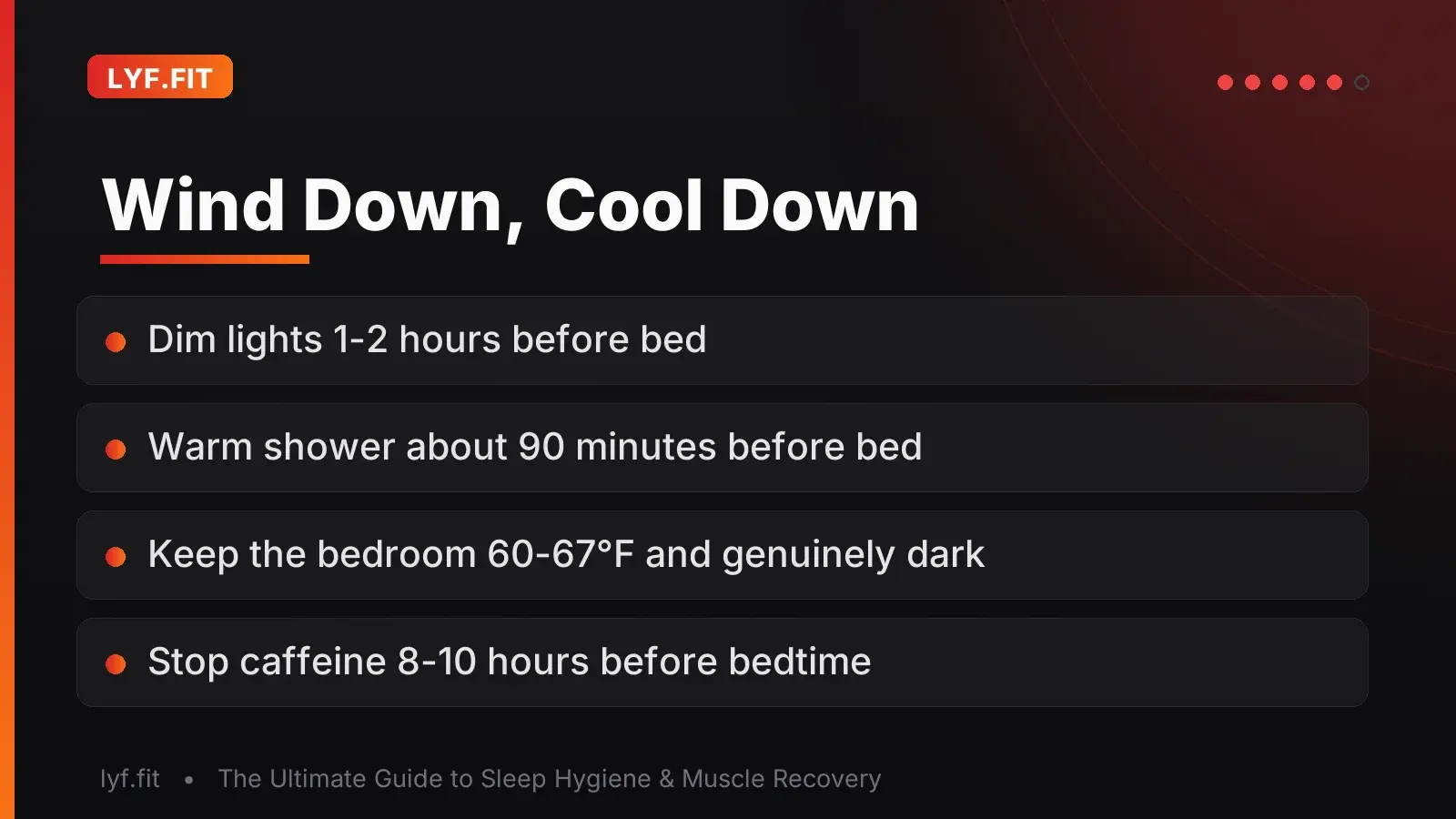
- Dim overhead lights and switch to warm lamps 1–2 hours before bed; put screens away or use night mode.
- Spend 5–10 minutes on light tissue release or mobility—tight muscles and fascial adhesions from heavy lifting cause tossing and turning.
- Take a warm shower about 90 minutes before bed; as the water evaporates, it helps drop your core temperature.
TriggerPoint GRID Foam Roller Sponsored
The industry standard for deep tissue myofascial release. Perfect for pre-sleep recovery.
If you want a targeted routine to run before bed, our Mobility Generator builds a quick 5-minute wind-down sequence for whichever muscle group is barking.
How should you set up your bedroom for recovery?
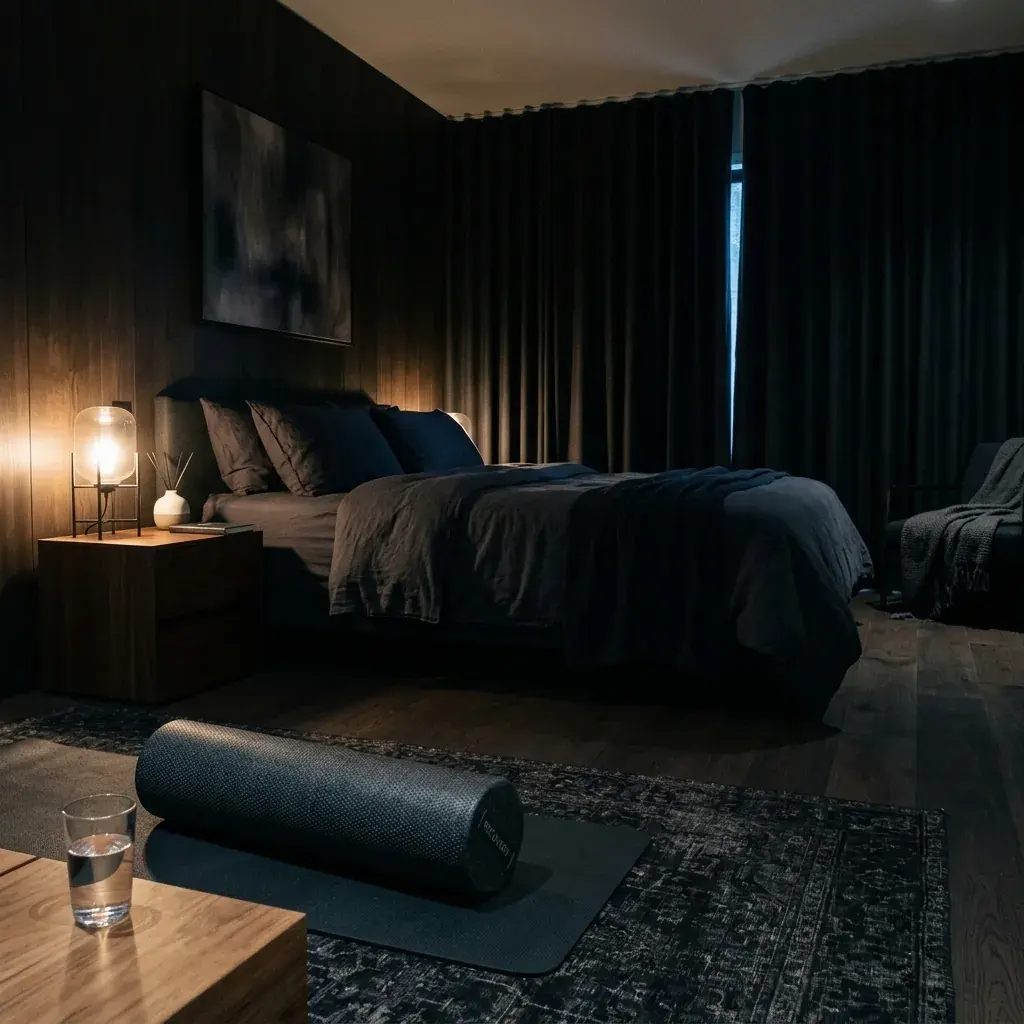
Your sleep environment is the cheapest performance upgrade you own. Three variables do most of the work: temperature, light, and noise.
- Temperature: Your core needs to fall by about 2–3°F to initiate and hold deep sleep. Keep the room 60–67°F (15–19°C)—cool beats cozy.
- Light: Get morning sunlight in your eyes within 30 minutes of waking to anchor your circadian clock, then make the bedroom genuinely dark at night. Blackout curtains or a quality sleep mask block the stray light that suppresses melatonin.
- Noise: A fan, white-noise machine, or earplugs smooths over the sudden sounds that fragment sleep without you fully waking.
Manta Sleep Mask Sponsored
100% blackout sleep mask for deep, uninterrupted sleep and optimal recovery.
When should you cut caffeine and alcohol?
Caffeine has a half-life of roughly 5–6 hours, so a mid-afternoon coffee can still be half in your system at bedtime. Research suggests 400 mg of caffeine taken even 6 hours before bed can trim about an hour off total sleep. A practical rule: stop caffeine 8–10 hours before your target bedtime.
Alcohol is the sneakier saboteur. A nightcap helps you fall asleep faster, but as it metabolizes it fragments the back half of the night, suppresses REM, and blunts the nighttime growth hormone pulse you need for repair. You wake up feeling unrested even after a "full" night. If recovery is the priority, keep evening drinks light and early.
Nutrition timing helps too. Digesting a heavy meal pulls blood flow to your gut and raises core temperature and heart rate right when they should be dropping. Stop large meals about 3 hours before bed; if you are hungry, a light, slow-digesting protein snack (like a casein shake) settles the stomach without spiking blood sugar.
Do naps actually help recovery?
Yes, used correctly. A 20–30 minute nap can restore alertness and take the edge off a short night without leaving you groggy. Keep it brief—longer naps drop you into deep sleep and you wake with "sleep inertia," feeling worse than before. Nap before about 3 p.m. so it does not steal from your night sleep.
Naps supplement good nighttime sleep; they do not replace it. If you consistently need long daytime naps just to function, that is usually a signal your overnight sleep needs the attention first.
Test Your Knowledge
1 / 4Which sleep stage produces the largest pulse of growth hormone?
Interactive Tools
Save these contextual tools to your profile for quick access.
Frequently asked questions
Most lifters do best with 7–9 hours, leaning toward the upper end during hard training or a calorie deficit. Consistency matters as much as the raw number—keeping a steady bed and wake time improves quality at any given duration. Treat 7 hours as a floor, not a goal.
Partly. A single short night can be largely repaid, and catch-up sleep is better than none. But chronic weekday debt is not fully reversible with a long Sunday lie-in, and swinging your schedule around ("social jet lag") disrupts your circadian rhythm. A regular schedule beats a boom-and-bust one.
For most people, no—finishing a workout at least 1–2 hours before bed is usually fine, and regular exercise improves sleep overall. If you find intense evening sessions leave you wired, shift them earlier, keep the lights low afterward, and give your core temperature time to fall before you get in bed.
Dial in the basics first: consistent schedule, cool dark room, no caffeine late, and a real wind-down. If poor sleep persists for weeks despite good habits, or you snore heavily and wake unrefreshed, that is worth raising with a doctor or sleep professional. This article is education, not a diagnosis for a sleep disorder.
The bottom line
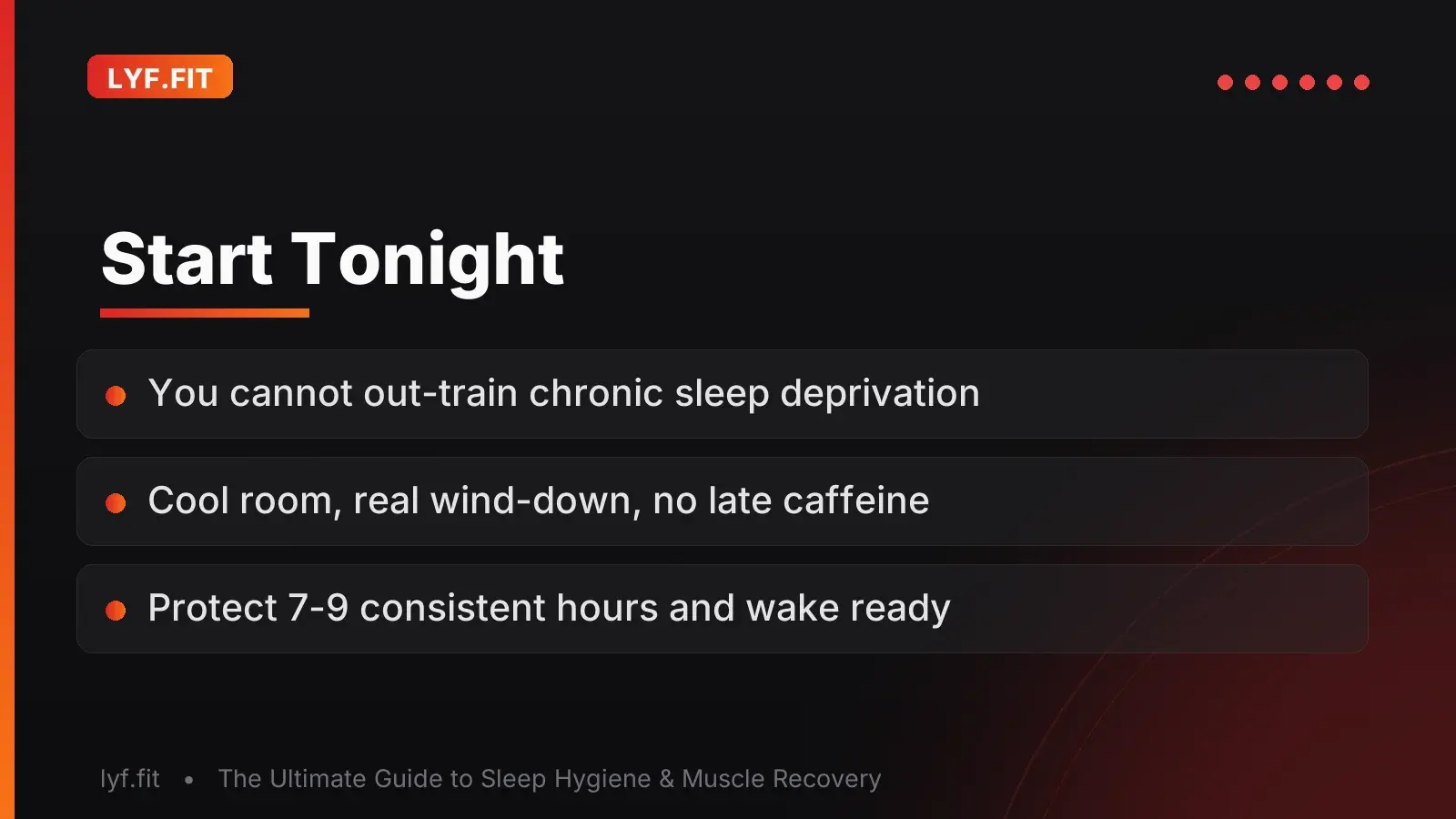
You cannot out-train chronic sleep deprivation. By protecting 7–9 consistent hours, building a simple wind-down, and dialing in a cool, dark, quiet bedroom, you will deepen your sleep—and by extension, your muscle recovery, hormonal balance, and next-day performance.
Start tonight. Turn the thermostat down, roll out your tight muscles, cut the late caffeine, and wake up ready to train. To make the habits stick, pair your new routine with the Daily Water Tracker and a quick pre-bed sequence from the Mobility Generator.
Stop completely guessing.
Use our interactive PWA tools to calculate your exact macros, 1RM, and running pace offline.