
Disclaimer: Some of the links on this page are affiliate links. As an Amazon Associate and affiliate for other networks, we may earn a commission from qualifying purchases at no additional cost to you.
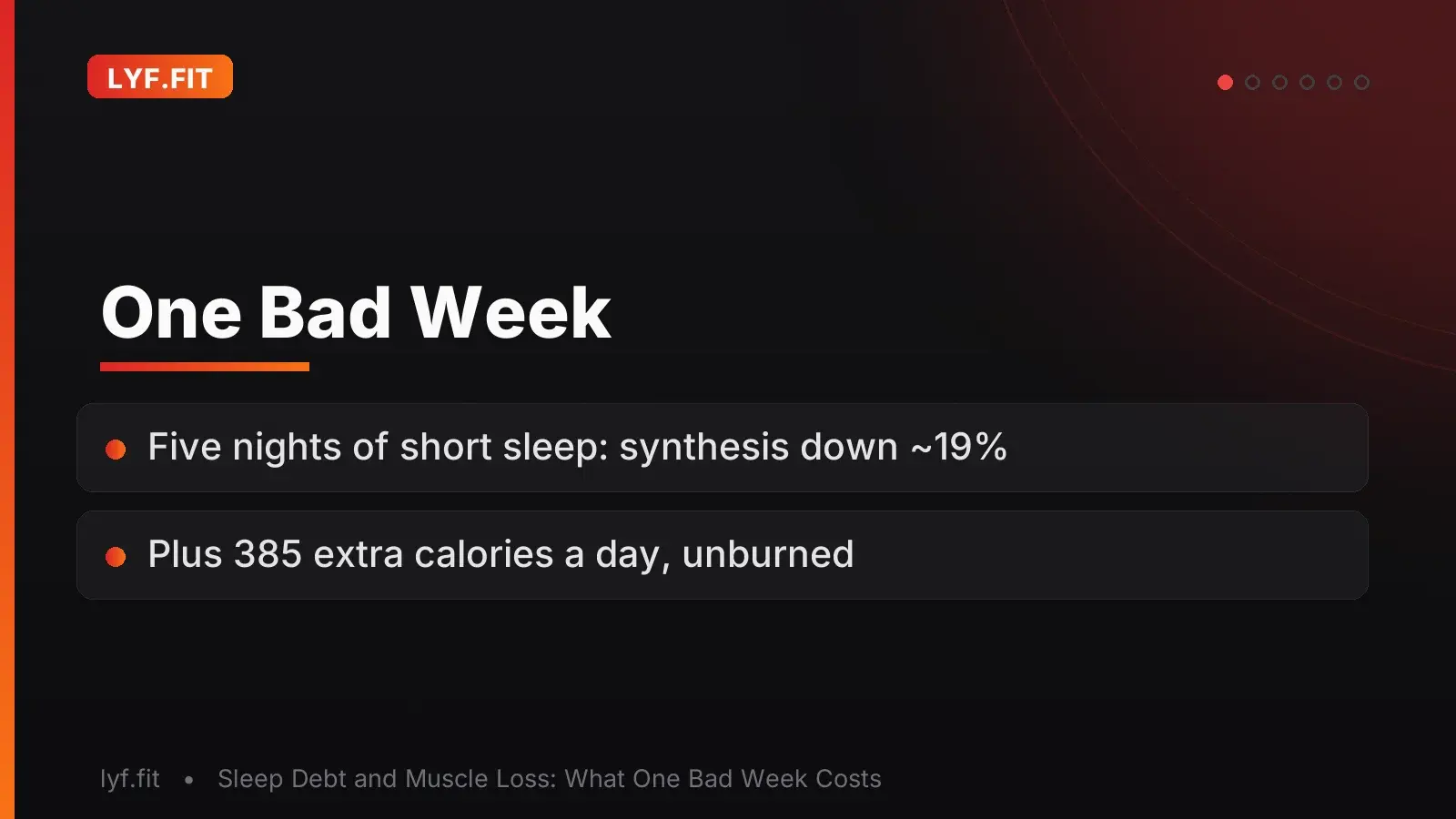
One bad week of sleep will not visibly shrink your arms. What it does is measurably degrade the machinery that builds and defends muscle: five nights at four hours in bed cut myofibrillar protein synthesis by roughly 19%, evening cortisol fails to fall on schedule, and you eat about 385 extra calories a day without burning any more. The cost is real, it is mostly biochemical and behavioral rather than a chunk of lost tissue, and — critically — three hard interval sessions during that same week appear to erase the protein-synthesis hit entirely.
What does a week of sleep debt actually do to muscle?
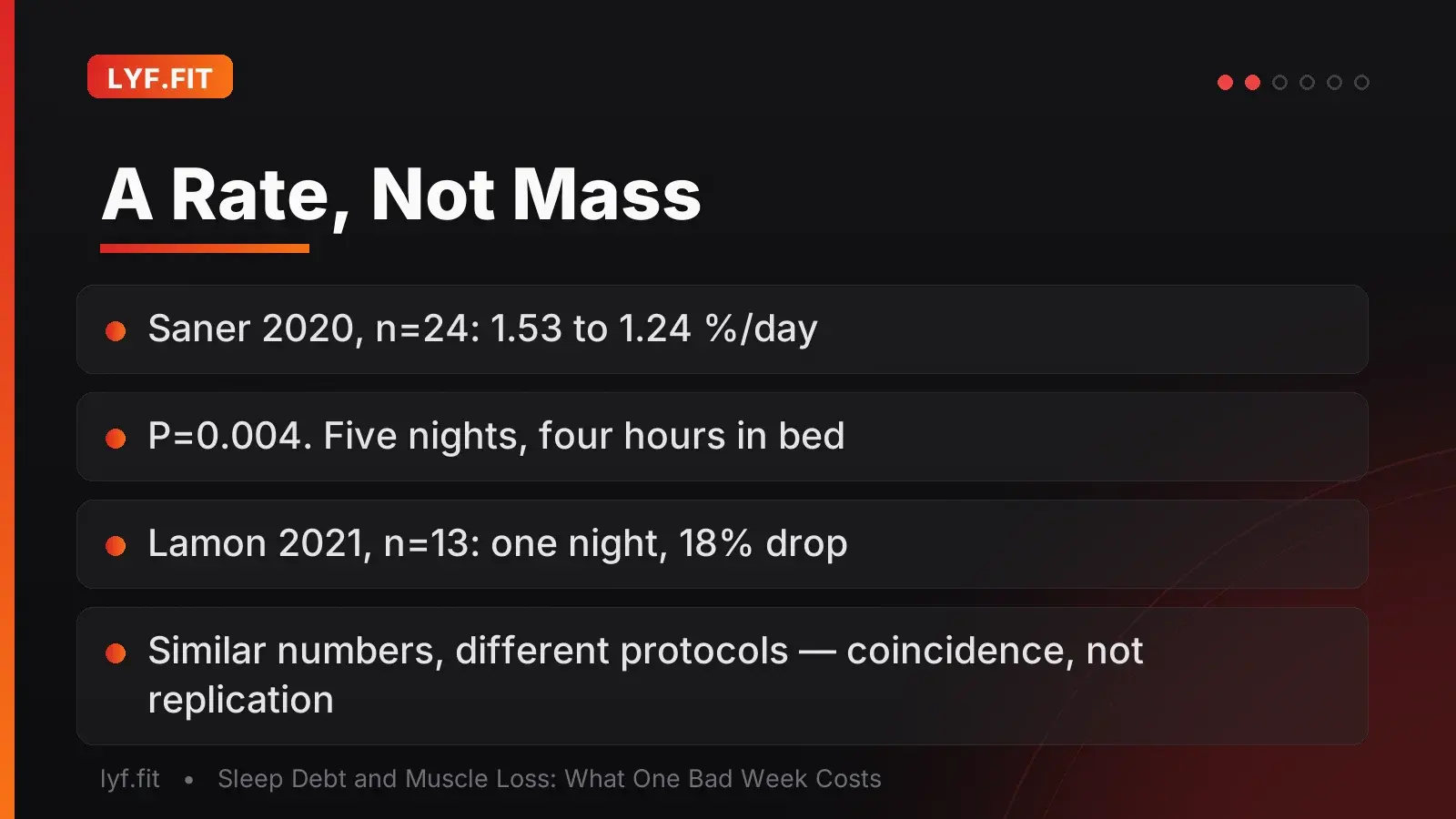
The most direct evidence comes from a 2020 study in The Journal of Physiology (Saner and colleagues), which put 24 healthy young men through five nights of either normal sleep or four hours in bed. Myofibrillar fractional synthetic rate — the rate at which contractile muscle protein is rebuilt — fell from 1.53%/day on normal sleep to 1.24%/day when sleep was restricted (difference −0.29, 95% CI −0.50 to −0.09, P=0.004).
That is a rate, not a mass. No trial has ever measured actual muscle loss from a week of short sleep alone. The honest framing: sleep debt suppresses the process that maintains muscle tissue, and if you hold that suppression for long enough while under-eating, it shows up on the scale as the wrong kind of weight.
How fast does the damage start — one night or one week?
Faster than most people assume. A 2021 randomized crossover in Physiological Reports (Lamon et al., n=13) found that a single night of total sleep deprivation dropped postprandial muscle protein synthesis 18% (0.072 to 0.059 %/h, p=0.040), raised the daytime cortisol curve 21%, and lowered testosterone AUC 24%. IGF-1 and insulin were unchanged.
Be careful with that 18%. It is a coincidence, not a replication — Saner's ~19% came from five nights of partial restriction measured over days; Lamon's 18% came from one night of total deprivation measured over hours. Different protocols, different windows, similar-looking numbers. Neither one converts into a percentage of muscle lost.
Is cortisol really "eating" your muscle?
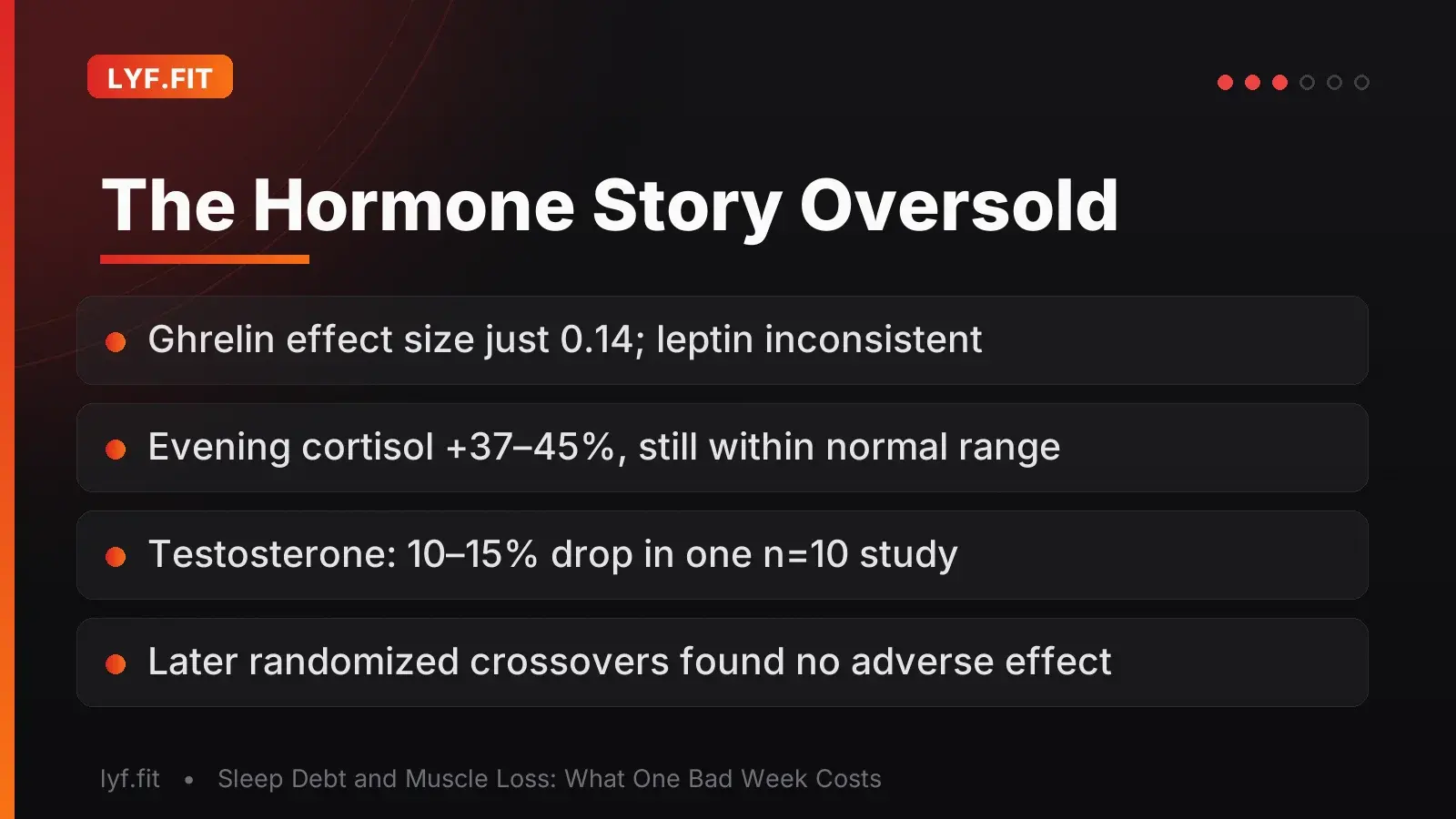
No — and this is where popular writing goes furthest off the rails. The actual finding is narrower and more interesting: sleep loss delays the evening decline of cortisol. Your HPA axis fails to shut down on time. A classic 1997 study found evening plasma cortisol was 37% higher after partial deprivation and 45% higher after total deprivation, and the landmark 1999 Lancet sleep-debt experiment (11 men, six nights at four hours in bed) found the same elevated evening pattern alongside increased sympathetic activity.
These values sit inside normal diurnal variation. They are not a pathological state, and no cortisol-lowering supplement has been shown to change any muscle outcome discussed here. Treat delayed cortisol clearance as a signal that recovery is being deferred — not as evidence of catabolic emergency.
Does sleep loss tank your testosterone?
It is contested, and the evidence is far thinner than the headlines imply. The famous 2011 JAMA study (Leproult & Van Cauter) restricted 10 young men to under five hours for eight nights and found a 10–15% drop in daytime testosterone, largest in the afternoon. That single n=10 study is the source of nearly every "sleep loss ages your T by a decade" headline.
But a 2019 pair of randomized crossovers (Smith, St-Onge et al., Sleep Health) found no adverse testosterone effect in either protocol — not after five nights at four hours in bed, and not after six weeks of 1.5h nightly reduction achieved by going to bed later, where endpoint values were 483 ng/dL restricted vs 476 ng/dL habitual. Testosterone stayed within the normal reference range in all of these studies. The honest read: the effect is small, inconsistent between labs, and rests on very few people — not that a rough week collapses your T.
| Claim you'll see online | What the evidence actually shows |
|---|---|
| "A bad week costs you muscle" | Myofibrillar synthesis fell ~19% over 5 nights (n=24); no trial has measured mass loss from sleep alone |
| "Sleep loss ages your testosterone 10–15 years" | 10–15% daytime drop in one n=10 study; a later pair of randomized crossovers found no adverse effect at all |
| "Ghrelin and leptin flood you with hunger" | Largest meta-analysis: ghrelin SMD just 0.14; an RCT-only meta-analysis found no significant change in either |
| "Cortisol goes through the roof" | Evening cortisol +37–45%; a delayed nightly decline, still within normal diurnal range |
| "Just eat more protein to compensate" | No trial has tested protein dose under sleep restriction; protein alone doesn't preserve lean mass without training |
Why do you overeat when you're tired, if not hormones?
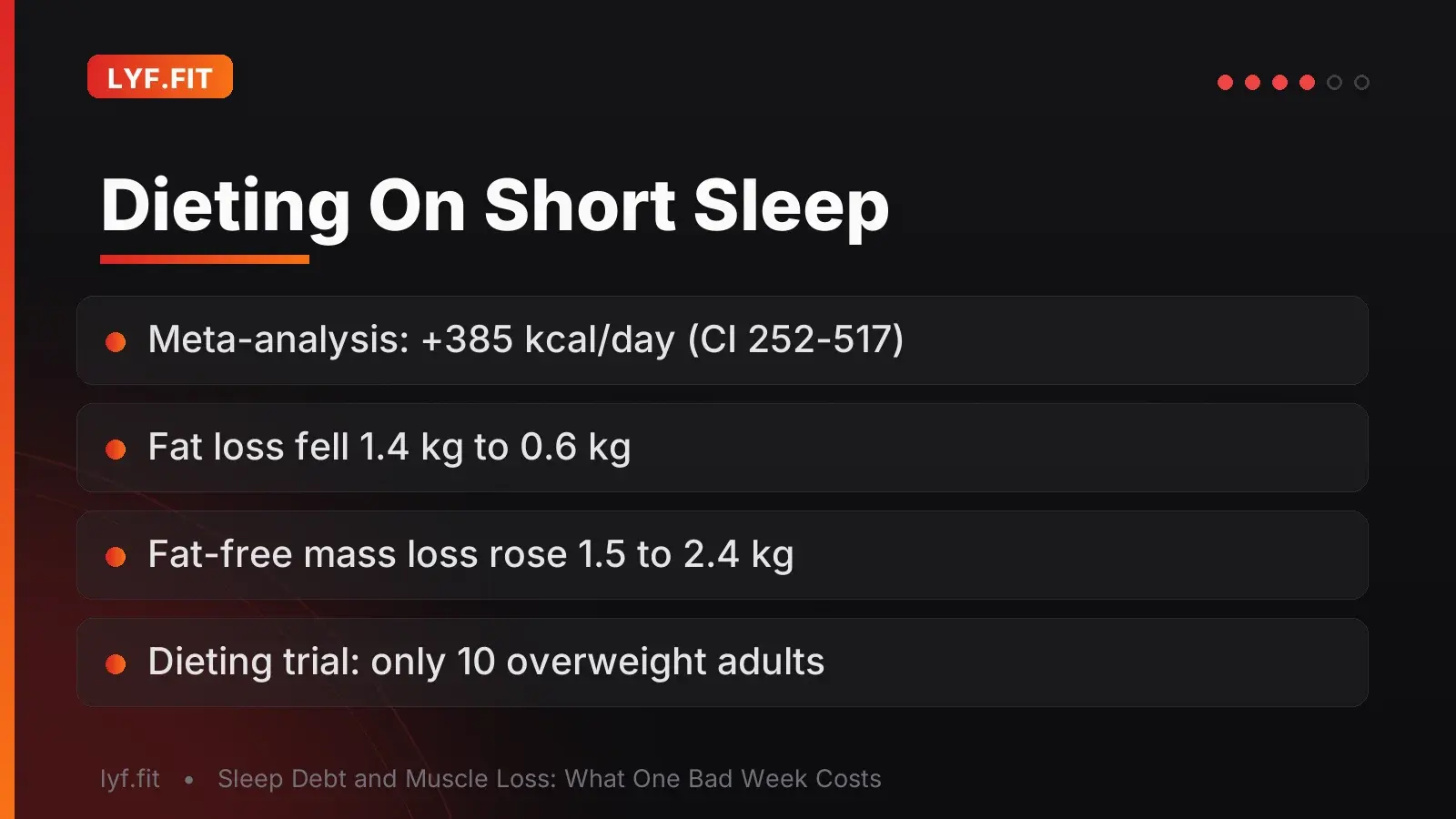
The overeating is the best-replicated finding in this entire literature — and the hormone explanation for it is the weakest. A 2017 meta-analysis in the European Journal of Clinical Nutrition found partial sleep deprivation increased intake by +385 kcal/day (95% CI 252 to 517, P<0.00001) with no compensating rise in energy expenditure or resting metabolic rate. Fat intake rose; protein intake actually fell.
Meanwhile a 2020 Obesity Reviews meta-analysis of 2,250 participants found a ghrelin effect size of just 0.14, and a 2025 RCT-only meta-analysis (6 trials, 141 people) found no significant ghrelin or leptin change at all. Behavior explains it better than biochemistry: more waking hours with food access, degraded decision-making, and reward-driven choices. The sleep–weight-loss connection is real; the hormone story is oversold.
What happens when you diet on short sleep?
This is where sleep debt bites hardest. In a 2010 Annals of Internal Medicine trial, 10 overweight adults did 14 days of identical moderate calorie restriction at either 8.5h or 5.5h sleep opportunity. Same deficit, very different outcome: fat loss fell from 1.4 kg to 0.6 kg, while fat-free mass loss rose from 1.5 kg to 2.4 kg. With adequate sleep, 56% of the weight lost was fat. On short sleep, only about 25% was.
That is the strongest available support for the "sleep debt costs you lean mass" thesis — and note what it required: an active two-week deficit in 10 people. If you are cutting, sleep is a body-composition variable, not a wellness accessory. Read our body recomposition guide for how the deficit itself should be structured.
Can training protect you when sleep is short?
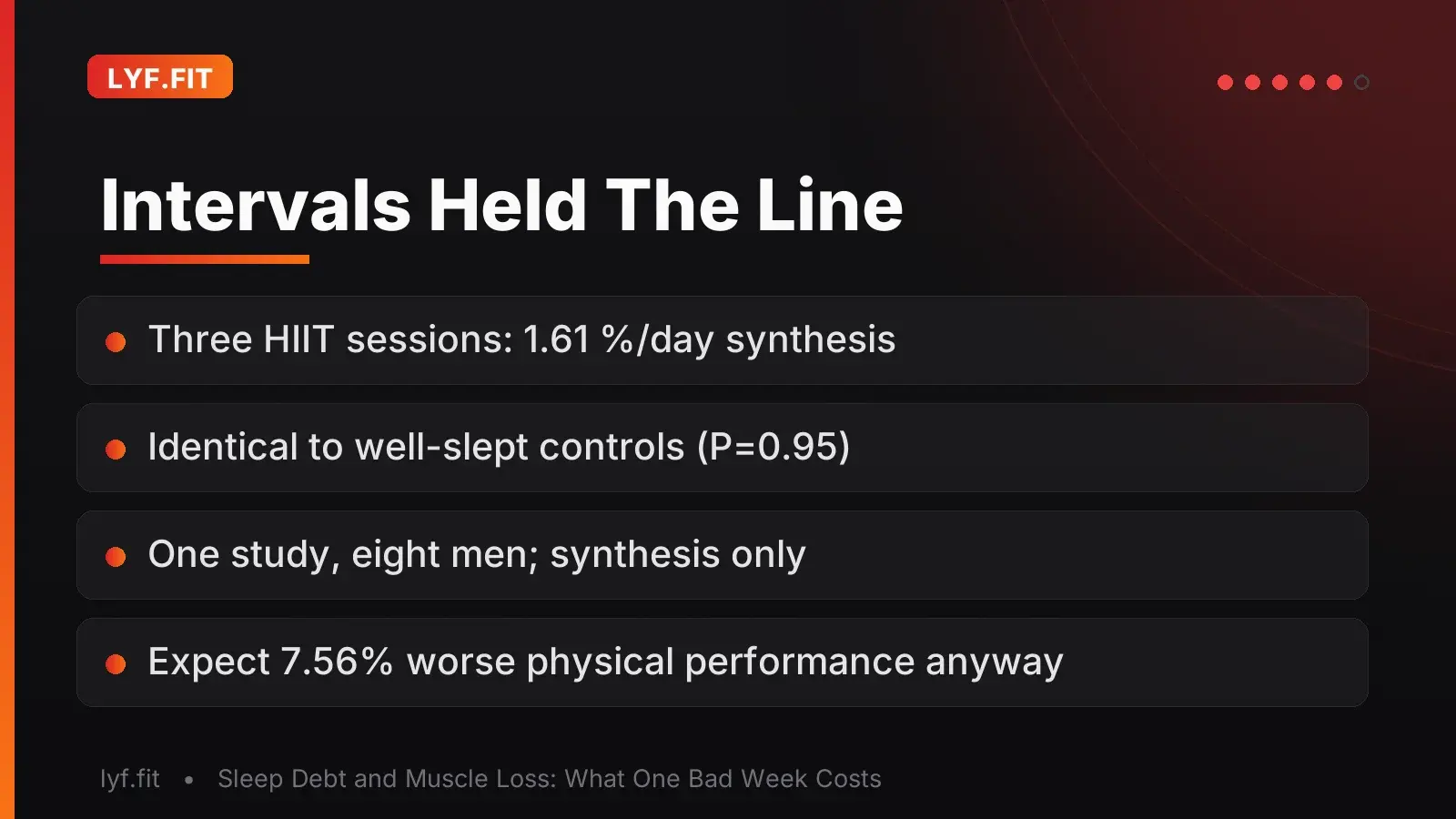
Partially — and the finding is striking enough to build a week around. In the same Saner study, a third group did three high-intensity interval sessions during their five sleep-restricted nights. Their myofibrillar synthesis was 1.61%/day, statistically indistinguishable from the well-slept group (P=0.95) and clearly better than sleep restriction alone (P<0.001).
Do not read that as "exercise cancels sleep loss." It is one study with eight men in that arm, and it rescued protein synthesis specifically — not glucose tolerance, not cognition, not performance. A 2022 Sports Medicine meta-analysis of 227 outcomes found acute sleep loss degrades physical performance by 7.56% (95% CI −11.9 to −3.13), scaling roughly 0.4% per extra hour awake. So: keep training, expect to be worse at it, and see our HIIT vs. LISS breakdown for how to structure those sessions.
Sunny Health & Fitness Indoor Cycling Bike Sponsored
Intervals were the one countermeasure that preserved protein synthesis under sleep restriction — a bike makes a 20-minute session possible on a wrecked week.
Test Your Knowledge
1 / 5In the 2020 Saner study, what happened to myofibrillar protein synthesis after five nights of 4h sleep?
Can you catch up on the weekend?
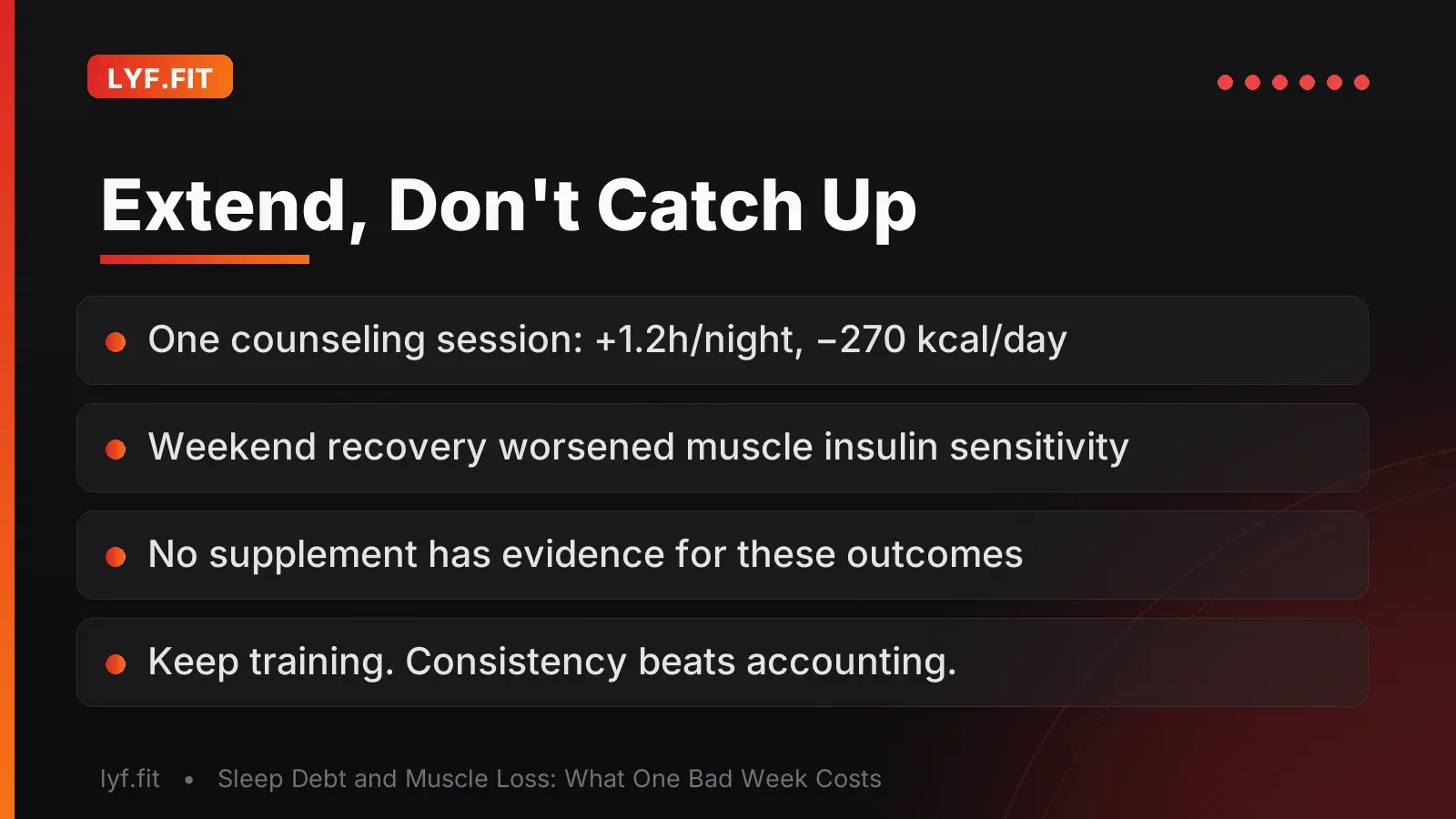
Not really, and this deserves active correction rather than a soft qualifier. A 2019 Current Biology study (Depner et al.) compared chronic 5h nights against 5h nights with ad libitum weekend recovery. Insulin sensitivity fell about 13% over two weeks in the restricted group, who gained roughly 3 lb from post-dinner snacking — and the weekend-recovery group ended up with worse muscle- and liver-specific insulin sensitivity than those who never recovered, likely from the circadian whiplash of a shifting schedule.
Participants given unlimited weekend sleep only recovered about three extra hours across two nights anyway. There is also no good evidence you can "bank" sleep before a hard week. Consistency beats accounting.
What's the actual recovery protocol?
Lead with sleep extension, not products. The strongest real-world citation is a 2022 JAMA Internal Medicine RCT: 80 adults habitually sleeping under 6.5 hours received one personalized sleep-hygiene counseling session targeting 8.5h in bed. They gained +1.2h/night and cut intake by ~270 kcal/day with zero diet instruction, expenditure unchanged.
Practical stack, in order of evidence:
- Extend time in bed toward 8–8.5h, protecting the same wake time. Our sleep hygiene and muscle recovery guide has the mechanics; the architecture of deep rest explains why the stages matter.
- Nap strategically — 13:00–16:00, under 30 minutes to avoid sleep inertia, and allow ~30 minutes after waking before training.
- Keep training, including intervals. Expect a ~7.5% performance decrement and program accordingly.
- Hydrate and move — use the water tracker and a short mobility routine on days when hard training isn't realistic.
No supplement — melatonin, magnesium, ashwagandha, or any "sleep stack" — has trial evidence for the muscle outcomes in this article.
Interactive Tools
Save these contextual tools to your profile for quick access.
Frequently asked questions
Almost certainly not in any measurable way. No study has demonstrated muscle mass loss from a week of sleep restriction alone. What the research shows is a suppressed rate of myofibrillar protein synthesis (~19% over five nights) and a blunted anabolic response — the machinery, not the tissue. Actual lean-mass losses in the literature required a simultaneous two-week calorie deficit. If you feel smaller and weaker after a bad week, that is far more likely to be reduced glycogen, water, and a real 7.5% performance decrement than lost muscle.
There's no trial that has tested protein dose specifically under sleep restriction, so anyone giving you a number is guessing. What we do know is that high protein alone failed to prevent lean mass loss during energy restriction in multiple studies — the protective effect appears to require resistance training alongside it. Keep protein at your normal target, keep lifting, and don't treat a shake as a substitute for the hours you didn't sleep. Notably, sleep-deprived people spontaneously eat less protein and more fat, so simply holding your usual intake is already an active choice.
One night is enough to register. A randomized crossover found that a single night of total sleep deprivation cut postprandial protein synthesis 18%, raised the cortisol curve 21%, and lowered testosterone AUC 24%. That said, these are acute, reversible shifts in n=13 people — a single rough night is a blip, not damage. The concern is the repeating pattern: chronic restriction plus a weekend rebound produced worse insulin sensitivity than staying restricted, which suggests the rhythm matters as much as the total.
Cautiously at best. Nearly all of this literature is young, healthy, and overwhelmingly male — the 2022 performance meta-analysis pooled a sample that was 89% male, and the key mechanistic trials ran between 10 and 24 participants. The 2021 crossover study noted that the numerical drop in protein synthesis appeared in male but not female participants, and it wasn't powered to test sex differences. These effect sizes should be treated as unestablished for women, older adults, and trained athletes. This is education, not medical advice — talk to a physician about persistent sleep problems.
The cost of one bad week is a suppressed anabolic signal, a delayed cortisol nightfall, ~385 extra calories a day, and a real hit to how well you train — not a visible chunk of muscle. Fix it by extending time in bed toward 8.5 hours rather than chasing a weekend rebound, and keep training through it, because intervals were the one countermeasure that held protein synthesis at normal levels. On the days a hard session isn't realistic, run a five-minute mobility routine and stay on top of hydration with the water tracker — small, repeatable inputs that survive a week your sleep didn't.
Stop completely guessing.
Use our interactive PWA tools to calculate your exact macros, 1RM, and running pace offline.