

Disclaimer: Some of the links on this page are affiliate links. As an Amazon Associate and affiliate for other networks, we may earn a commission from qualifying purchases at no additional cost to you.
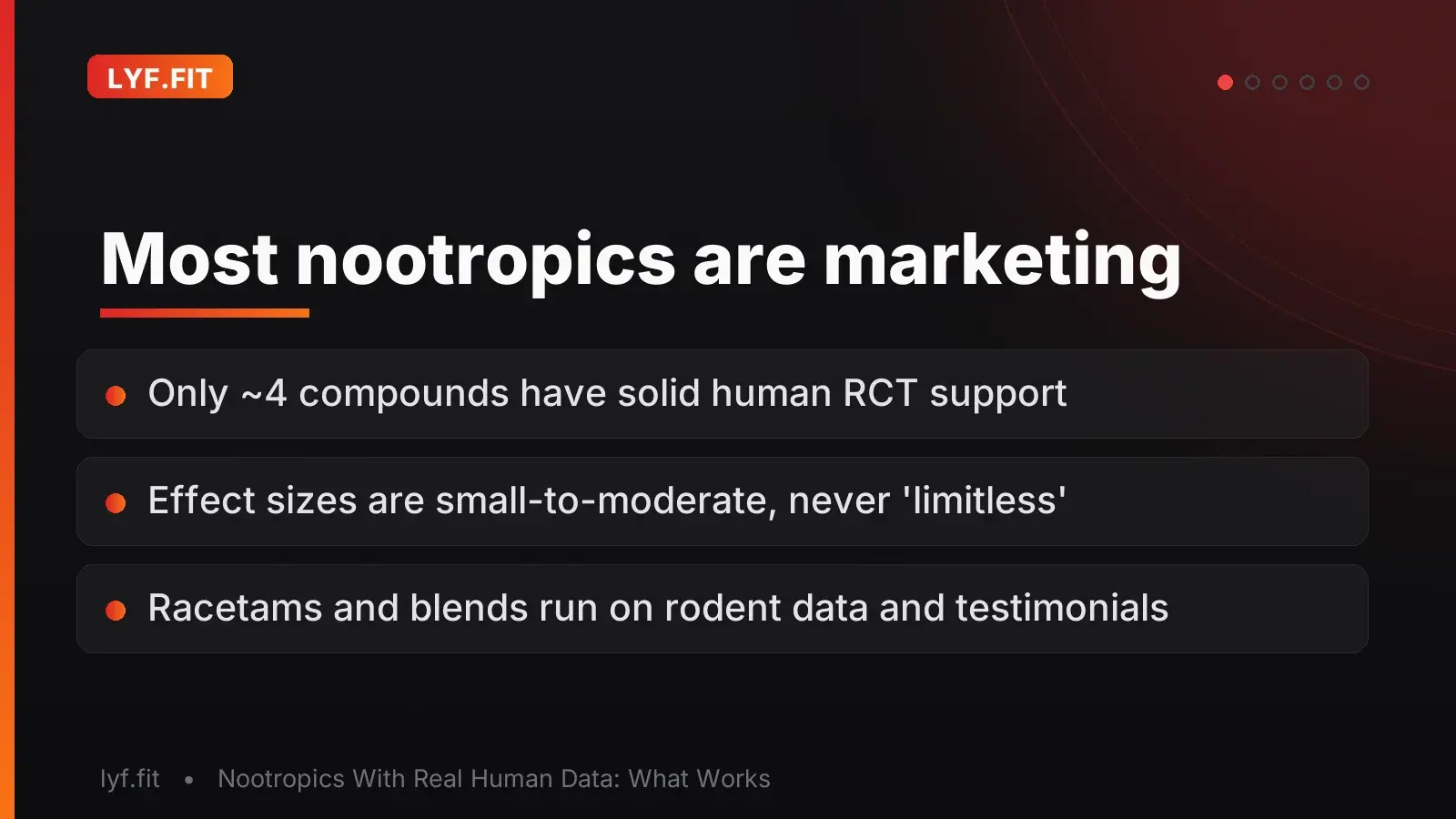
Most "smart drugs" are marketing. When you filter for compounds tested in placebo-controlled human trials and report their effect sizes honestly, the credible list shrinks to about four: caffeine paired with L-theanine, creatine under sleep loss or stress, omega-3 fatty acids for specific populations, and L-tyrosine taken acutely before a demanding task. Almost everything else — most racetams, proprietary "stacks," unregulated powders — runs on rodent data, mechanism hand-waving, and testimonials rather than randomized evidence.
What makes a nootropic "evidence-based"?
The bar is simple but rarely cleared: a double-blind, placebo-controlled trial in humans, ideally replicated, that measures a real cognitive task rather than a survey of how sharp people felt. Effect size matters as much as the p-value. A finding can be "statistically significant" yet trivially small — a few milliseconds of reaction time. In cognition research, effects are usually reported as Cohen's d, where roughly 0.2 is small, 0.5 is moderate, and 0.8 is large. Nearly every legitimate nootropic effect lands in the small-to-moderate band, and many single studies are underpowered, so replication and pooled meta-analyses matter more than any one headline. Anything promising "genius-level focus" is selling a feeling, not a measured outcome.
Does caffeine plus L-theanine actually work?
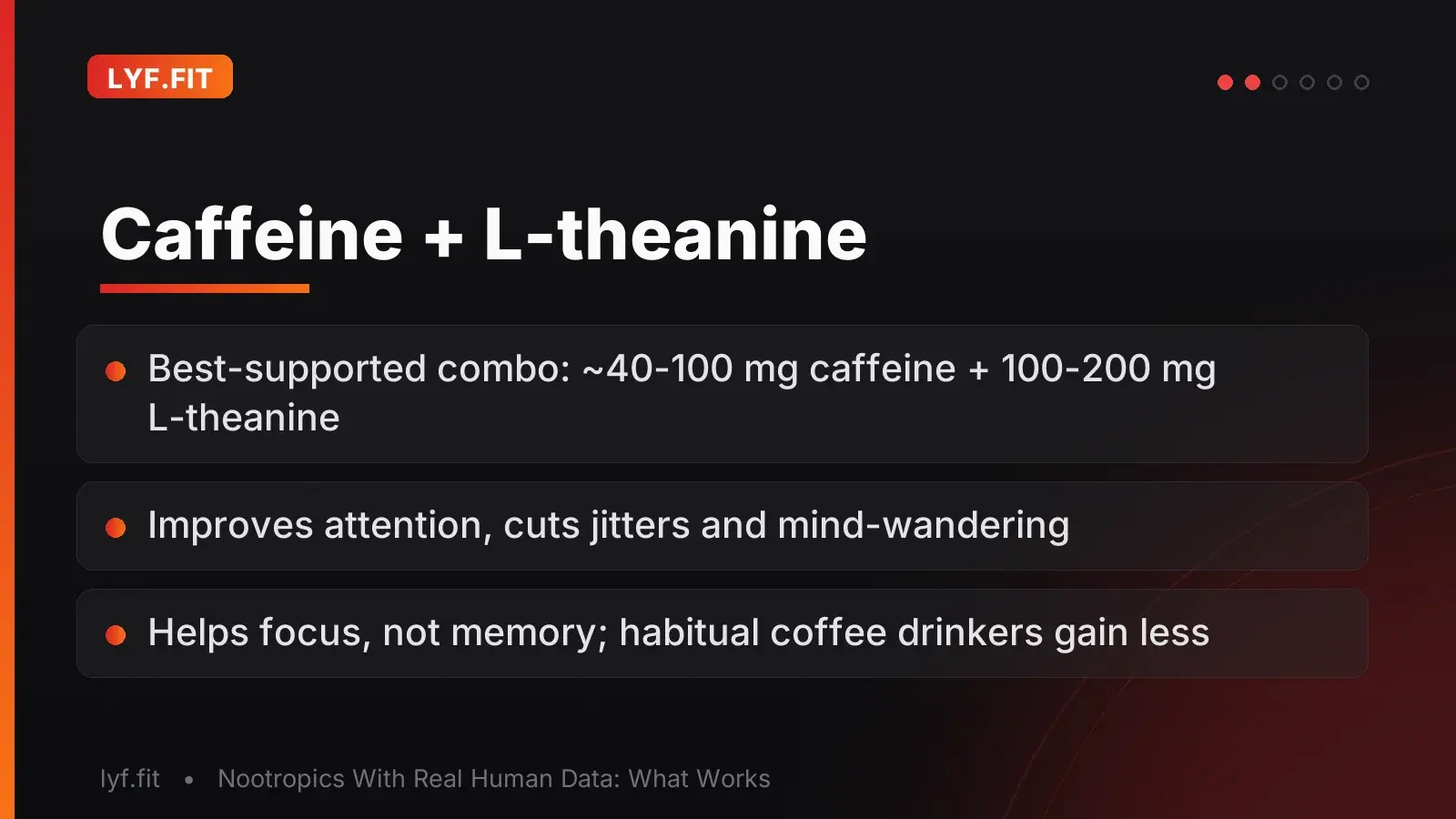
This is the best-supported combination in the category. Caffeine (typically 40–100 mg) delivers alertness; L-theanine (100–200 mg), an amino acid from tea, blunts the jitteriness and blood-pressure bump caffeine alone can cause. A 2022 systematic review found the pairing reliably improves attention and reduces mind-wandering, with effect sizes in the small-to-moderate range. A 2025 double-blind crossover in sleep-deprived young adults reported that a higher-dose combination improved measures of selective attention and suppressed responses to distractors. Both compounds absorb within 30–60 minutes, so the stack is a same-day tool you take before focused work, not something to load for weeks. The catch: benefits concentrate on attention and reaction speed, not memory or reasoning, and habitual coffee drinkers see less from the caffeine half.
Can creatine sharpen a tired brain?
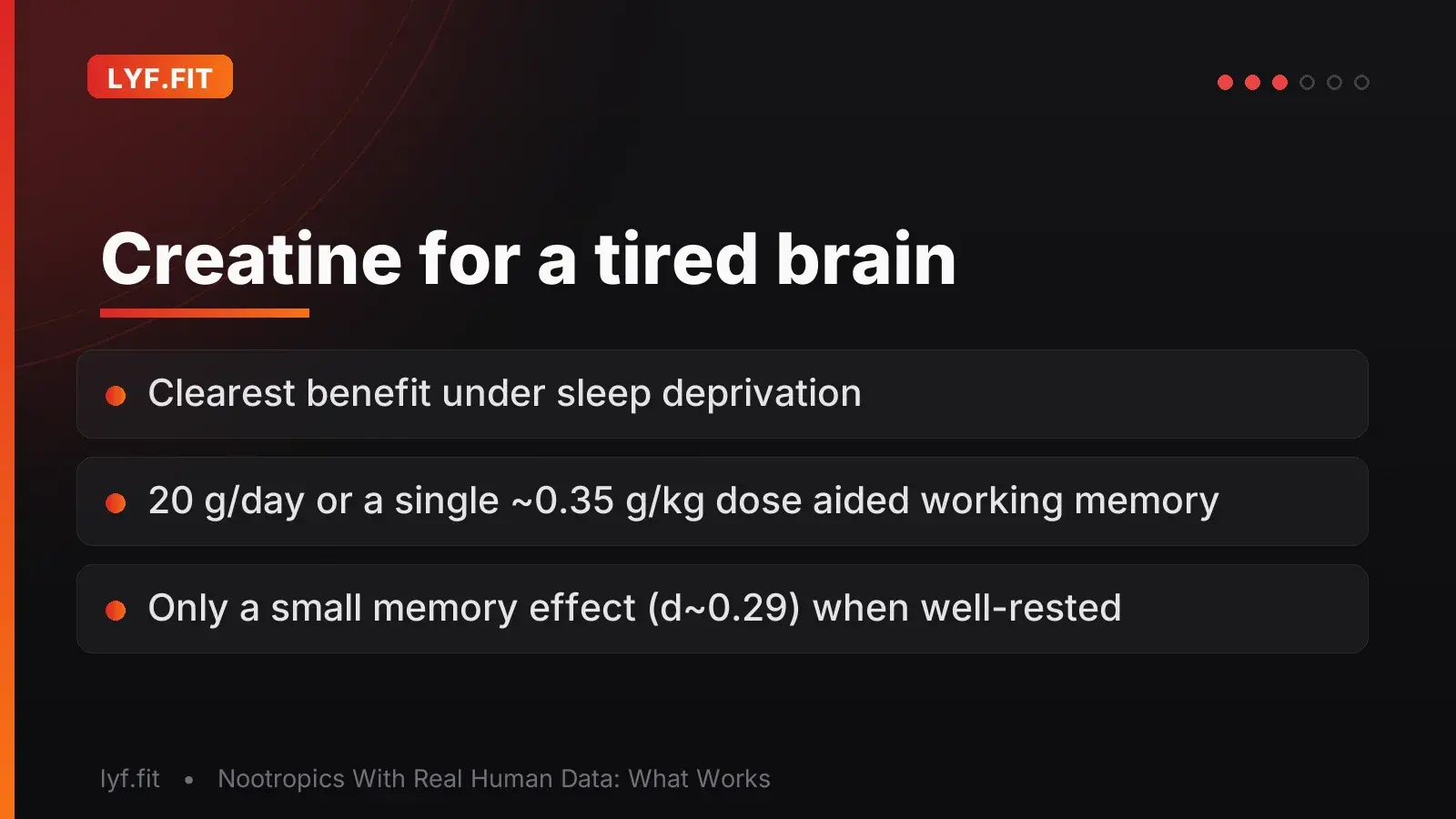
Creatine is the surprise of modern cognition research — but the effect is state-dependent. In broadly healthy adults, a 2024 meta-analysis of 16 RCTs (492 participants) found only a small overall memory benefit — about Cohen's d of 0.29 — concentrated in older adults, and European regulators declined to authorize a broad brain-health claim. Under sleep deprivation, the picture sharpens. One trial gave 20 g/day for 7 days and saw improved working memory after 36 hours awake; a 2024 study using a single high dose (roughly 0.35 g/kg) reported better processing speed and vigilance during sleep deprivation, alongside measurable shifts in the brain's high-energy phosphates. Creatine appears to work by buffering the brain's ATP supply when demand spikes — which is exactly why a rested, fed brain notices little, and why the people with the lowest baseline stores respond most.
What about omega-3s and the aging brain?
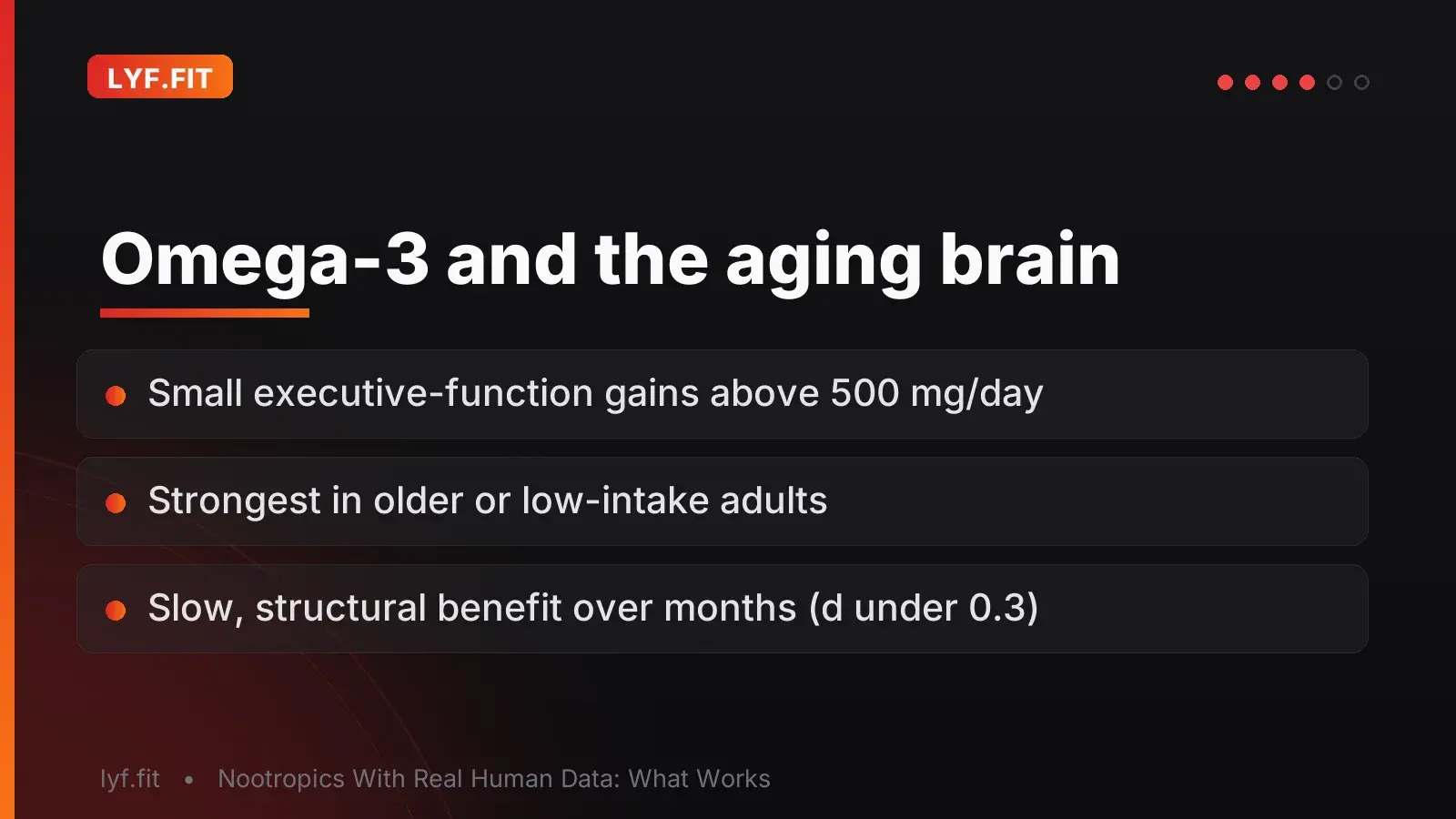
Omega-3 fatty acids (EPA and DHA) are a longevity staple, but their cognitive payoff is modest and population-specific. A dose-response meta-analysis pooling two dozen datasets found a small upward trend in executive function, most apparent within the first 12 months and at intakes above 500 mg/day of total omega-3, with some analyses pointing to an optimal window of roughly 1,000–2,500 mg/day. The signal is strongest in older adults and people who start with low dietary intake; healthy young adults eating fish already show little to gain. Treat omega-3 as a slow, structural nutrient for brain maintenance — not a same-day focus aid. Effect sizes here are small (Cohen's d generally under 0.3), and the certainty of evidence remains low enough that future trials could shift the estimate.
Is L-tyrosine worth taking before stress?
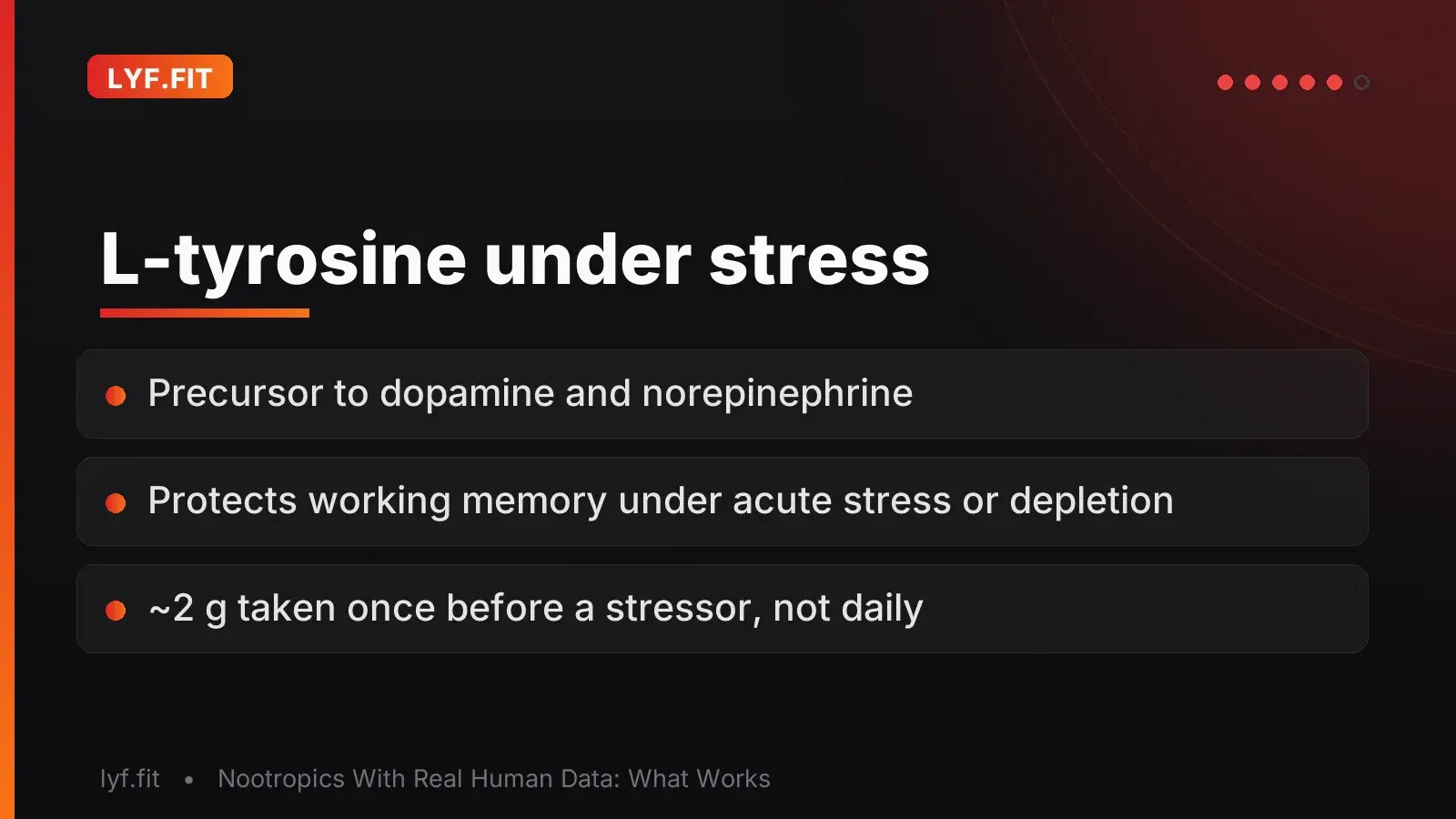
L-tyrosine is a precursor to dopamine and norepinephrine — the catecholamines your brain burns through under acute stress, cold, noise, or sleep loss. Human trials show it can protect working memory and multitasking performance specifically when a stressor depletes those neurotransmitters. A frequently cited multitasking study and more recent stress-exposure trials (including a virtual-reality drill) found fewer errors on demanding tasks with tyrosine versus placebo, though several secondary measures missed significance. The pattern is consistent: benefit under load, nothing in calm baseline conditions, and no evidence it builds a lasting cognitive edge over time. Doses in studies run high — often 100–150 mg/kg, which works out to roughly 7–10 grams for a typical adult, far above the 500–2,000 mg on most supplement labels — and are taken once before the stressor, not daily.
Which nootropics are mostly hype?
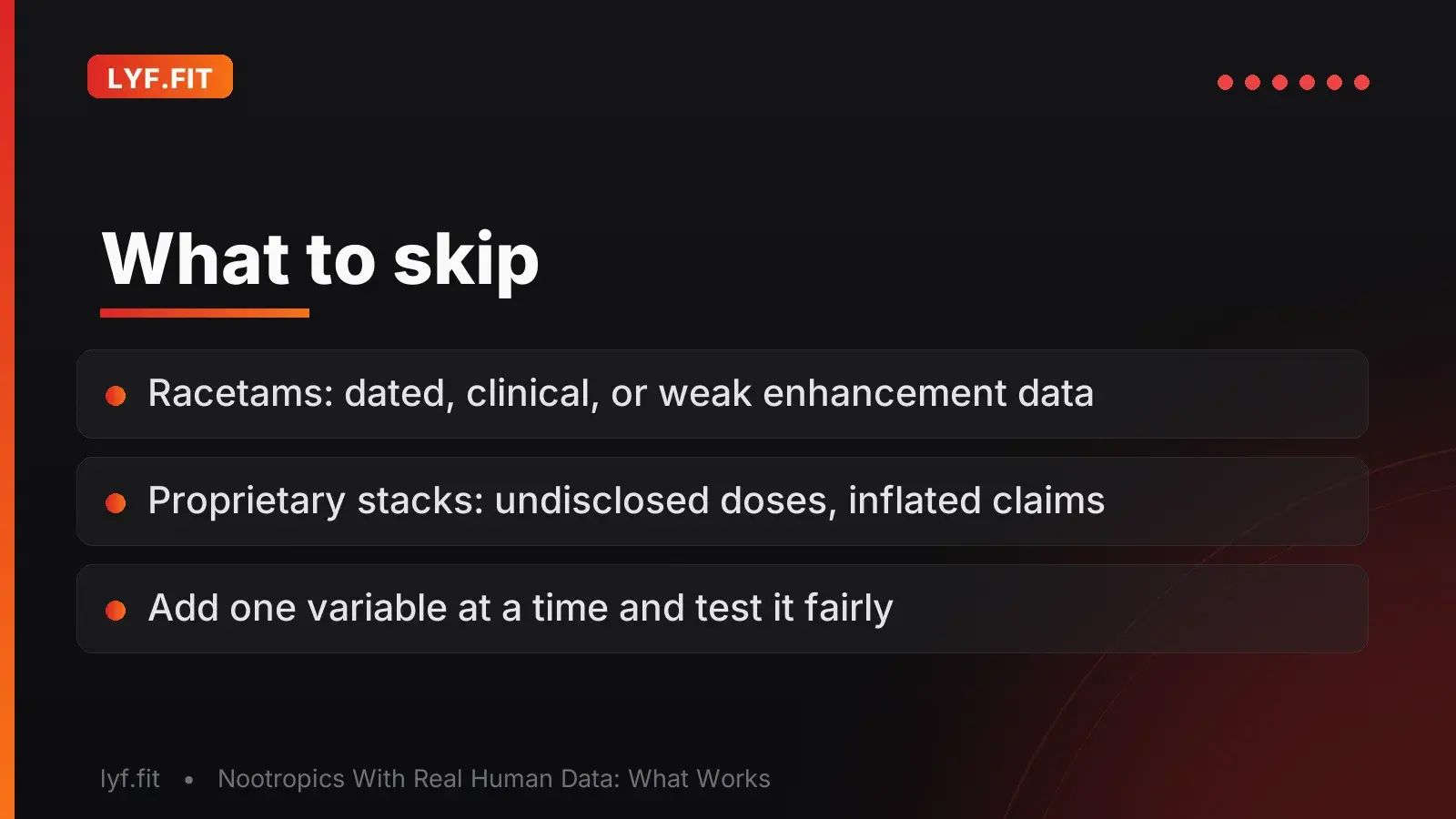
Racetams (piracetam, aniracetam, oxiracetam) dominate the marketing but not the evidence. Most human data is old, small, or focused on clinical cognitive decline rather than healthy enhancement, and none are FDA-approved supplements in the US — they occupy a gray market. Ginkgo biloba is another perennial seller: large trials in older adults have found no reliable prevention of cognitive decline, and its enhancement signal in healthy people is weak at best. "Proprietary blends" are worse still: undisclosed doses, dozens of ingredients riding on one another's reputations, and effect claims that far outrun any trial. The honest summary is that the compounds with the loudest promises tend to have the quietest data.
Test Your Knowledge
1 / 3Which nootropic has the strongest evidence specifically under sleep deprivation?
How do the credible options compare?
Effect sizes below are approximate and drawn from the human literature, not marketing copy.
| Compound | What human data shows | Effect size | Key caveat |
|---|---|---|---|
| Caffeine + L-theanine | Improved attention, less mind-wandering; better focus in sleep-deprived adults | Small–moderate | Habitual coffee drinkers gain less; helps attention, not memory |
| Creatine | Better working memory & processing speed under sleep deprivation | Small in rested people; moderate under stress | Little benefit when well-rested; needs consistent daily dosing |
| Omega-3 (EPA/DHA) | Small executive-function gains, mainly in older/low-intake adults | Small (d < 0.3) | Slow effect over months; minimal in healthy young eaters |
| L-tyrosine | Protects working memory under acute stress or depletion | Situational, moderate under load | No benefit at calm baseline; taken acutely, not daily |
| Racetams (piracetam, etc.) | Mostly clinical-decline or dated data; weak enhancement signal | Unclear in healthy adults | Not FDA-approved supplements in the US; gray-market |
| Proprietary "stacks" | Little independent trial evidence | Unquantified | Undisclosed doses; claims outrun data |
Notice the pattern: the compounds that work do so within narrow, defensible windows — a stimulant smoothed, a stressed brain buffered, an aging brain slowly maintained. None of them delivers the flat, all-day cognitive upgrade the category's marketing implies, and the two with real staying power — creatine and omega-3 — earn their place as much through general health as through any acute focus effect. Before adding anything, check interactions and confirm it fits your own goals rather than a headline, and talk to a physician if you take medications or have a health condition. You can look up any compound's dosing notes and study grade in our tools.
Interactive Tools
Save these contextual tools to your profile for quick access.
Frequently asked questions
Modafinil is a prescription wakefulness medication, not a supplement, and it does improve some cognitive measures in sleep-deprived people. But it's regulated for specific medical conditions, carries real side effects and interactions, and using it off-label for productivity is a medical decision for a physician — not something to self-prescribe.
It depends on the mechanism. Caffeine + L-theanine and L-tyrosine act within an hour, so you can test them on a demanding day. Creatine needs consistent daily dosing to saturate tissue, and omega-3's cognitive signal builds over months. Judge acute tools on the day; judge structural nutrients over 8–12 weeks.
Not necessarily. The only well-tested "stack" is caffeine plus L-theanine. Combining many compounds makes it impossible to know what's helping, multiplies interaction risk, and is exactly how proprietary blends hide weak dosing. Add one variable at a time and give it a fair trial before layering another.
Yes, even the well-supported ones. Caffeine can raise anxiety and disrupt sleep; creatine may cause minor water retention or GI upset in some people; high-dose tyrosine and omega-3 can cause stomach discomfort. None of these compounds should be framed as risk-free, and none treat or prevent disease.
The evidence-based nootropic list is short, its effect sizes are honest and modest, and its wins come from matching the right compound to the right situation — a tired brain, a stressful task, a low-omega-3 diet. Skip the "limitless" promises and start with what has human trials behind it. Use our supplements database to check dosing and study grades, and the glossary to decode any term before you buy.
Stop completely guessing.
Use our interactive PWA tools to calculate your exact macros, 1RM, and running pace offline.