

Disclaimer: Some of the links on this page are affiliate links. As an Amazon Associate and affiliate for other networks, we may earn a commission from qualifying purchases at no additional cost to you.
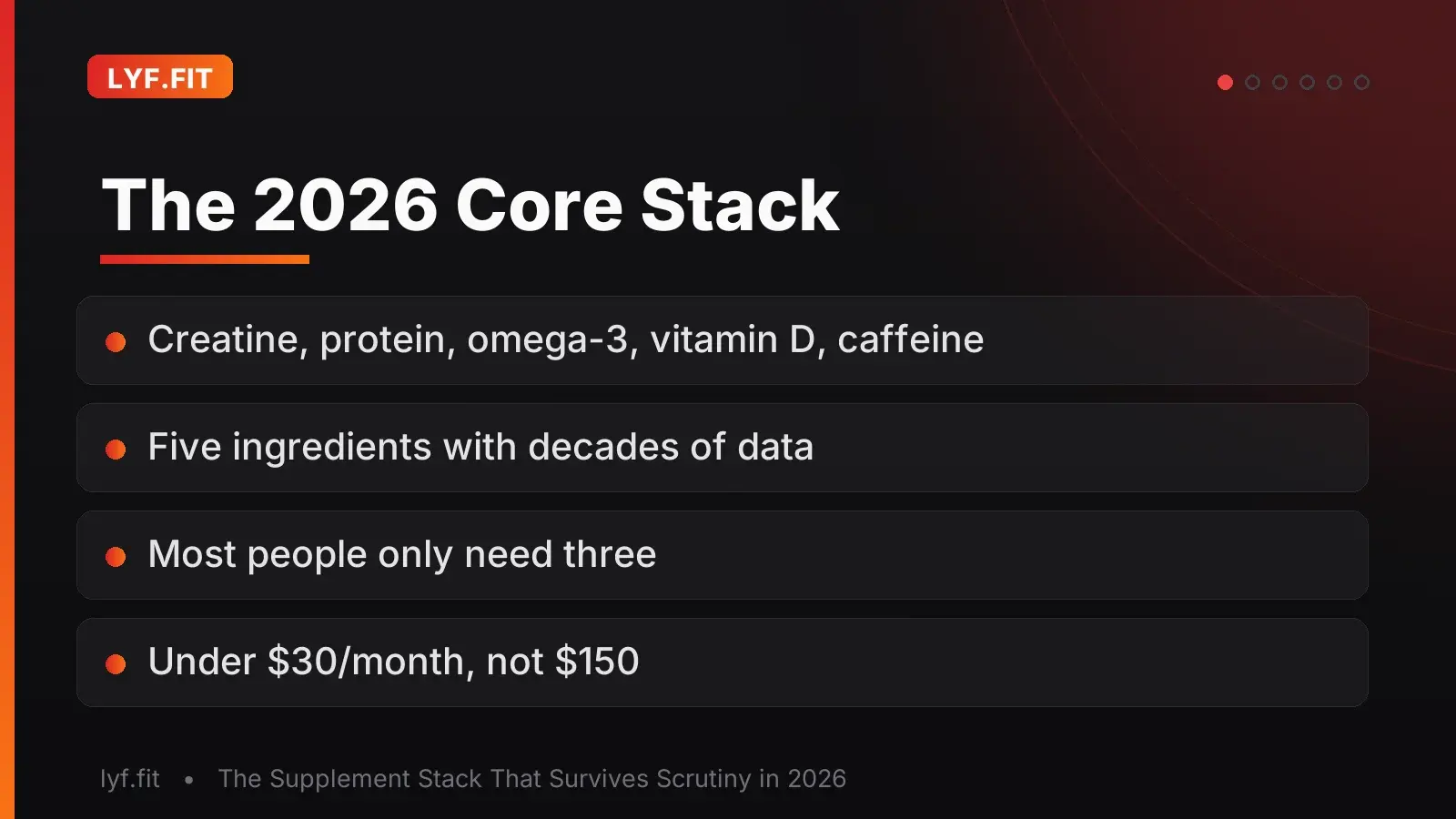
Five supplements survive rigorous scrutiny in 2026, and most people only need three of them. The short list is creatine monohydrate, a protein supplement to close a dietary gap, omega-3 fatty acids, vitamin D if you are actually deficient, and caffeine before training. Everything else in the average $80 tub is either redundant, dose-dependent on a deficiency you probably do not have, or backed by effect sizes too small to feel.
The problem with supplement marketing is not that products fail to "work" — it is that they oversell tiny effects and hide the fact that most benefit comes from covering nutritional gaps you could close with food. This guide grades each item by evidence quality, tells you what it actually does at the cellular level, and — just as important — names who genuinely needs it versus who is buying expensive urine.
Why does most of your supplement shelf fail scrutiny?
The honest filter is simple: strong evidence, a plausible mechanism, and a meaningful effect size in people who eat a normal diet. Most products fail on the third criterion. A compound can show a "statistically significant" result and still move performance by less than 1% — real, but imperceptible in your training log.
The supplement industry is projected to exceed $200 billion globally, and the vast majority of that revenue comes from products with weak or deficiency-dependent evidence. Creatine, by contrast, has been studied in more than 1,000 trials over 30-plus years. When a molecule that cheap survives that much scrutiny, it tells you the winners are boring — and the exciting new powder usually is not one of them.
What is the core stack that actually holds up?
The defensible core is five ingredients, and each earns its place through mechanism plus replicated human data, not marketing. Creatine monohydrate raises intramuscular phosphocreatine, letting you regenerate ATP faster during hard efforts. Protein supplies the amino acids that drive muscle protein synthesis. Omega-3s (EPA and DHA) are structural fats your cell membranes and cardiovascular system use directly. Vitamin D acts as a pro-hormone regulating hundreds of genes. Caffeine blocks adenosine receptors to blunt perceived effort.
Notice what unites them: all five have decades of data, dirt-cheap generic versions, and clear biological roles. None depends on a proprietary blend or a patented delivery system. The premium is almost always paid for marketing, not molecules.
How strong is the evidence for creatine and protein?
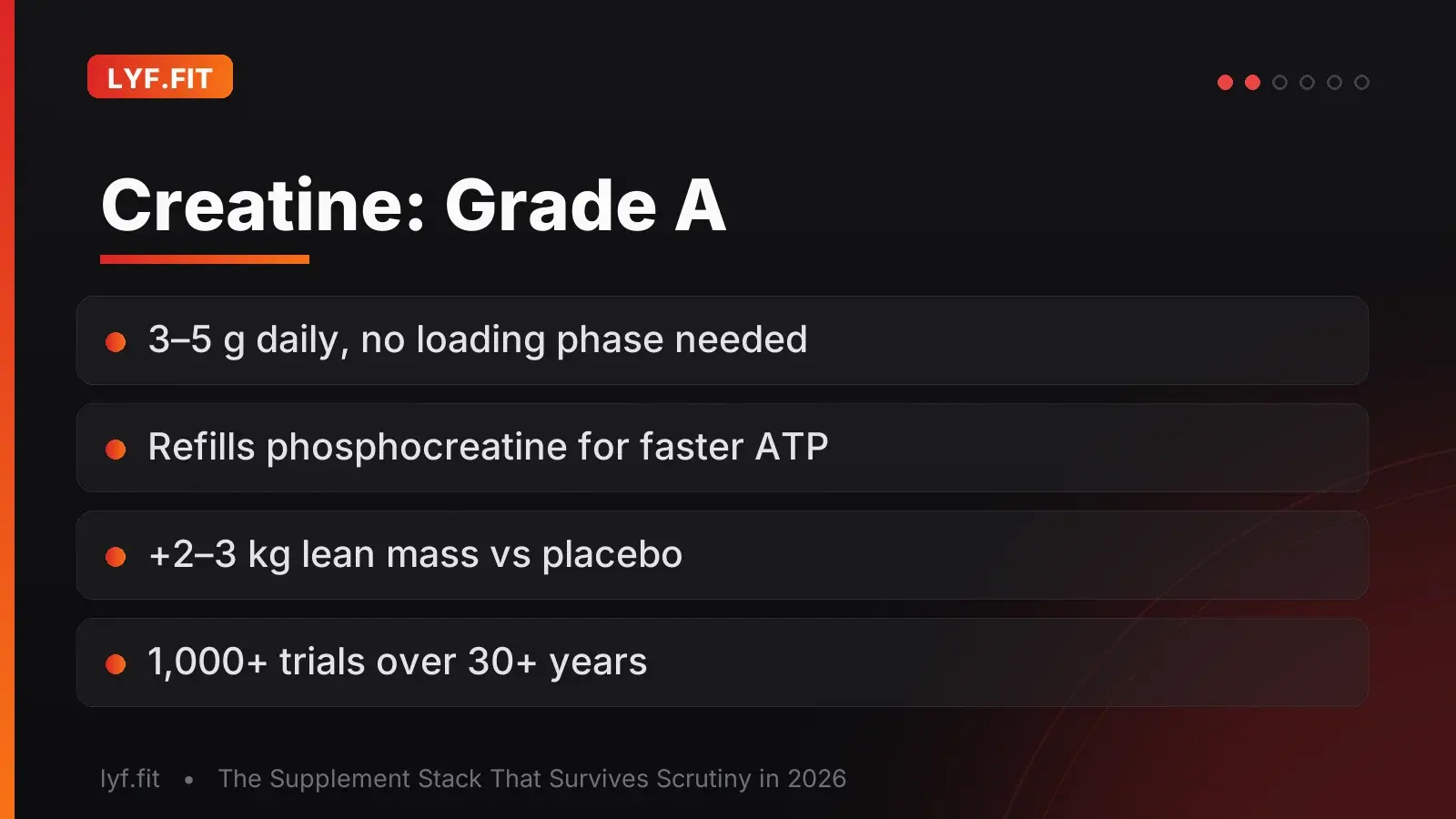
These two anchor the stack. Creatine monohydrate at 3–5 g per day is arguably the most validated performance supplement in existence: meta-analyses pooling resistance-training studies show it adds roughly 2–3 kg of lean mass and measurably more strength than placebo over 6–12 weeks. In older adults, one review found creatine plus training produced about 3.0 kg of lean-tissue gain versus 0.5 kg for placebo. No loading phase is required — a flat daily dose saturates muscle in three to four weeks.
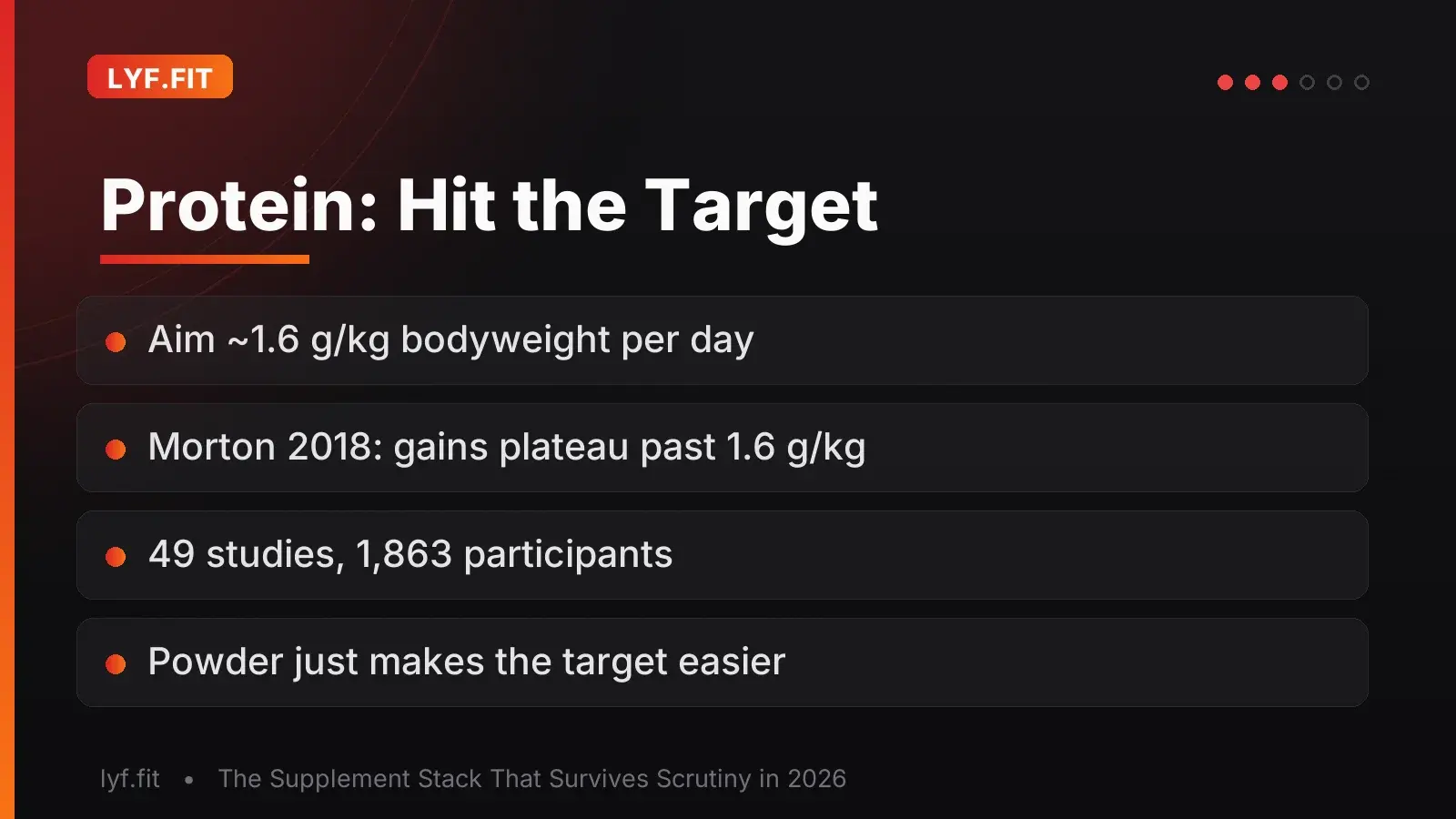
Protein is about hitting a daily target, not a magic powder. The landmark 2018 Morton meta-analysis of 49 studies and 1,863 participants found muscle gains kept rising until roughly 1.6 g per kg of bodyweight per day, then flattened. A shaker of whey simply makes that target easier to hit; food does the same job.
Do omega-3, vitamin D, and caffeine earn their spots?
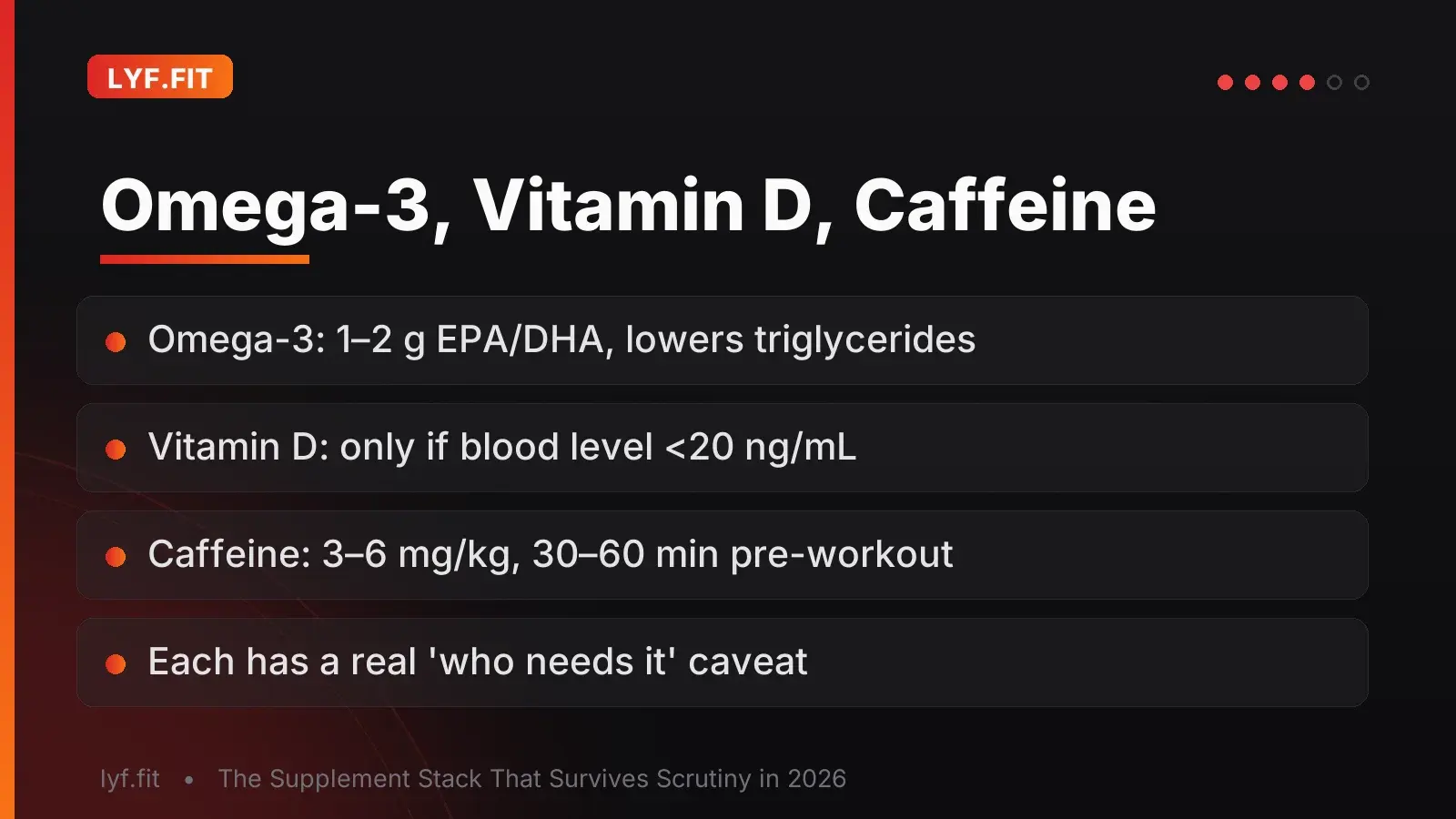
Yes — but with sharper "who needs it" caveats than creatine or protein. Omega-3s (target 1–2 g combined EPA/DHA daily) reliably lower triglycerides, with meta-analyses showing meaningful reductions at doses above 2 g per day; the American Heart Association notes 4 g of prescription-grade omega-3s can lower triglycerides substantially. If you eat fatty fish twice a week, a supplement adds little.
Vitamin D only helps if you are deficient — roughly a blood level under 20 ng/mL, which is common in northern winters. Supplementing a replete person does essentially nothing for performance, so test first; 1,000–2,000 IU daily corrects most deficiencies.
Caffeine is the reliable pre-workout stimulant. At 3–6 mg/kg taken 30–60 minutes before training it produces small but real gains in strength, power, and endurance across dozens of trials — effect sizes around 0.2–0.4.
Which popular supplements should you drop?
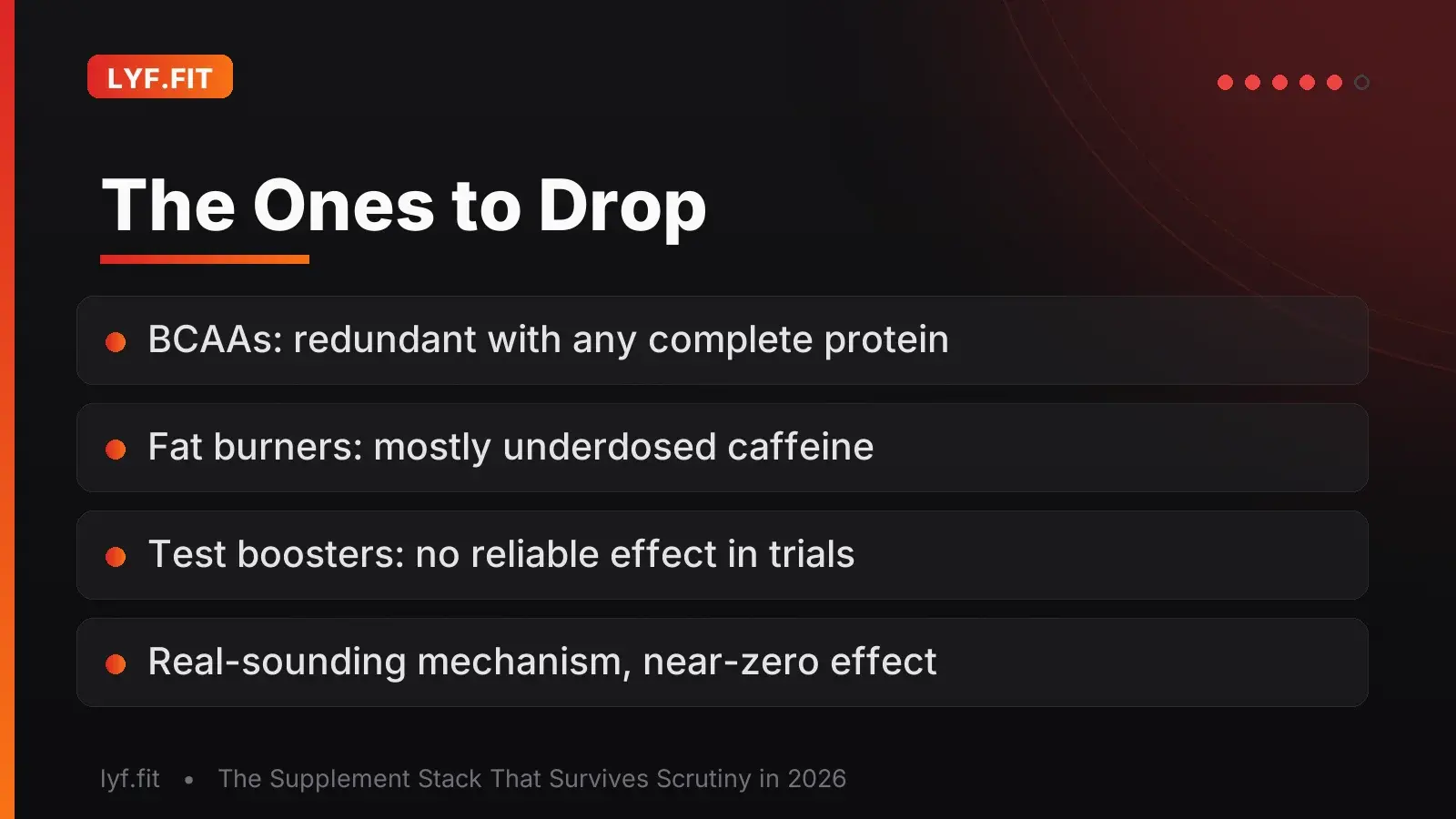
Three categories dominate marketing while failing scrutiny. BCAAs are the clearest waste: branched-chain amino acids are already present in any complete protein, and studies consistently show whole protein (or full essential amino acids) outperforms isolated BCAAs for muscle protein synthesis. If you hit your protein target, BCAAs add nothing.
Fat burners rely on stimulants plus a long list of underdosed botanicals; the thermogenic effect is trivial and often just the caffeine you could take for pennies. Testosterone boosters — tribulus, D-aspartic acid, most "natural" blends — repeatedly fail to raise testosterone or performance in controlled trials in men with normal levels. The mechanism sounds plausible; the human data does not follow.
The pattern: each sells a real-sounding mechanism while the effect size in practice rounds to zero.
How do the winners and losers compare head-to-head?
The table below grades each supplement on evidence quality, real mechanism, and — the deciding column — who actually benefits. "Grade A" means multiple high-quality meta-analyses with meaningful effects; "F" means repeated failures or effects indistinguishable from placebo.
| Supplement | Evidence grade | What it actually does | Who needs it |
|---|---|---|---|
| Creatine monohydrate (3–5 g/day) | A | Refills phosphocreatine for faster ATP regeneration; +2–3 kg lean mass | Anyone training for strength or size; aging adults |
| Protein powder (to reach ~1.6 g/kg) | A | Supplies amino acids for muscle protein synthesis | Anyone short of their daily protein target |
| Omega-3 EPA/DHA (1–2 g/day) | B+ | Structural membrane fats; lowers triglycerides | Low fish eaters; elevated triglycerides |
| Vitamin D (1,000–2,000 IU) | B (if deficient) | Pro-hormone regulating bone, immune, muscle genes | Confirmed-deficient people (blood <20 ng/mL) |
| Caffeine (3–6 mg/kg pre-workout) | A− | Blocks adenosine; cuts perceived effort | Anyone wanting an acute training boost |
| BCAAs | D | Redundant with any complete protein | Essentially no one hitting protein goals |
| Fat burners | F | Mostly caffeine plus underdosed botanicals | No one |
| Testosterone boosters | F | No reliable effect on T or performance | No one with normal testosterone |
Test Your Knowledge
1 / 4What daily creatine dose saturates muscle without a loading phase?
How should you actually build and dose the stack?
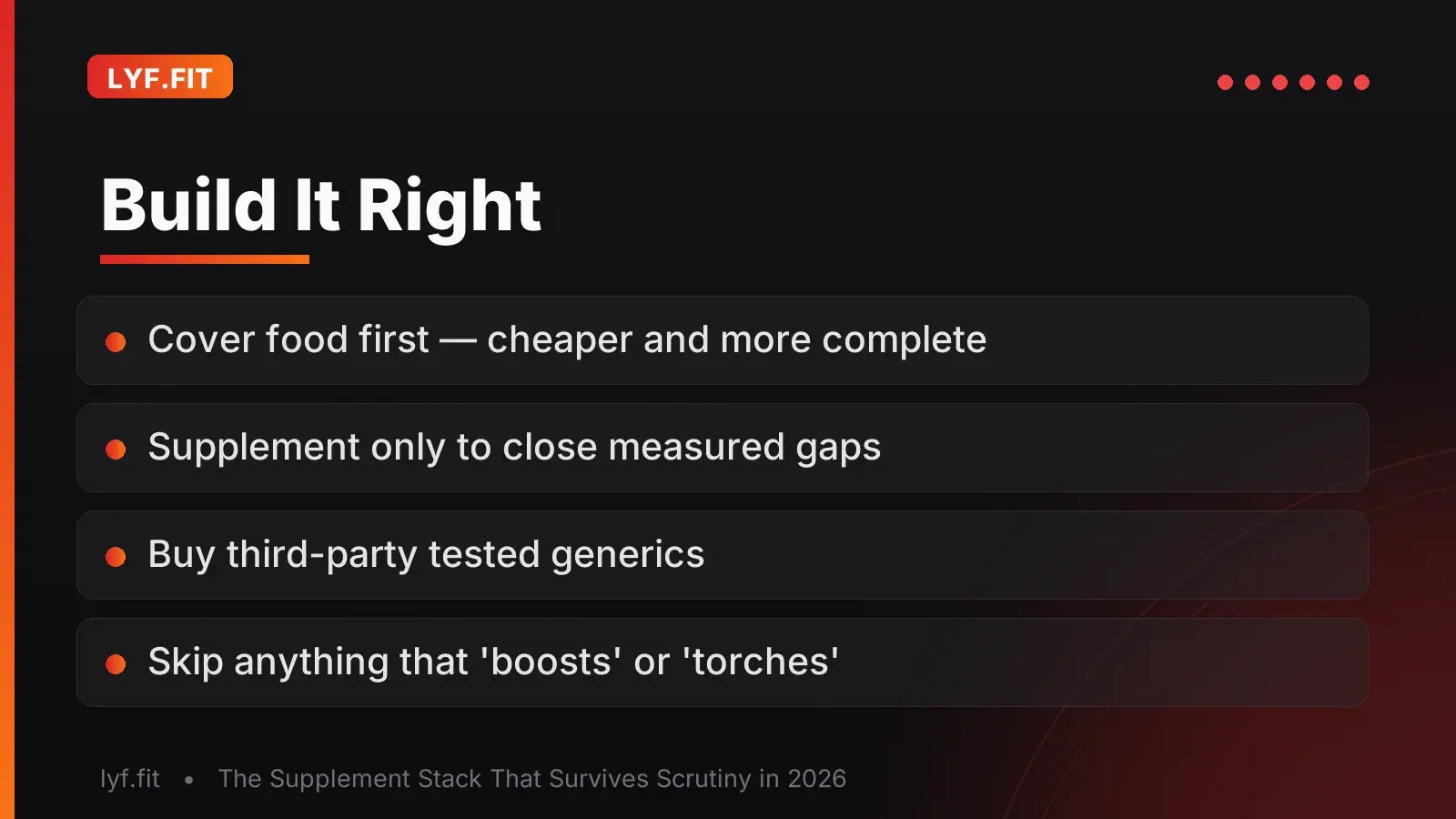
Start by covering food first — protein and omega-3 targets are often reachable through diet alone, which is cheaper and comes with fiber, micronutrients, and satiety. Use a supplement only to close the remaining gap. Calculate your protein target from bodyweight (roughly 1.6 g/kg for active lifters) and track it for a week before assuming you need powder.
Then layer in the non-negotiables: creatine 3–5 g daily at any time, caffeine 3–6 mg/kg before hard sessions if you tolerate it. Add vitamin D only after a blood test confirms a low level. Skip anything promising to "boost" a hormone or "torch" fat — those claims are the tell. A defensible 2026 stack costs under $30 a month, not $150.
Interactive Tools
Save these contextual tools to your profile for quick access.
TDEE & Macro Calculator
Calculate your Total Daily Energy Expenditure and get custom macronutrient targets for your goals.
Frequently asked questions
Creatine monohydrate has one of the deepest safety records of any sports supplement, with studies spanning years at 3–5 g per day showing no harm to kidney or liver function in healthy people. The old "kidney damage" concern came from misreading creatinine markers, not actual injury. Anyone with existing kidney disease should clear it with their physician first, but for healthy adults daily use is well supported.
No. Loading (about 20 g daily for a week) saturates muscle faster but offers no long-term advantage and often causes bloating or GI upset. A steady 3–5 g per day reaches full saturation in three to four weeks with fewer side effects, which is why most 2026 guidance skips loading entirely.
Largely, yes — and that is the point. Protein targets, omega-3s from fatty fish, and vitamin D from sun and fortified foods can all be met through diet for many people. Creatine is the main exception: dietary sources (red meat, fish) provide only about 1–2 g per day, so a supplement is the practical way to reach a saturating dose. Use supplements to fill measured gaps, not to replace a decent diet.
Almost never. The active molecule in creatine monohydrate, whey isolate, or fish oil is identical regardless of the label; you are paying for marketing, flavoring, and packaging. Look for third-party testing (NSF Certified for Sport or Informed Sport) for purity assurance, then buy the cheapest version that carries it.
The supplement stack that survives scrutiny in 2026 is short, cheap, and unglamorous — creatine, protein to hit your target, omega-3s, vitamin D if you are deficient, and caffeine. Skip the BCAAs, fat burners, and testosterone boosters that dominate the marketing but not the data. Run your numbers first: use the macro diary to see whether you even need protein powder, and the TDEE calculator to anchor your intake targets before you spend a dollar on a tub.
Stop completely guessing.
Use our interactive PWA tools to calculate your exact macros, 1RM, and running pace offline.