
Disclaimer: Some of the links on this page are affiliate links. As an Amazon Associate and affiliate for other networks, we may earn a commission from qualifying purchases at no additional cost to you.
When you are 22 years old, your body is effectively made of rubber. You can sleep four hours, eat pizza for breakfast, walk into the gym with zero warm-up, deadlift 400 pounds, and feel perfectly fine the next morning.
If you attempt that exact sequence at age 45, you will likely spend the next month visiting physical therapists.
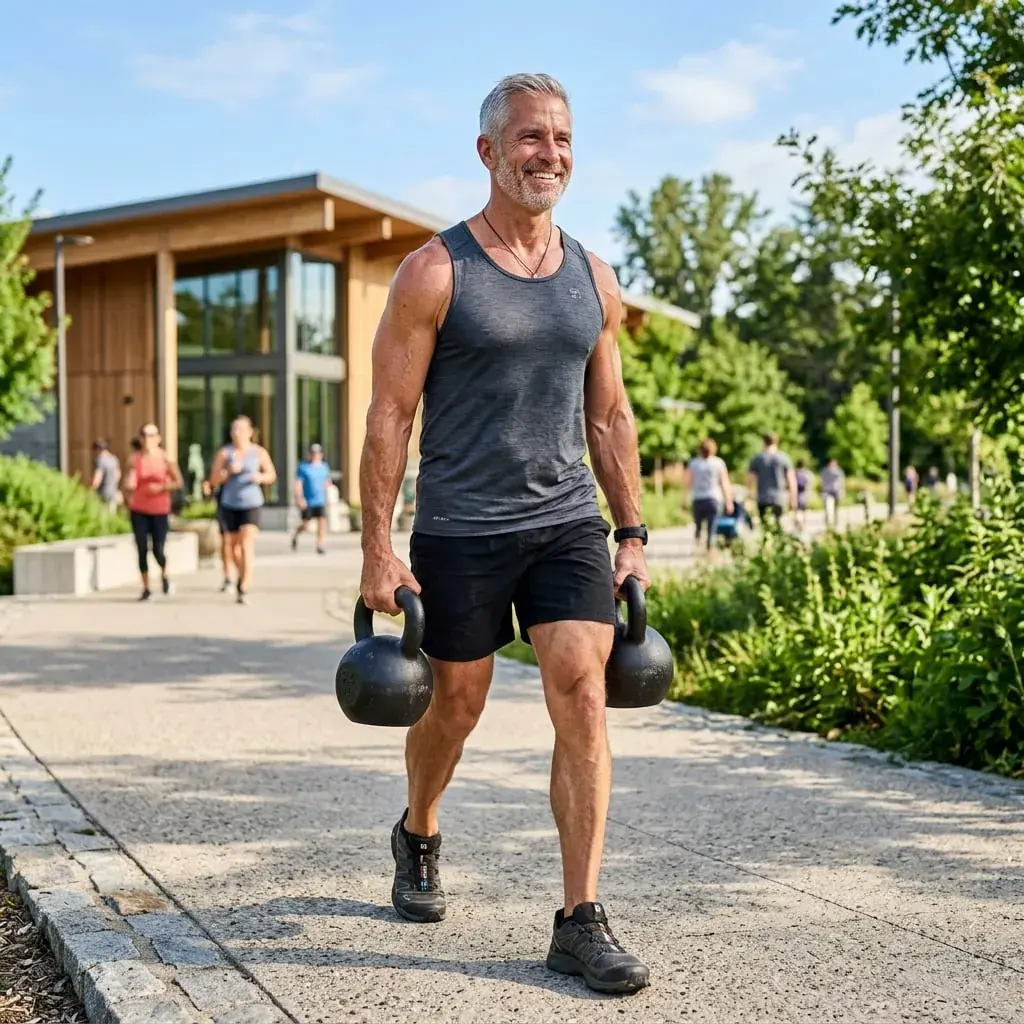
Aging induces undeniable biochemical shifts: decreases in natural testosterone, reduced collagen synthesis, and diminished Type II (fast-twitch) muscle fiber retention. However, chronological age is not a death sentence for your fitness. You can absolutely build muscle, set PRs, and drastically improve your body composition well into your 60s and 70s. The key is shifting the goalposts from "maximum intensity" to "maximum longevity."
1. Prioritize Sarcopenia Prevention
Sarcopenia is the involuntary, age-related loss of skeletal muscle mass and strength, accelerating sharply after age 50. It is the primary reason why elderly individuals suffer catastrophic falls.
Cardio is fantastic for cardiac health, but jogging alone will not stop sarcopenia. You must lift weights. Resistance training provides the mechanical tension required to signal the body to retain muscle tissue. (Read more in Understanding Hypertrophy).
You do not need to max out on the squat rack. Utilizing moderate weights in the 8-to-15 rep range is immensely effective. A structured regimen from our Program Templates is the best defense against aging in existence.
2. Shift Focus to Joint Health
As we age, cartilage thins and tendons lose elasticity. The days of skipping your warm-up are over.
- Dynamic Warm-Ups: Before touching a weight, spend 5-10 minutes elevating your core temperature and lubricating your joints. Ensure you use our Mobility Routine Generator targeting your stiffest joints (often the hips or thoracic spine).
- Tempo Training: Rather than bouncing weight out of the bottom of a lift—which places massive sheer force on tendons—slow down. Use a 3-second negative (eccentric) portion of the lift. It forces the muscle to do the work rather than relying on connective tissue rebound.
- Embrace Machines: Free weights are phenomenal, but if barbells cause you severe lower back or shoulder pain, swap to machines. Leg presses, hack squats, and chest presses stabilize the body and isolate the muscle safely. (See: Training Around Injuries).
3. Protein Becomes Even More Critical
A highly documented phenomenon known as Anabolic Resistance occurs as we age. In your 20s, a meal with 20g of protein might be enough to maximize Muscle Protein Synthesis (MPS). By your 50s, the body's machinery becomes less sensitive to the amino acid Leucine, meaning you may require 30g to 40g of protein in a single meal to generate the exact same growth response.
Older populations systematically undereat protein. You must proactively track your intake. Calculate your needs using our TDEE Calculator and track it relentlessly using the Macro Diary.
4. Respect the Recovery Debt
Your central nervous system and immune system cannot clear fatigue as rapidly as they once did. (Read: The Science of Rest).
If you used to train 6 days a week, drop it to 3 or 4 days. Interleave your heavy lifting sessions with active recovery days (walking, swimming, or cycling). Furthermore, sleep hygienic practices become non-negotiable.
Adapt your program, park your ego at the door, and focus on the metrics that actually matter: blood pressure, bone density, lean mass retention, and pain-free mobility.
Interactive Tools
Save these contextual tools to your profile for quick access.
Mobility Routine Generator
Select a tight muscle group and instantly generate a 5-minute stretching routine to relieve tightness and improve range of motion.
Stop completely guessing.
Use our interactive PWA tools to calculate your exact macros, 1RM, and running pace offline.