
Disclaimer: Some of the links on this page are affiliate links. As an Amazon Associate and affiliate for other networks, we may earn a commission from qualifying purchases at no additional cost to you.
Sustainable macro tracking comes down to three moves: log meals before you eat them instead of reconstructing the day at 9 PM, judge yourself on the weekly average instead of any single day, and when precision gets exhausting, track only protein and total calories. That's enough accuracy for nearly every goal short of a bodybuilding stage — and it's a system you can run for years without a food scale at restaurants.
Tracking matters because intuition is provably bad at this: in a classic 1992 New England Journal of Medicine study, dieters who "couldn't lose weight" underreported their food intake by an average of 47% and overreported exercise by 51%. Macros — protein, carbs, fat — are just a structured way to close that gap between what you think you eat and what you eat.
Which tracking style actually fits your life?
Precision costs effort, and the right trade-off depends on your goal:
| Style | Effort | Accuracy | Best for |
|---|---|---|---|
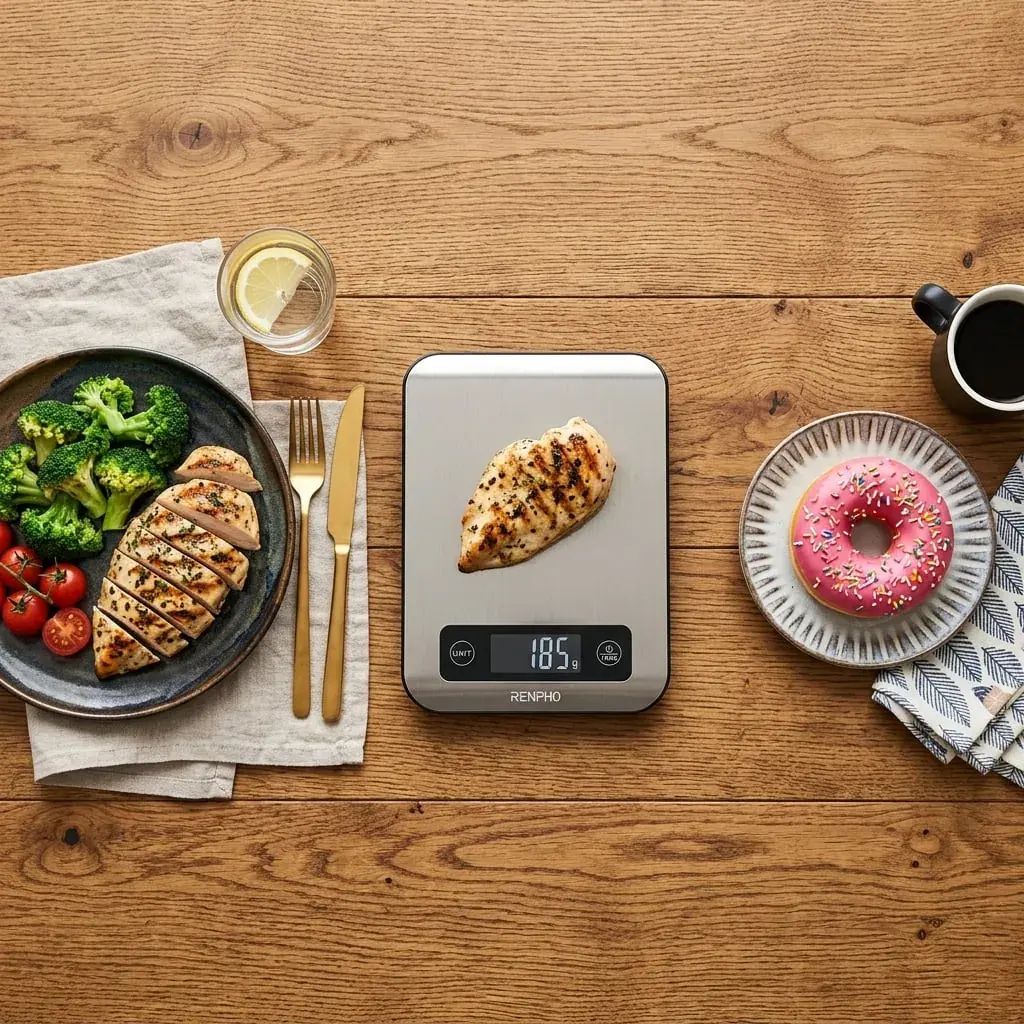
| Weigh everything | High | Highest | Contest prep, short diagnostic phases |
| Log by servings/labels | Medium | Good | Active fat-loss or muscle-gain phases |
| Protein + calories only | Low | Good enough | Most people, most of the year |
| Hand portions (palm/fist/thumb) | Minimal | Rough | Maintenance, travel, restaurants |
Notice that the levels are interchangeable week to week. Weigh food for two calibration weeks, then coast on serving-based logging with a trained eye. Rigid people quit; flexible people keep going — the philosophy behind flexible dieting.
Why should you log meals before you eat them?
Logging after the fact turns every evening into macro Tetris: 60 g of protein left, 2 g of fat, and nothing in the kitchen fits. Pre-logging inverts the game. Enter dinner and lunch in the morning (or the night before), see what's left, and build breakfast and snacks into the remainder.
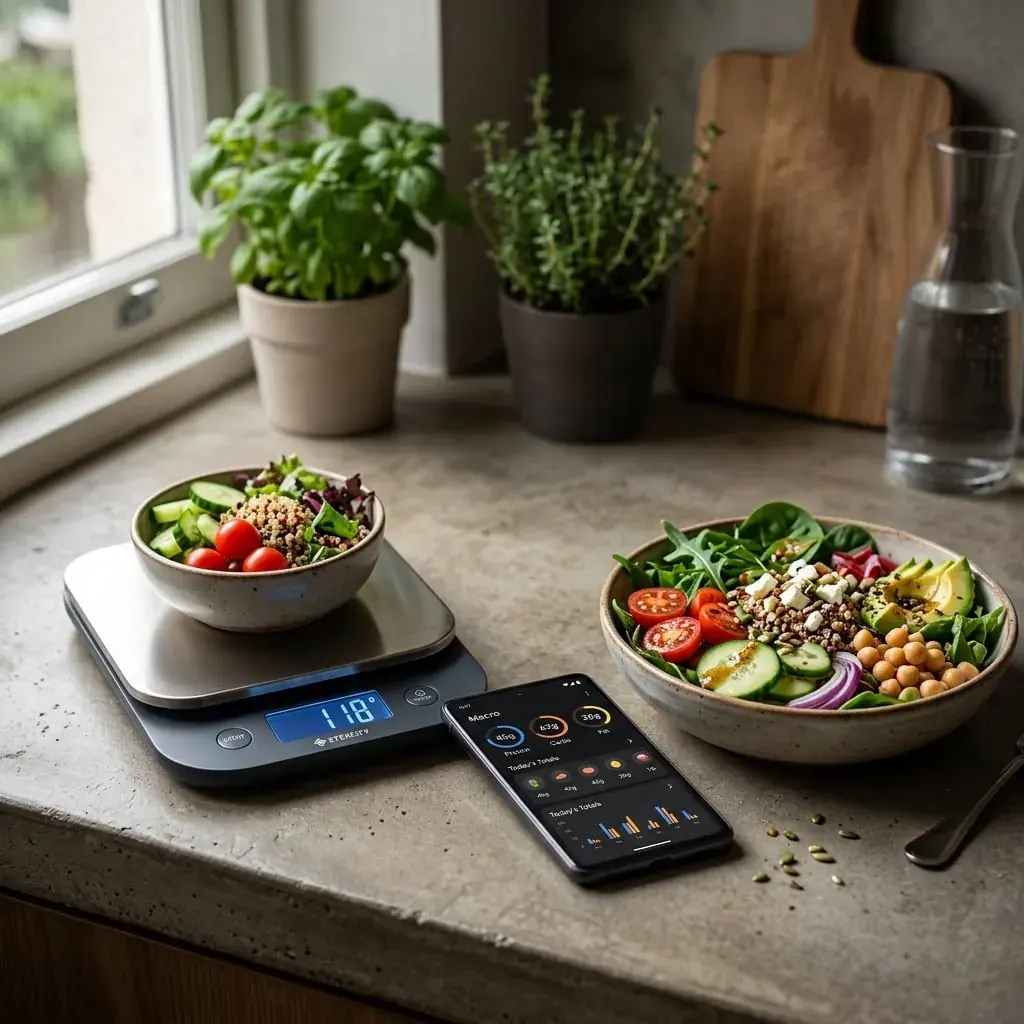
The macro diary is built for this loop: a searchable common-foods database with a servings multiplier, one-tap re-add for your regular foods, and editable entries — so when dinner changes, you revise the plan in two taps instead of starting over. Set your targets first with the TDEE & macro calculator, which can hand its numbers straight to the diary.
Does going over on one day ruin your progress?
No — your body doesn't reset at midnight. Energy balance plays out over days and weeks, so a 2,500-calorie daily target is really a 17,500-calorie weekly budget. Going 300 over on Saturday isn't failure; it's a rounding item you can absorb with ~100 fewer calories across Sunday–Tuesday, or simply ignore if the weekly average holds.
This reframe kills the most destructive pattern in dieting: the "blown it anyway" spiral, where one unplanned burger becomes a 3,000-calorie evening. One meal is ~5% of your week. Log it honestly, note the real exercise cost of a blowout if you're curious, and return to normal at the very next meal — not Monday.
What's the minimum effective version of tracking?
If full tracking feels overwhelming, run the simplified stack:
- Get your calorie target from the TDEE calculator.
- Set protein at roughly 0.7–1 g per pound of body weight (grams stay metric per dosing convention: ~1.6–2.2 g/kg).
- Hit protein, stay under calories. Let carbs and fats land wherever they land — at equal calories and protein, research finds little fat-loss difference between high-carb and high-fat splits.
- Estimate restaurants generously. Find the closest chain equivalent and add a ~20% buffer; restaurant cooking runs heavier on oil and butter than menus suggest. A rough log beats a blank day, every time.
Sanity-Check Your Tracking
1 / 4In the classic 1992 NEJM study, by how much did dieters underreport their calorie intake?
Interactive Tools
Save these contextual tools to your profile for quick access.
TDEE & Macro Calculator
Calculate your Total Daily Energy Expenditure and get custom macronutrient targets for your goals.
Frequently asked questions
No — think of tracking as calibration, not a life sentence. Most people get the biggest returns from 8–12 focused weeks: you learn what 30 g of protein looks like, what your regular meals actually contain, and how portions map to outcomes. After that, many maintain with hand portions and a weekly weigh-in, re-tracking only when progress stalls.
It's worth watching loosely. Guidelines suggest ~25–38 g/day, most people get under 20 g, and fiber strongly affects satiety — which makes every other target easier. The macro diary tracks fiber alongside the big three; our fibermaxxing guide covers how to raise it without GI drama.
Alcohol carries 7 calories per gram (nearly fat's 9) and most trackers hide it inside carbs. Easiest honest method: log drinks as pure calories against your daily total — a 5-oz glass of wine ≈ 125 kcal, a pint of beer ≈ 150–200. Precision matters less than not letting drinks vanish from the ledger.
It can be — for some people, numbers amplify anxiety rather than awareness. If logging triggers obsessive checking or guilt spirals, use structure-based approaches instead (hand portions, consistent meal templates, component meal prep) and consider talking to a registered dietitian. Tools should reduce stress, not create it.
Macro tracking is a GPS, not a judge: a wrong turn just means recalculating. Pre-log your day, grade yourself on the week, and when life gets busy, fall back to protein-plus-calories. Set your targets with the TDEE calculator and run the plan in the macro diary.
Stop completely guessing.
Use our interactive PWA tools to calculate your exact macros, 1RM, and running pace offline.