
Disclaimer: Some of the links on this page are affiliate links. As an Amazon Associate and affiliate for other networks, we may earn a commission from qualifying purchases at no additional cost to you.
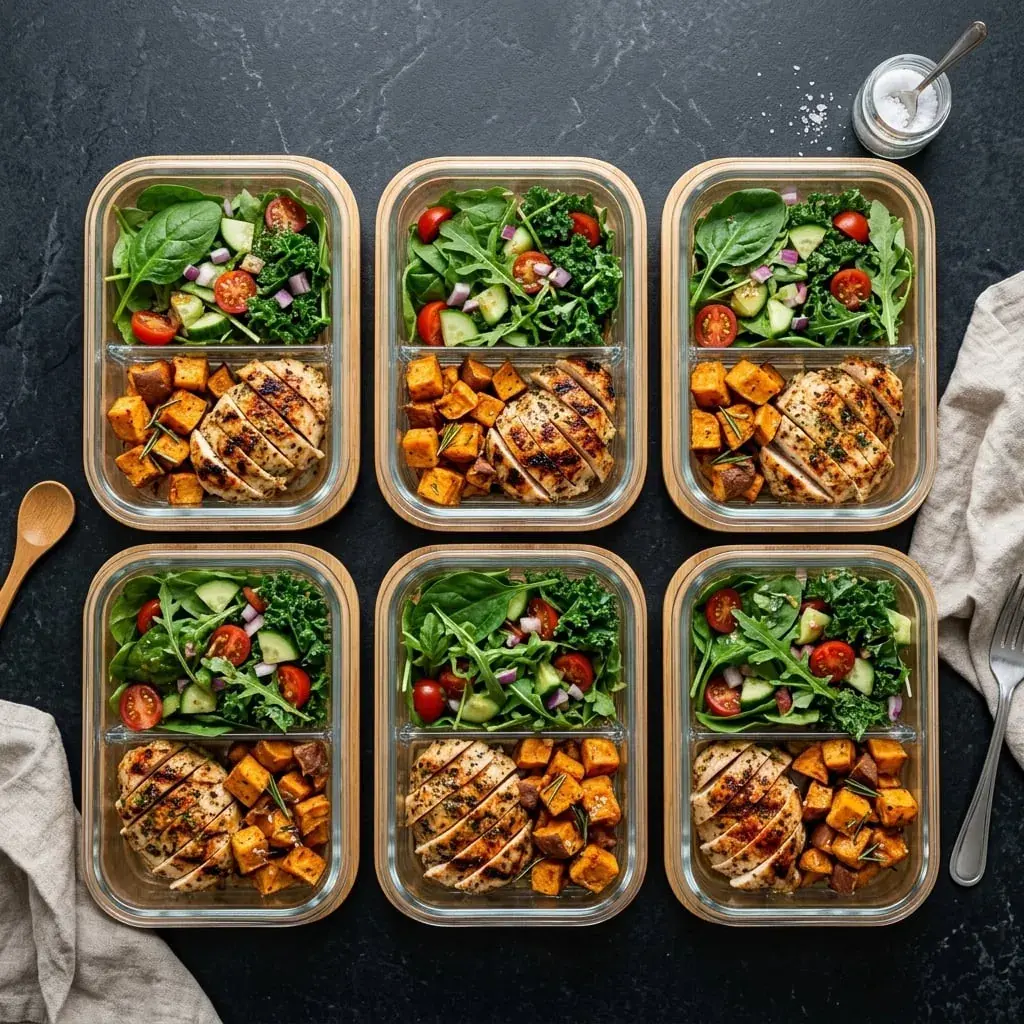
The fastest way to make meal prep stick is to stop cooking complete meals and start batch-cooking components: two or three proteins, two carbs, and a tray of vegetables, stored separately and assembled fresh in about three minutes per meal. This "buffet-style" approach takes roughly 90 minutes on a Sunday instead of four hours, keeps textures from going soggy by Wednesday, and makes hitting 30–40 grams of protein per meal nearly automatic.
The Instagram version of meal prep — ten identical chicken-rice-broccoli boxes — fails for a predictable reason: by day three you dread your own food. Variety is an adherence tool, not a luxury.
Why component prep beats classic meal prep
Cooking composed meals locks every decision in on Sunday. Component prep delays the decision to mealtime:
- Proteins (pick 2): Roast a tray of chicken thighs (they reheat far juicier than breast), brown 2 lbs of 90/10 ground beef or turkey, or bake a side of salmon.
- Carbs (pick 2): A pot of rice or quinoa, a tray of roasted sweet potatoes, or a batch of pasta.
- Vegetables: One big sheet pan roasted (peppers, broccoli, onions) plus something raw and crunchy (cucumbers, slaw mix, cherry tomatoes).
- Flavor: 2–3 sauces or spice blends — the same chicken becomes burrito bowls, teriyaki plates, or salads.
Food-safety note: the USDA guideline for cooked food in the fridge is 3–4 days, so either prep twice weekly (Sunday and Wednesday, ~45 minutes each) or freeze half of Sunday's batch.
Bayco Glass Meal Prep Containers Sponsored
High-quality glass containers to keep your meal prep fresh all week long without retaining odors.
How much protein per meal — and why protein first?
Protein earns its priority three ways. It is the most satiating macronutrient. It has by far the highest thermic effect — your body burns roughly 20–30% of protein's calories just digesting it, versus 5–10% for carbs and 0–3% for fat. And it is the raw material for muscle repair: research on muscle protein synthesis suggests roughly 0.4 g of protein per kg of body weight per meal (about 30–40 g for most adults) across 3–5 meals is an effective pattern for supporting training.
Here's what 30+ grams looks like from common prep staples (approximate, cooked weights):
| Staple | Serving | Protein (approx.) |
|---|---|---|
| Chicken thigh, roasted | 5 oz (140 g) | 32 g |
| Ground beef 90/10 | 5 oz (140 g) | 36 g |
| Salmon, baked | 5 oz (140 g) | 31 g |
| Greek yogurt, nonfat | 1 cup (245 g) | 24 g |
| Eggs | 3 large | 18 g |
| Tofu, firm | 7 oz (200 g) | 20 g |
Mixing sources also happens naturally with component prep — yogurt or eggs at breakfast, batch-cooked meat at lunch and dinner.
How do you keep prepped food from getting boring (or unsafe)?
Three habits carry most of the weight. Separate wet from dry: sauces live in their own jars and go on at assembly, which is what keeps day-four food tasting like day-one food. Rotate flavor systems weekly, not proteins — the shopping list barely changes, but Mexican week and teriyaki week feel like different diets. Label with dates so the 3–4 day fridge window is never a guess.
If you need inspiration beyond the basics, our recipe hub is curated for exactly this: every recipe lists per-serving macros, scales for batch cooking, and can be filtered by protein content and prep time. Pair it with the macro diary — since components repeat all week, your logging becomes copy-paste (recently used foods surface as one-tap chips), which is how macro tracking stays sane.
What does a realistic beginner week look like?
Skip perfection; aim for coverage. A first-timer's Sunday (about 90 minutes, mostly hands-off):
- Oven: tray of chicken thighs + tray of sweet potatoes and mixed vegetables (40 min, same temperature).
- Stove: pot of rice; brown ground beef with taco seasoning (25 min, parallel).
- Counter: portion Greek yogurt cups, rinse berries, mix one sauce.
That's roughly 10–12 lunches and dinners covered. Fill the gaps with near-zero-effort proteins — cottage cheese, canned tuna, rotisserie chicken — and calibrate portions against your targets from the TDEE & macro calculator (the full method is in our TDEE and macros guide).
Meal Prep Smarts
1 / 4What is the core idea of component ('buffet-style') prep?
Interactive Tools
Save these contextual tools to your profile for quick access.
TDEE & Macro Calculator
Calculate your Total Daily Energy Expenditure and get custom macronutrient targets for your goals.
Frequently asked questions
Thighs, for most people. They carry a few more grams of fat per serving but reheat moist instead of chalky, which matters more for adherence than the small macro difference. If you prefer breast, slightly undercook it (pull at ~160°F and rest) and store it in its juices.
Yes — cooked proteins, rice, and most roasted vegetables freeze well for 2–3 months in airtight containers. Freeze in single portions, thaw overnight in the fridge, and skip freezing raw-crunch items (cucumber, lettuce) which turn to mush.
Anchor on the cheapest complete proteins per gram: eggs, canned tuna, chicken thighs and drumsticks, ground turkey on sale, dry lentils, and cottage cheese. Buy carbs dry and in bulk (rice, oats, potatoes). A week of 150 g/day protein is very achievable on a modest grocery budget with those staples.
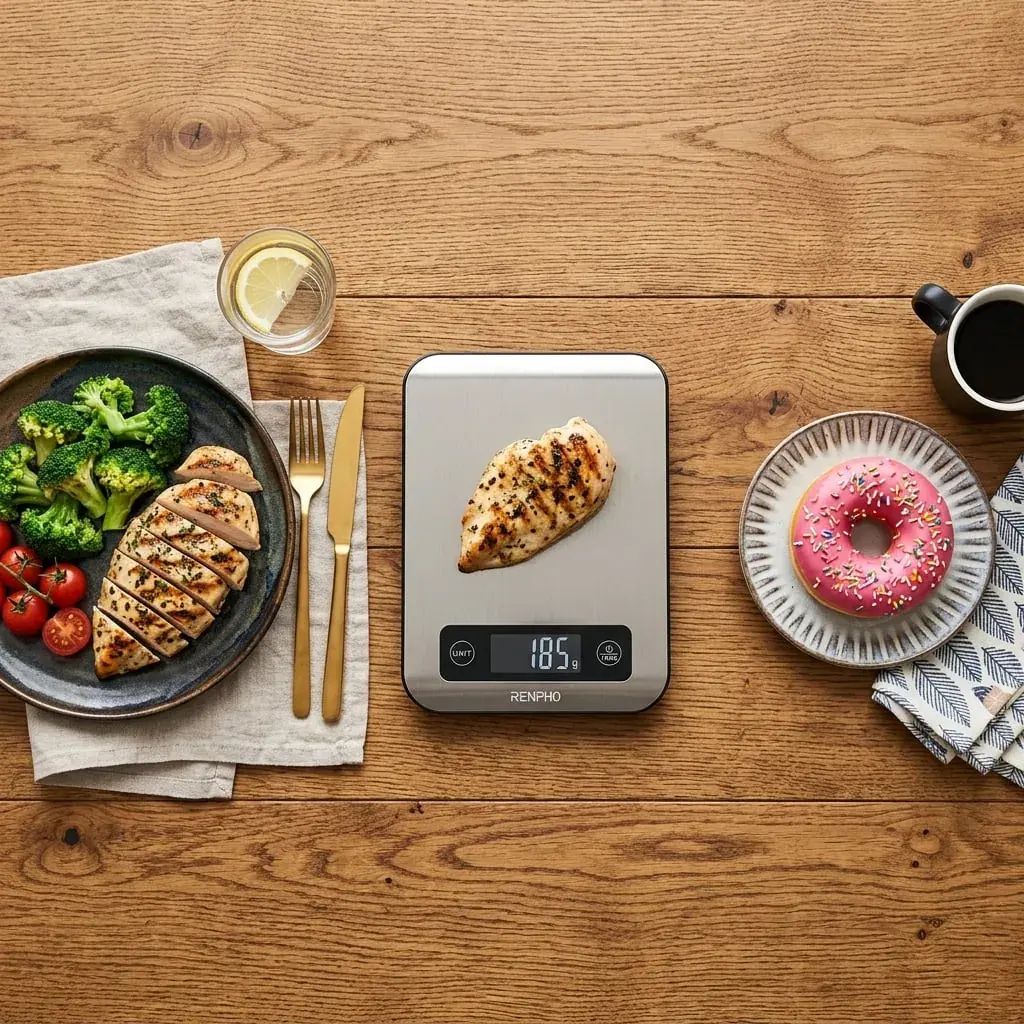
Weigh during your first couple of preps to calibrate your eye — one 5-oz portion of chicken looks the same forever after. Because components repeat, logging in the macro diary becomes a two-tap habit rather than a nightly forensic audit.
Batch-cook components, store them separately, assemble in minutes, and let variety come from sauces instead of extra cooking. Start with two proteins and one sheet pan this Sunday, browse the recipe hub for your rotation, and protein targets will start hitting themselves.
Stop completely guessing.
Use our interactive PWA tools to calculate your exact macros, 1RM, and running pace offline.