
Disclaimer: Some of the links on this page are affiliate links. As an Amazon Associate and affiliate for other networks, we may earn a commission from qualifying purchases at no additional cost to you.
Decades of bodybuilding dogma suggested that building dense muscle required consuming massive quantities of whey, eggs, and chicken breast. If you told a 1990s strength coach you were transitioning to a plant-based diet, they would have told you to kiss your gains goodbye.
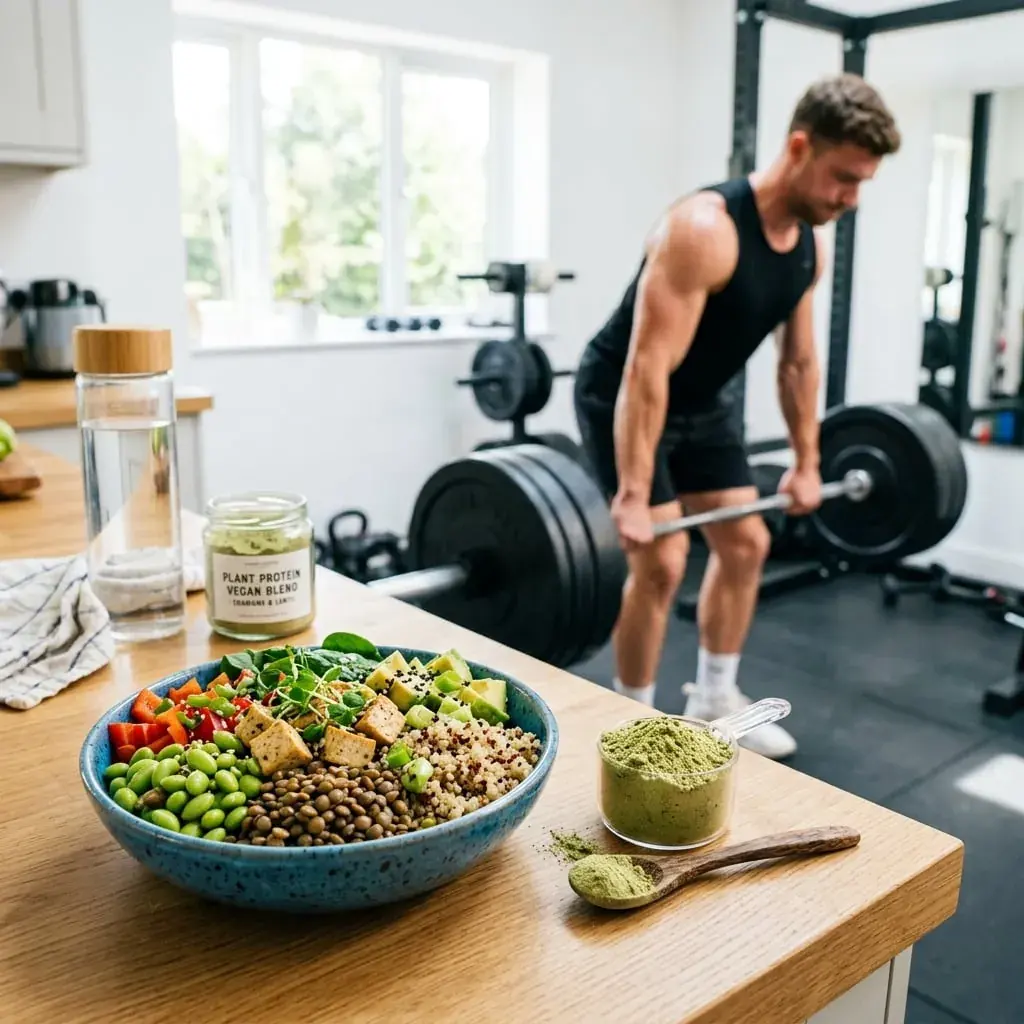
But empirical science and real-world examples (like Olympic weightlifter Kendrick Farris and bodybuilder Nimai Delgado) have proven otherwise. You absolutely can build a world-class physique entirely on plants.
However, doing so requires substantially more nutritional planning. Vegan bodybuilders face two distinct physiological hurdles that omnivores do not: protein bioavailability and amino acid profiles.
The Hurdles of Plant-Based Muscle
To stimulate Muscle Hypertrophy, the body needs a consistent supply of essential amino acids (EAAs), particularly the branched-chain amino acid Leucine. Leucine acts as a biological trigger (via the mTOR pathway) that initiates Muscle Protein Synthesis.
Problem 1: The Leucine Threshold
Animal proteins are highly dense in Leucine. Plant proteins generally have lower concentrations of Leucine per gram of total protein. To trigger MPS, you need roughly 2.5g to 3g of Leucine per meal. Hitting this on a vegan diet requires consuming larger absolute volumes of protein.
Problem 2: Bioavailability (PDCAAS)
The Protein Digestibility Corrected Amino Acid Score (PDCAAS) measures how well the human body absorbs and utilizes a protein. Whey and egg protein score a perfect 1.0. Plant proteins, due to their fiber matrices and anti-nutrients (like phytic acid), score lower. For example, lentils score around 0.52. This means that if you eat 30g of protein from lentils, your body might only actually utilize 15g of it for tissue repair.
The Solutions for Vegan Growth
1. Increase Total Protein Intake
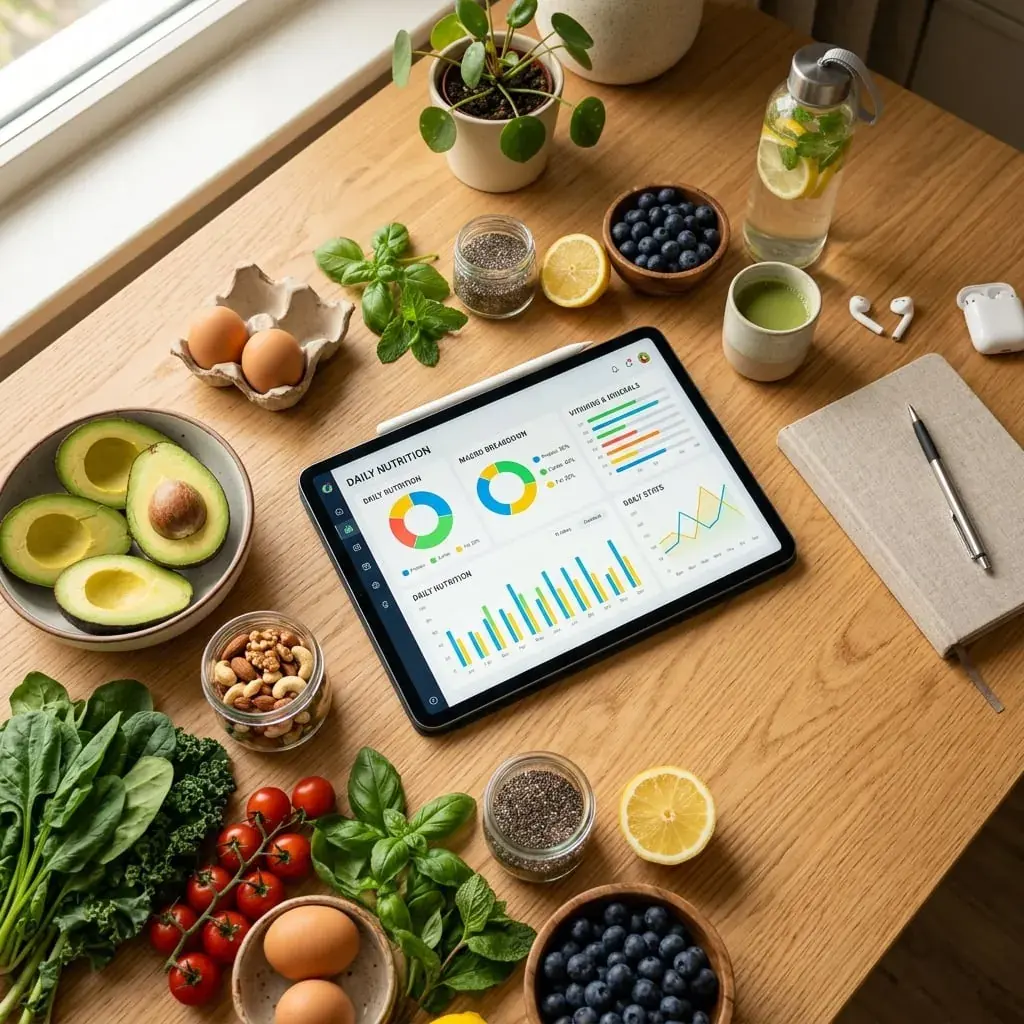
Because plant proteins are inherently less bioavailable, vegan bodybuilders must overshoot standard protein recommendations. While an omnivore might maximize growth at 1.6g of protein per kg of bodyweight, a vegan athlete should aim closer to 2.0g to 2.2g per kg. Use the TDEE Calculator to formulate your raw caloric needs, and adjust the macros upward for protein.
2. Protein Combining (Complementary Aminos)
Many plant sources are "incomplete," meaning they lack one or more of the 9 essential amino acids.
- Grains are typically low in lysine but high in methionine.
- Legumes are high in lysine but low in methionine. By combining foods (e.g., Rice and Beans, or Peanut Butter on Whole Wheat), you create a complete amino acid profile throughout the day. It is a myth that you must eat them in the exact same meal; your body maintains an amino acid pool over 24 hours.
3. Rely on High-Yield Vegan Isolates
Hitting 180 grams of protein entirely through whole-food beans, rice, and broccoli will require eating thousands of calories and massive amounts of fiber, which can cause severe gastrointestinal distress.
Serious vegan bodybuilders rely on isolated protein sources. The best plant-based protein powders blend Pea Protein (high in leucine/lysine) and Rice Protein (high in methionine). Together, their amino acid profile is nearly identical to whey protein. You can easily track these precise shakes using our Macro Diary.
Essential Vegan Supplementation
While a well-planned vegan diet can provide all macronutrients, plant-only diets are physically devoid of specific micronutrients crucial for performance. You must supplement:
- Vitamin B12: Essential for nerve function and energy production. There are no reliable plant sources of B12.
- Creatine Monohydrate: Naturally found in red meat. While your body synthesizes some creatine, vegetarians and vegans have significantly depleted muscle creatine stores. Supplementing 5g daily yields massive power output gains. (See our Supplement Database for safety profiles).
- Vitamin D3 & Omega-3s: Ensure your Omega-3s come from an Algae-based EPA/DHA supplement, rather than standard flaxseed (ALA), which converts poorly in humans.
Building muscle on a vegan diet isn't magic, but it isn't impossible either. It simply requires mathematical tracking and dietary precision.
Interactive Tools
Save these contextual tools to your profile for quick access.
Stop completely guessing.
Use our interactive PWA tools to calculate your exact macros, 1RM, and running pace offline.