
Disclaimer: Some of the links on this page are affiliate links. As an Amazon Associate and affiliate for other networks, we may earn a commission from qualifying purchases at no additional cost to you.
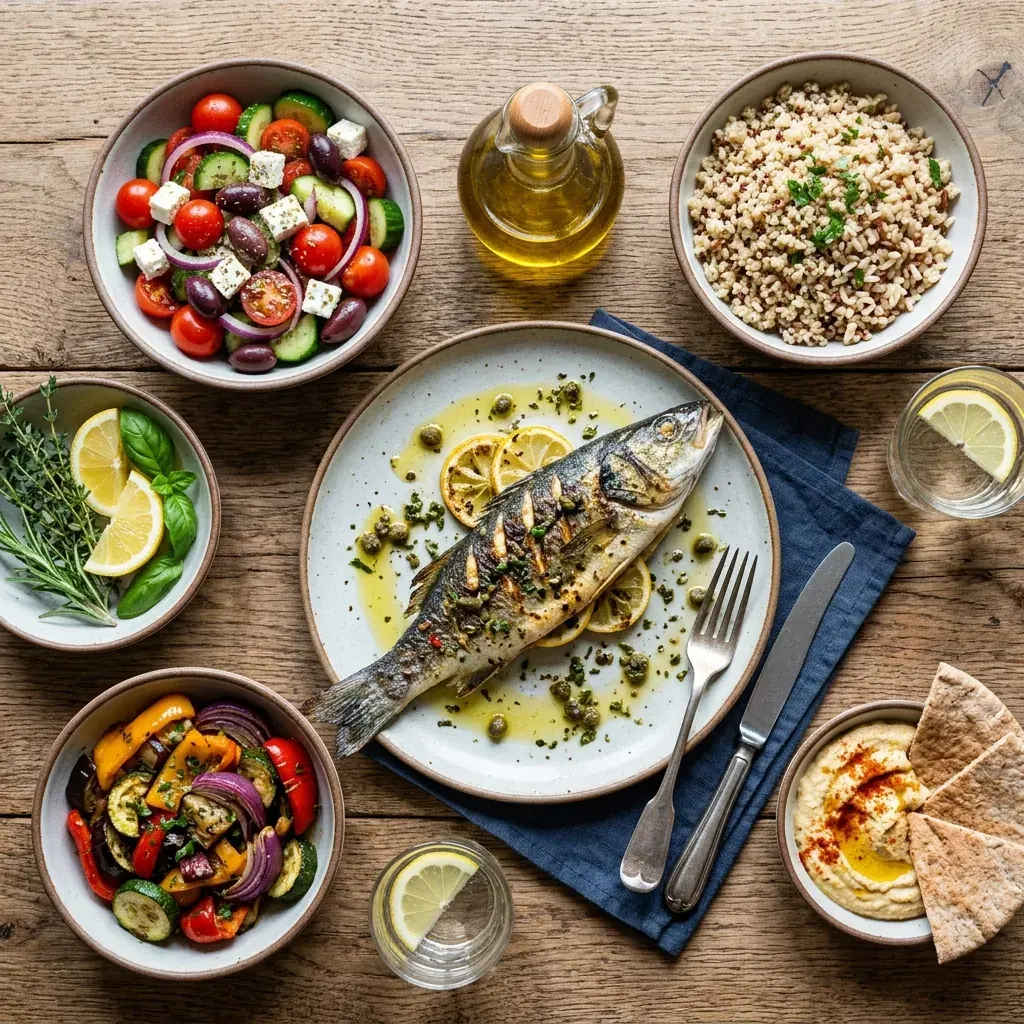
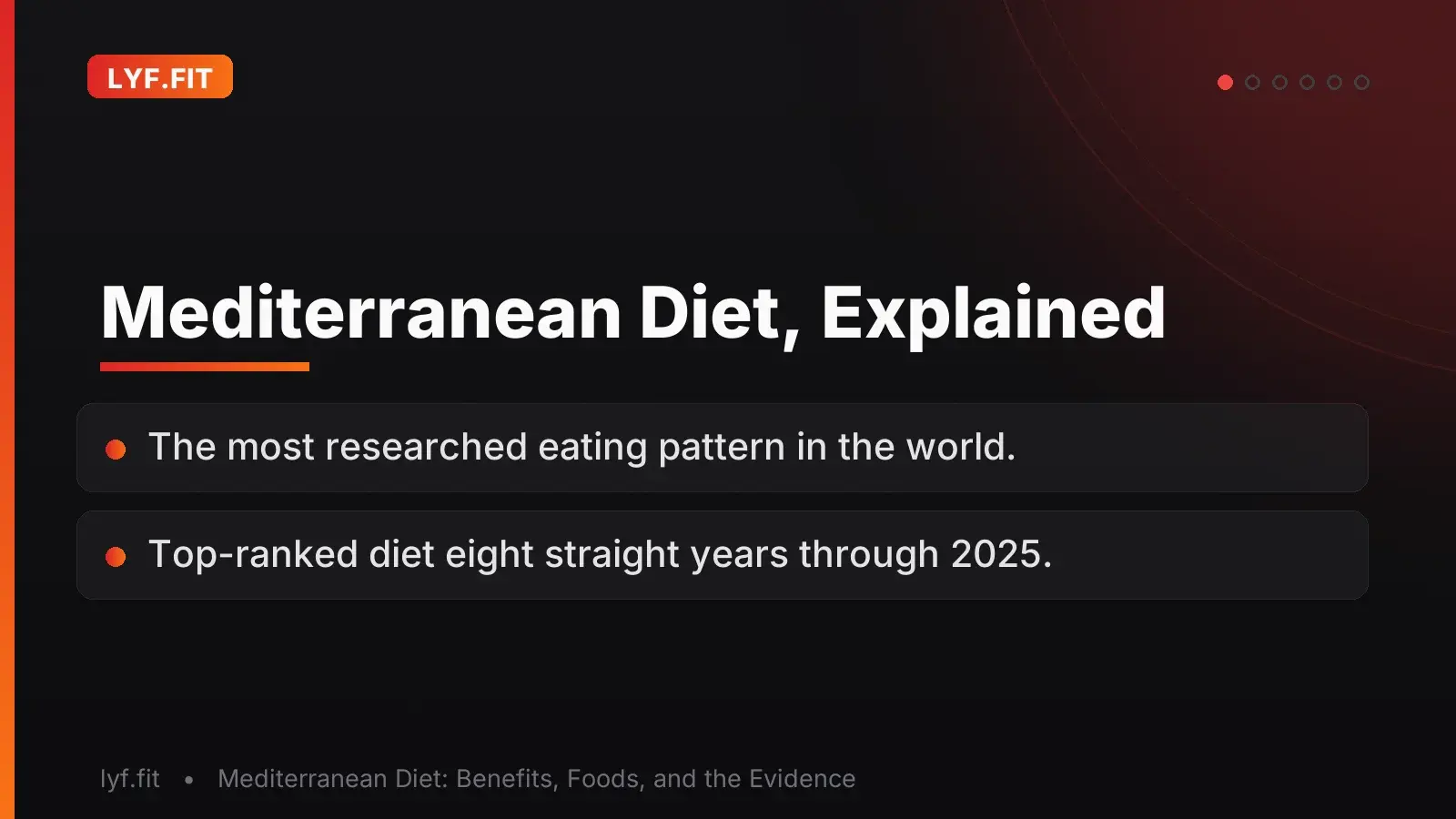
The Mediterranean diet is an eating pattern based on the traditional foods of countries around the Mediterranean Sea — vegetables, fruit, legumes, whole grains, nuts, fish, and extra-virgin olive oil. It is not a weight-loss fad. It is the most thoroughly researched diet in the world, and it has topped the U.S. News Best Diets ranking for eight consecutive years through 2025.
Here is what it includes, what the evidence shows, and how to start.
What is the Mediterranean diet?
The Mediterranean diet is a pattern, not a rulebook. There are no banned food groups, no calorie counting, and no branded products to buy. It simply shifts the balance of your plate toward minimally processed, plant-rich foods.
The concept traces back to physiologist Ancel Keys, whose Seven Countries Study in the 1950s and 1960s documented strikingly low rates of heart disease in Crete and southern Italy, despite diets that were not low in fat. The difference was the type of food: olive oil instead of butter, fish instead of red meat, and vegetables and legumes at the center of nearly every meal. Modern versions of the diet keep that same structure.
What do you eat on the Mediterranean diet?
The diet is easiest to follow as a frequency guide rather than a list of strict rules. Build most meals from the everyday foods, add the weekly foods regularly, and treat the rest as occasional.
| Frequency | Foods |
|---|---|
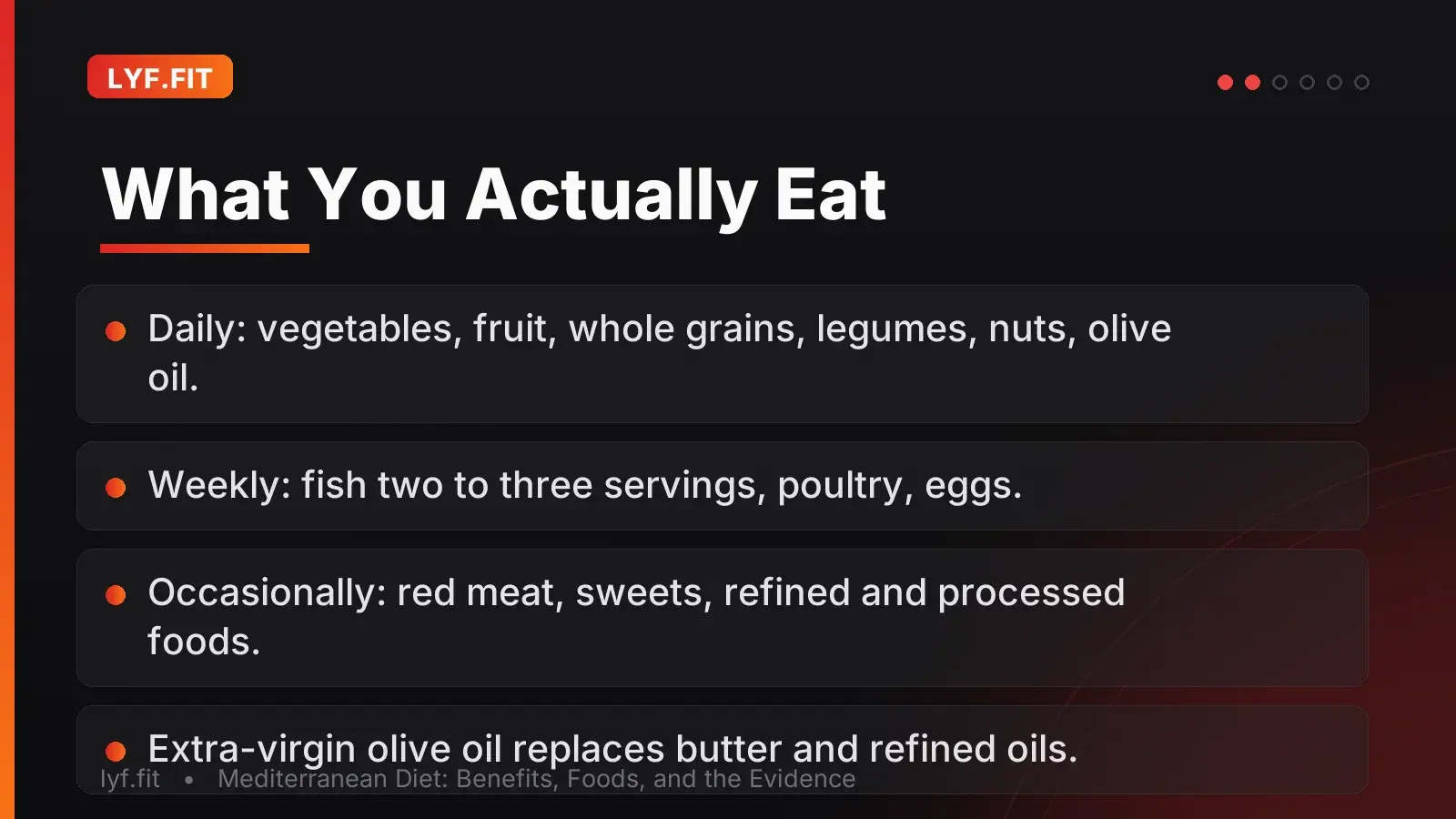
| Every day | Vegetables, fruit, whole grains, legumes, nuts, and extra-virgin olive oil |
| Every week | Fish and seafood (2–3 servings), poultry, eggs, cheese, and yogurt |
| Occasionally | Red meat (about one serving), sweets, refined grains, and heavily processed foods |
Extra-virgin olive oil is the signature fat, used in place of butter and refined oils. Fish should appear two to three times a week, and red meat is held to roughly one serving. Herbs and spices replace much of the salt.
Is the Mediterranean diet proven to work?
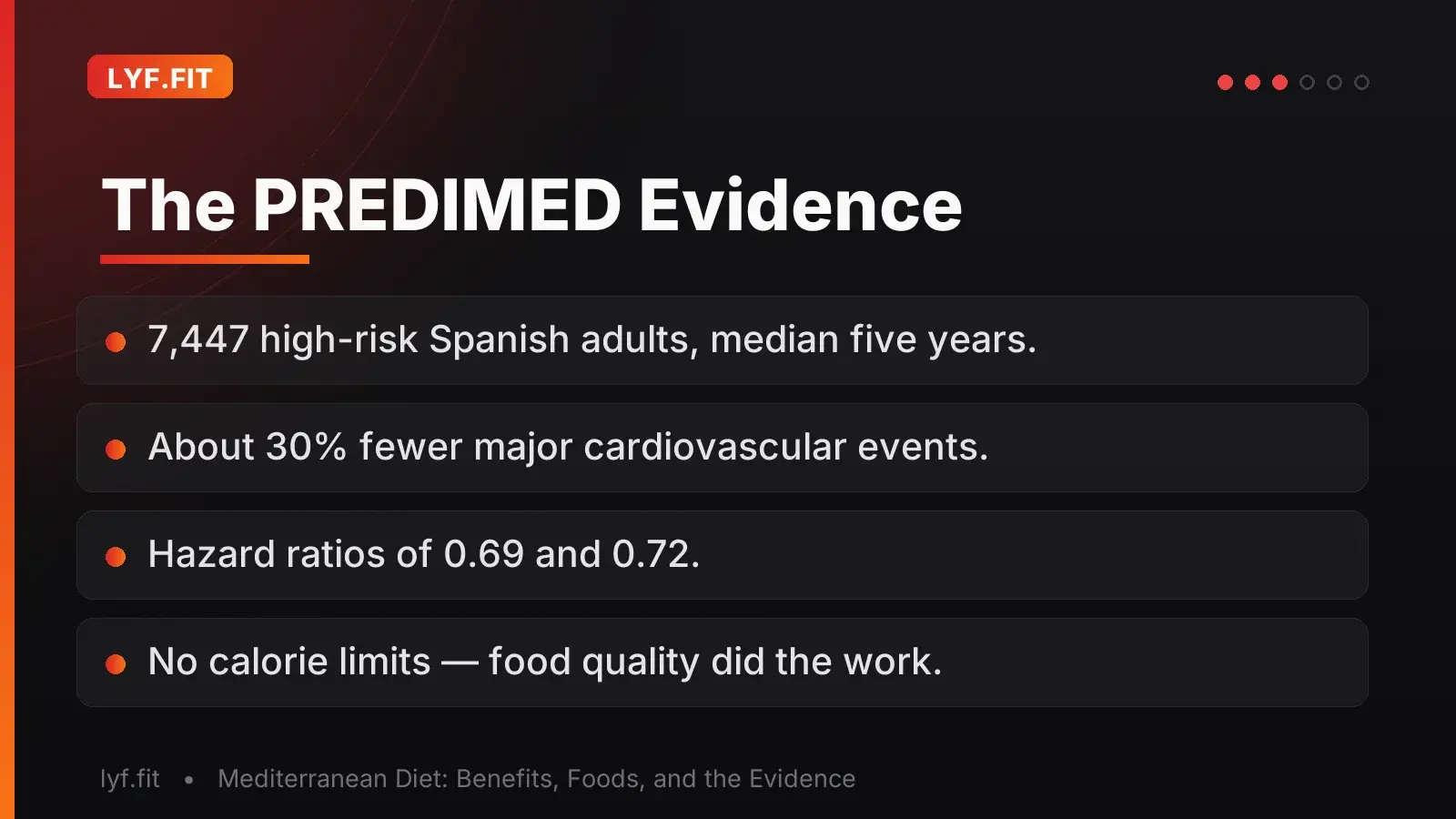
Yes — by one of the largest diet trials ever run. The PREDIMED study followed 7,447 adults in Spain who were at high cardiovascular risk but had no existing heart disease.
Participants were assigned to a Mediterranean diet enriched with extra-virgin olive oil, a Mediterranean diet enriched with mixed nuts, or a low-fat control diet. After a median of roughly five years, both Mediterranean groups had about 30% fewer major cardiovascular events — heart attack, stroke, or cardiovascular death — than the control group, with hazard ratios of 0.69 and 0.72. Crucially, the diet was not calorie-restricted. The benefit came from food quality, not portion control.
Can you trust the PREDIMED results?
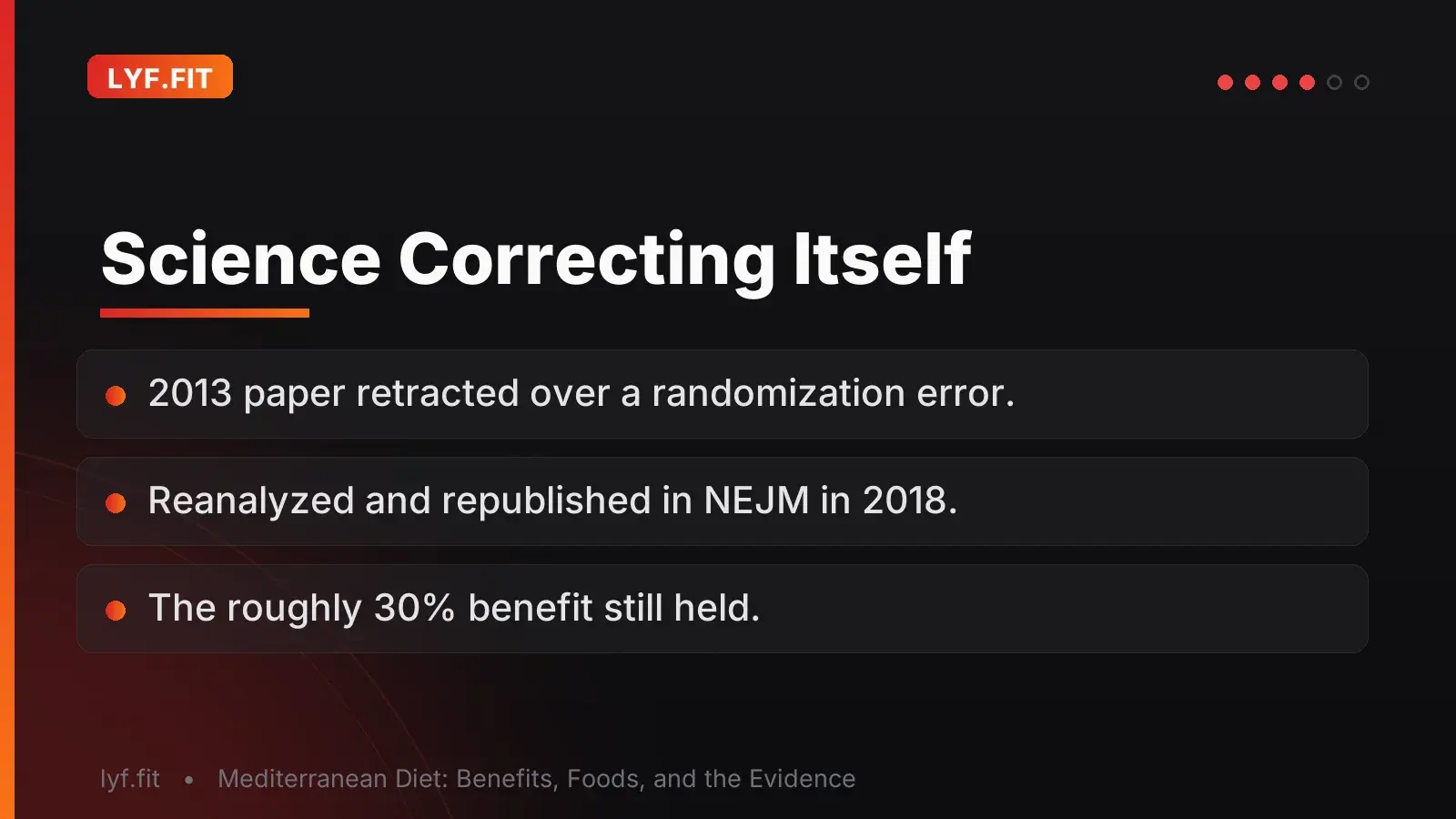
It is worth knowing the full story. The original 2013 PREDIMED paper was retracted in 2018 after researchers found that some participants had not been individually randomized — for example, members of the same household were sometimes assigned to a group together.
The authors reanalyzed the data using corrected statistical methods and republished it in the New England Journal of Medicine the same year. The conclusions held: the Mediterranean diet still showed roughly the same 30% reduction in cardiovascular events. The episode is a good example of science correcting itself in public, and the republished trial remains a cornerstone of nutrition evidence.
What are the benefits beyond heart health?
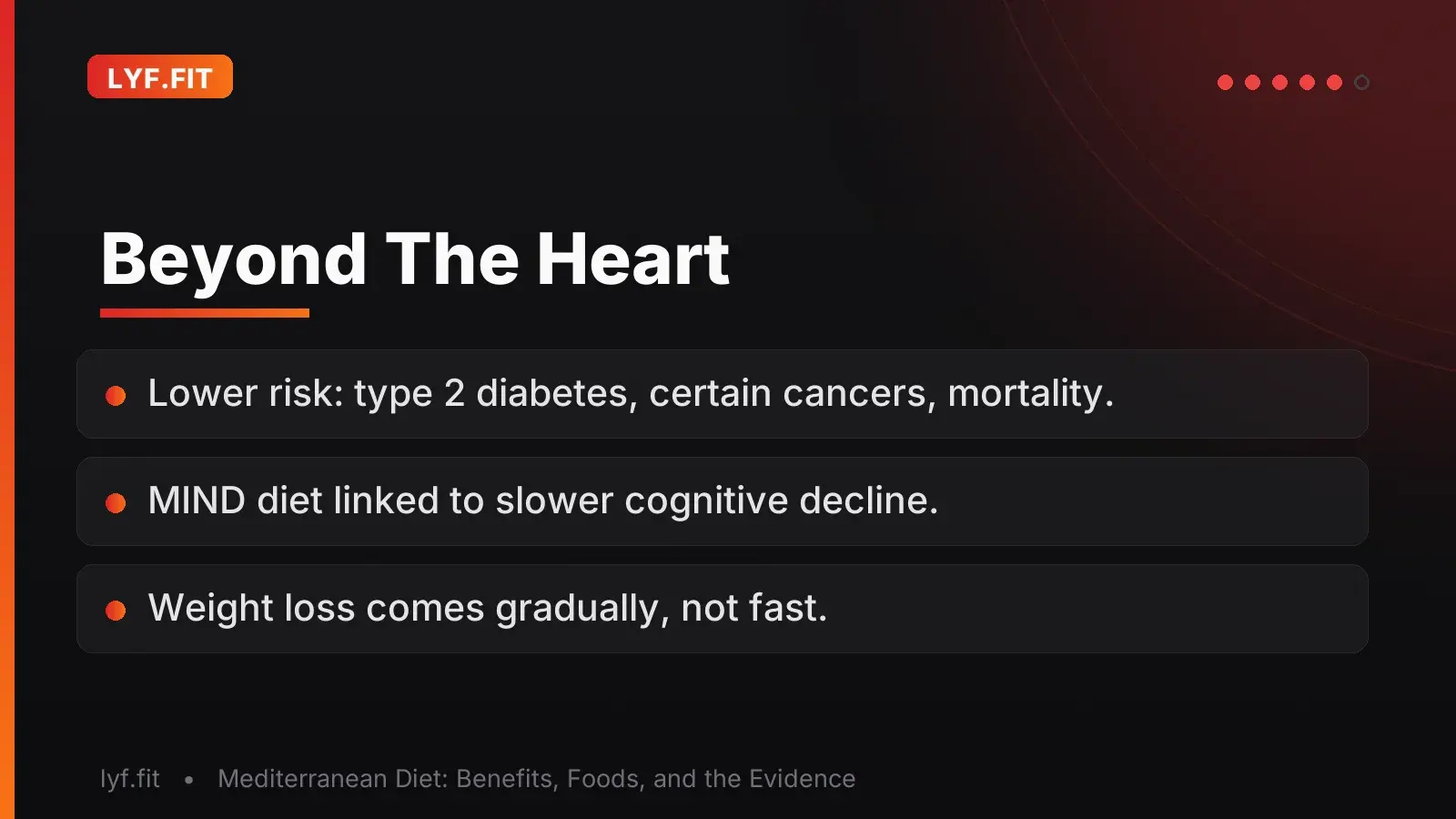
The Mediterranean diet's reach extends well past the cardiovascular system. Observational research links it to a lower risk of type 2 diabetes, certain cancers, and all-cause mortality.
It also appears to protect the brain. The MIND diet — a hybrid of the Mediterranean and DASH diets developed by researcher Martha Clare Morris and colleagues at Rush University in 2015 — has been associated with slower cognitive decline and a lower risk of Alzheimer's disease. Researchers credit the diet's omega-3 fatty acids, monounsaturated fats, fiber, B vitamins, and plant polyphenols, which together help lower inflammation and oxidative stress. Because the diet is satisfying and unrestrictive, it is also far easier to sustain for years than most weight-loss plans.
Does the Mediterranean diet help with weight loss?
It can, but slowly and indirectly. The Mediterranean diet is not designed as a weight-loss program, and PREDIMED let participants eat freely with no calorie limits.
Even so, the pattern tends to support a healthy weight over time. High-fiber vegetables, legumes, and whole grains are filling for relatively few calories, and the focus on whole foods naturally crowds out the ultra-processed products that drive overeating. People who switch usually lose weight gradually rather than rapidly. If steady, sustainable change is your goal, that is a feature rather than a flaw — fast weight loss is famously hard to keep off.
How does it compare to other diets?
The Mediterranean diet rarely produces dramatic short-term weight loss, and that is part of its strength. In expert rankings it sits just ahead of the DASH diet — designed to lower blood pressure — which shares most of the same principles.
Against a low-fat diet, the Mediterranean pattern won decisively in PREDIMED, even though it contains more total fat. Against very-low-carbohydrate plans such as keto, it is far less restrictive and has a much deeper long-term evidence base, although keto may produce faster initial weight loss. For most people the useful question is not which diet works fastest, but which one they can realistically follow for decades. On that measure, the Mediterranean diet consistently wins.
How do you start the Mediterranean diet?
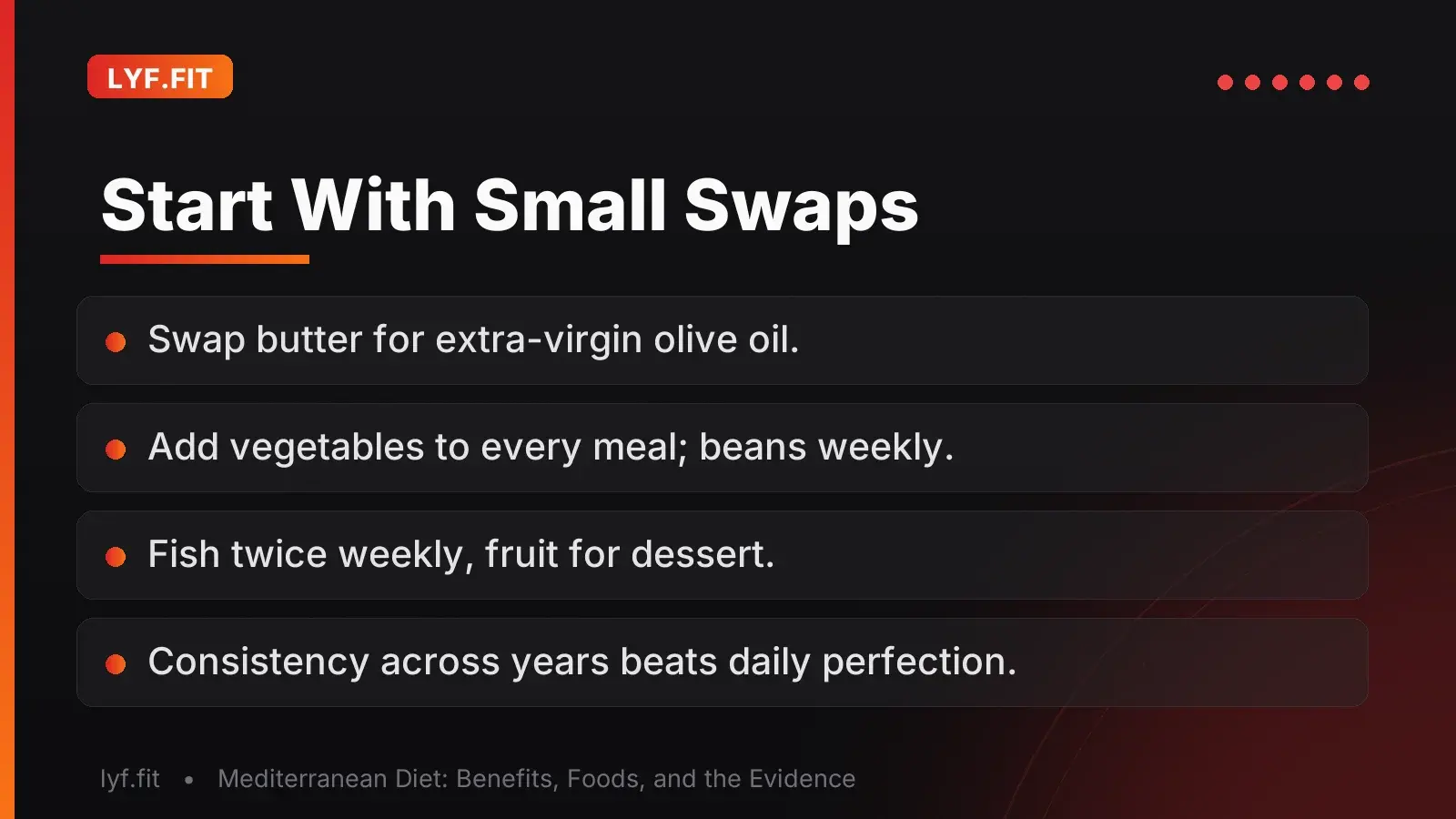
Start with small swaps rather than a complete overhaul. Replace butter and refined oils with extra-virgin olive oil. Add a vegetable to every meal, and make beans or lentils the base of one dinner each week.
Aim for fish twice a week, keep raw unsalted nuts on hand as a snack, and choose fruit for dessert most nights. Shift your bread, pasta, and rice toward whole-grain versions. None of this requires special products, supplements, or tracking apps. For meal ideas that fit the pattern, browse our Recipes tool and build a rotation of a few dishes you genuinely enjoy.
What about wine and red meat?
Two parts of the traditional Mediterranean diet deserve a careful note. Wine is often pictured alongside Mediterranean meals, usually in small amounts with food. However, health authorities increasingly emphasize that no level of alcohol is risk-free, and no one should start drinking for health reasons. The diet delivers its benefits fully without it.
Red meat is not banned, but it is genuinely limited — roughly one serving a week, with fish, poultry, beans, and lentils filling the gap. Processed meats such as bacon and sausage are kept to a minimum. These limits are a real part of why the pattern performs so well in research.
The bottom line
The Mediterranean diet is the closest thing nutrition science has to a consensus. It is backed by a major randomized trial, consistently rated the best overall diet, and flexible enough to adapt to almost any cuisine or budget. You do not need to follow it perfectly. Shifting your plate toward vegetables, whole grains, legumes, fish, and olive oil — and away from red and processed meat and refined carbohydrates — captures most of the benefit. Consistency across years matters far more than precision on any single day.
Interactive Tools
Save these contextual tools to your profile for quick access.
TDEE & Macro Calculator
Calculate your Total Daily Energy Expenditure and get custom macronutrient targets for your goals.
Core Concepts
1 / 6Test Your Knowledge
1 / 4What does the Mediterranean diet emphasize as its main source of fat?
Stop completely guessing.
Use our interactive PWA tools to calculate your exact macros, 1RM, and running pace offline.