


Disclaimer: Some of the links on this page are affiliate links. As an Amazon Associate and affiliate for other networks, we may earn a commission from qualifying purchases at no additional cost to you.
A deload week is neither magic nor automatically a waste — it is one way to reduce training stress. When hard training coincides with a sustained drop in performance or recovery, a lighter period may let fatigue dissipate. When training is progressing and recovery is stable, current evidence does not show that inserting an arbitrary week off improves muscle growth.
What is a deload week, exactly?
A deload is a short period of reduced training stress inserted between hard training blocks. There is no universal prescription: interviews with strength and physique coaches found that deloads were commonly 5-7 days and usually reduced training volume and/or effort. Unlike complete rest, many deloads still include movement practice at an easier dose.
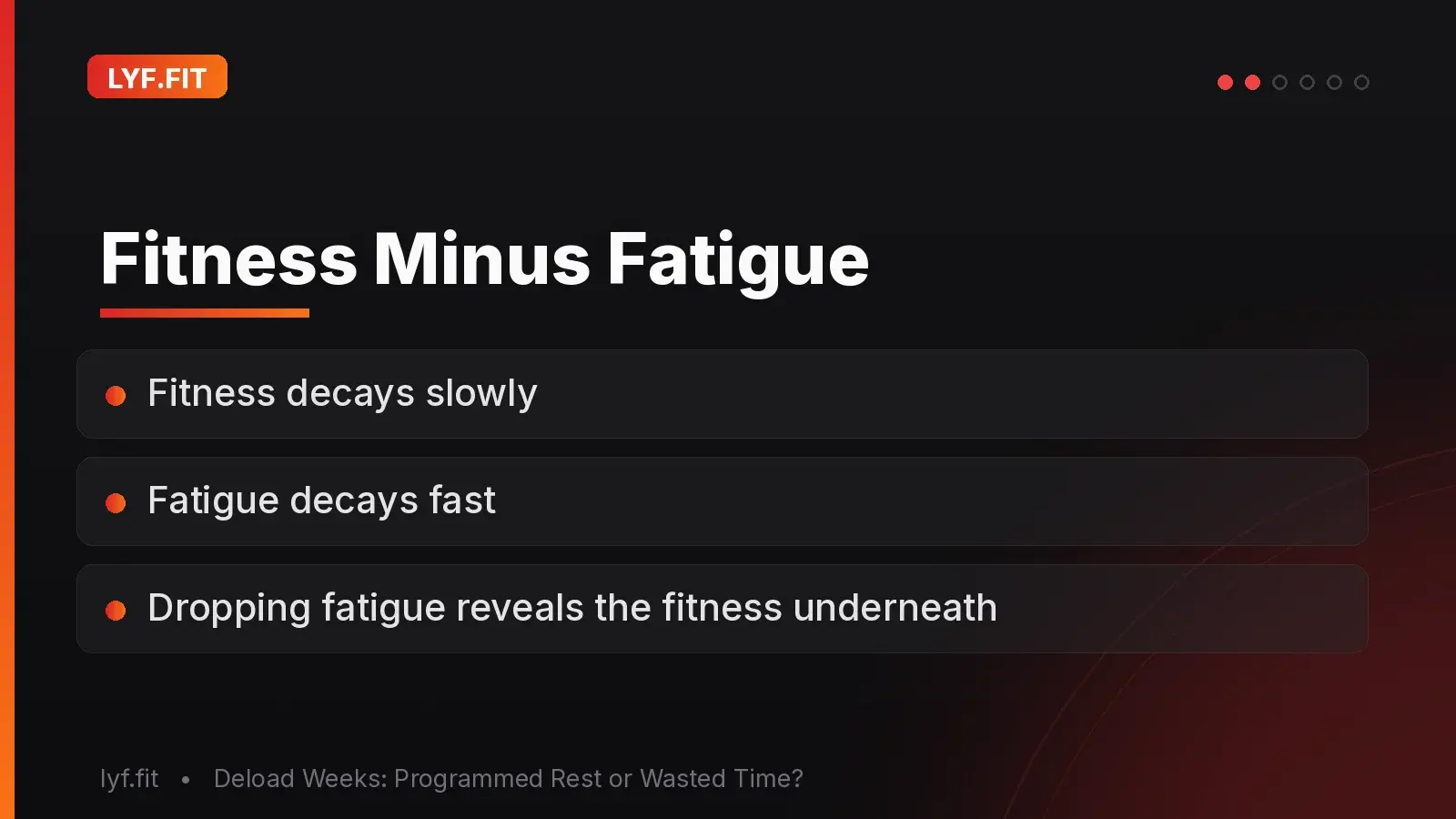
The logic comes from the fitness-fatigue model, a framework sports scientists have used for decades. In the model, training produces fitness and fatigue responses that decay at different rates; performance reflects their combined effect. It is a useful planning model rather than a literal measurement of your body, but it explains why reducing training can reveal adaptations that accumulated during a hard block.
What does the research actually say?
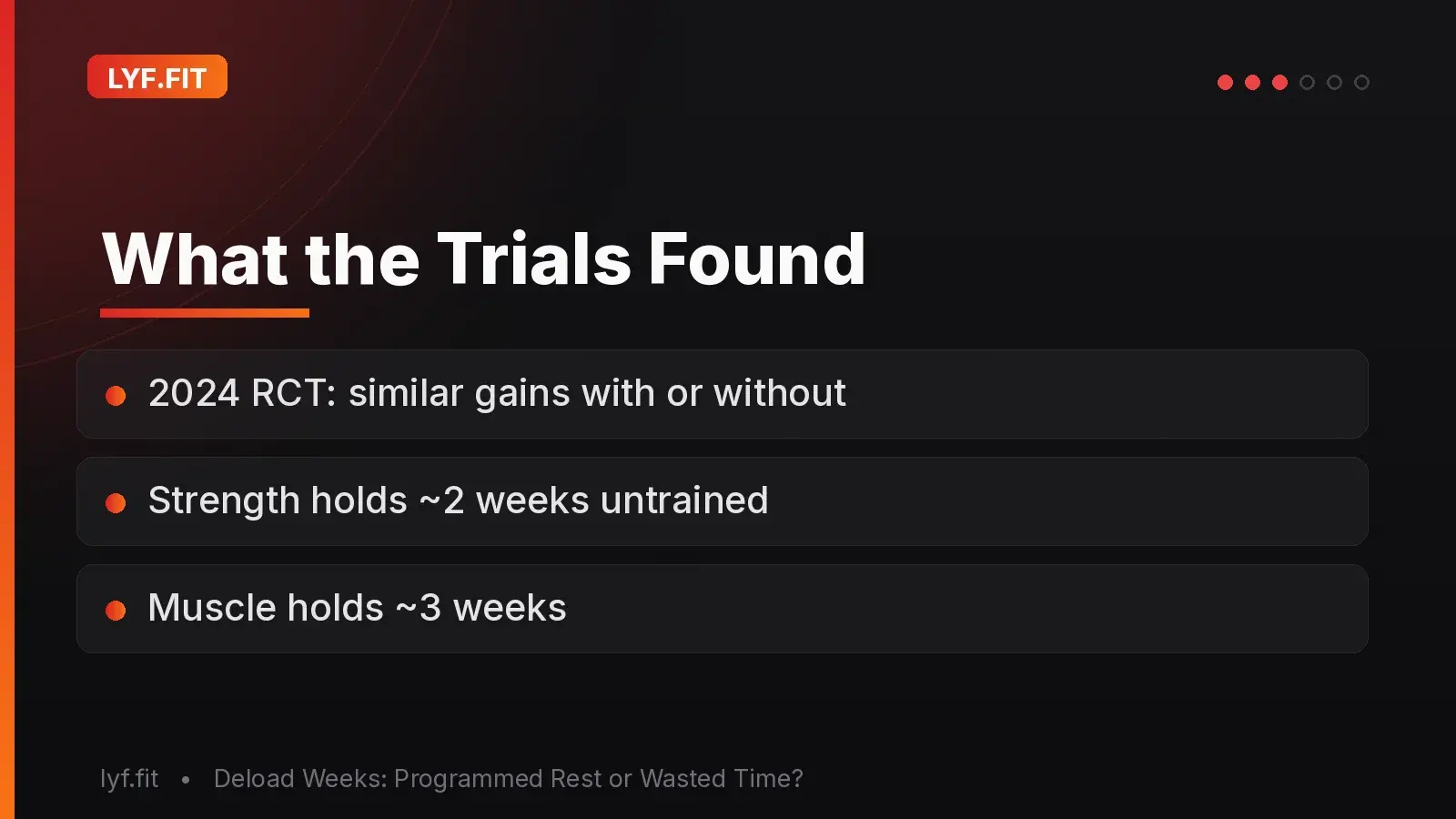
The honest answer: deloads are better supported by fatigue-management theory and coaching practice than by long-term head-to-head trials. A 2024 randomized study of 39 resistance-trained adults compared nine weeks of continuous training against the same program interrupted by a one-week training cessation at the midpoint. Lower-body muscle size, endurance, and power changes were similar, but the continuous-training group improved lower-body strength more.
That result argues against treating deloads as a muscle-building shortcut or assuming a week off is always consequence-free. The better case is targeted fatigue management: reducing training exposure when performance and recovery markers have deteriorated, while recognizing that the trial did not demonstrate injury prevention or superior growth. Sports-medicine consensus also emphasizes that no single marker diagnoses nonfunctional overreaching, so persistent symptoms deserve a broader look at sleep, nutrition, illness, and life stress.
Slide 1 of 6

How do you know you've earned a deload?
A practical coaching approach is to watch for several changes that persist across multiple sessions rather than reacting to one bad workout. The following are monitoring examples, not diagnostic criteria or a validated deload test; the coach-interview study found substantial variation in how practitioners made the decision:
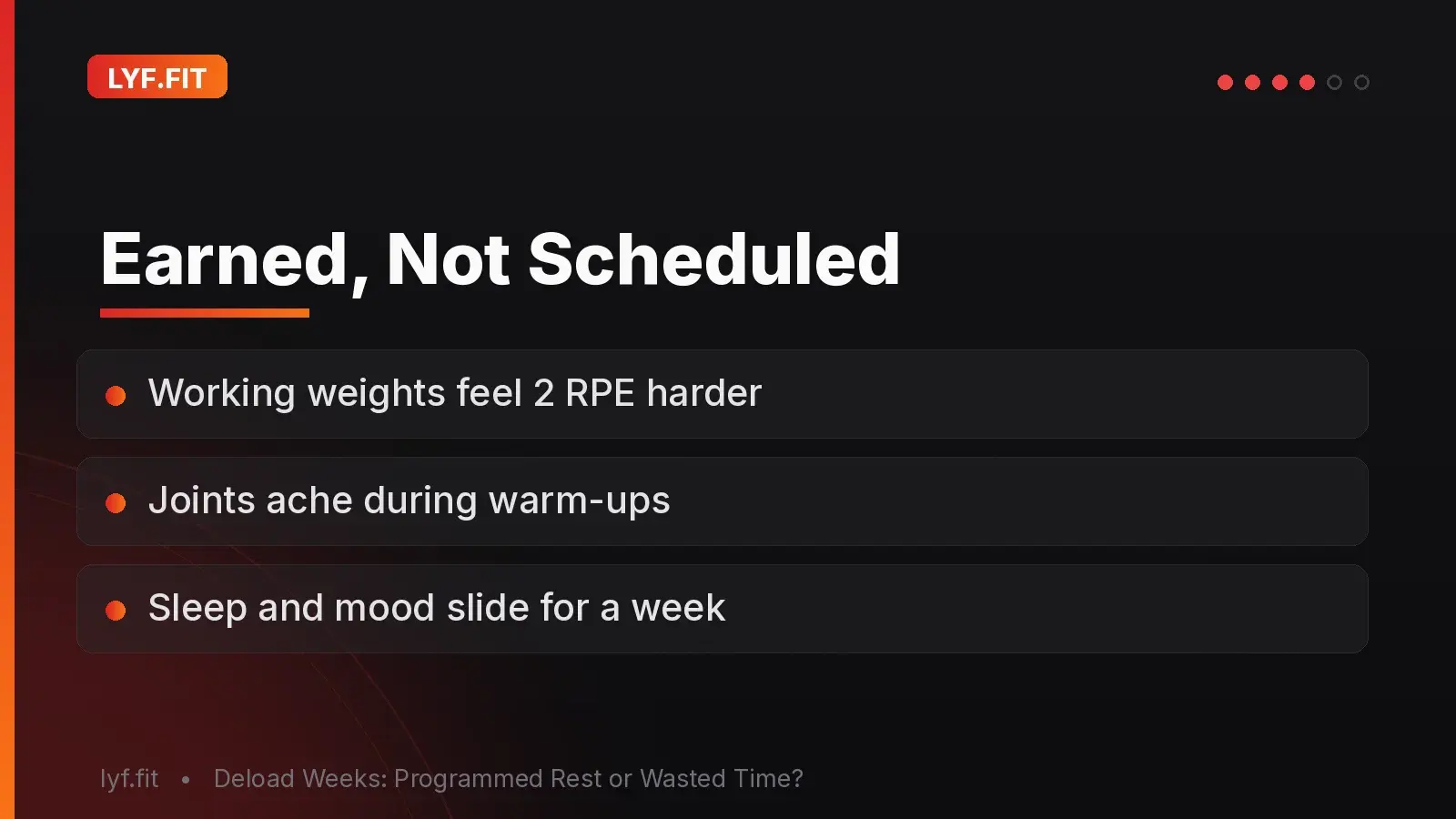
- Performance regression: working weights that felt like RPE 7 now feel like 9, or rep PRs stall and reverse across multiple lifts at once.
- Pain or joint complaints: elbows, knees, or shoulders aching during warm-ups, not just after hard sets. Persistent or worsening pain deserves qualified assessment rather than being treated as a normal fatigue score.
- Sleep and mood degradation: resting heart rate creeping up, sleep quality falling, and dread replacing the urge to train. Hard training normally raises appetite and deepens sleep; the reverse is a fatigue flag.
One difficult day is weak evidence. Several persistent changes justify reducing training stress and checking sleep, nutrition, illness, and life stress. That still does not prove a deload is the only answer, and beginners or lower-volume trainees may need them less often than athletes in demanding blocks.
Which deload template should you use?
Coaches commonly reduce volume, load, effort, or some combination of them. The ranges below are practical examples drawn from coaching practice—not head-to-head validated prescriptions—and should be adjusted to the athlete and the reason for reducing stress.
| Template | Load | Volume | Best for |
|---|---|---|---|
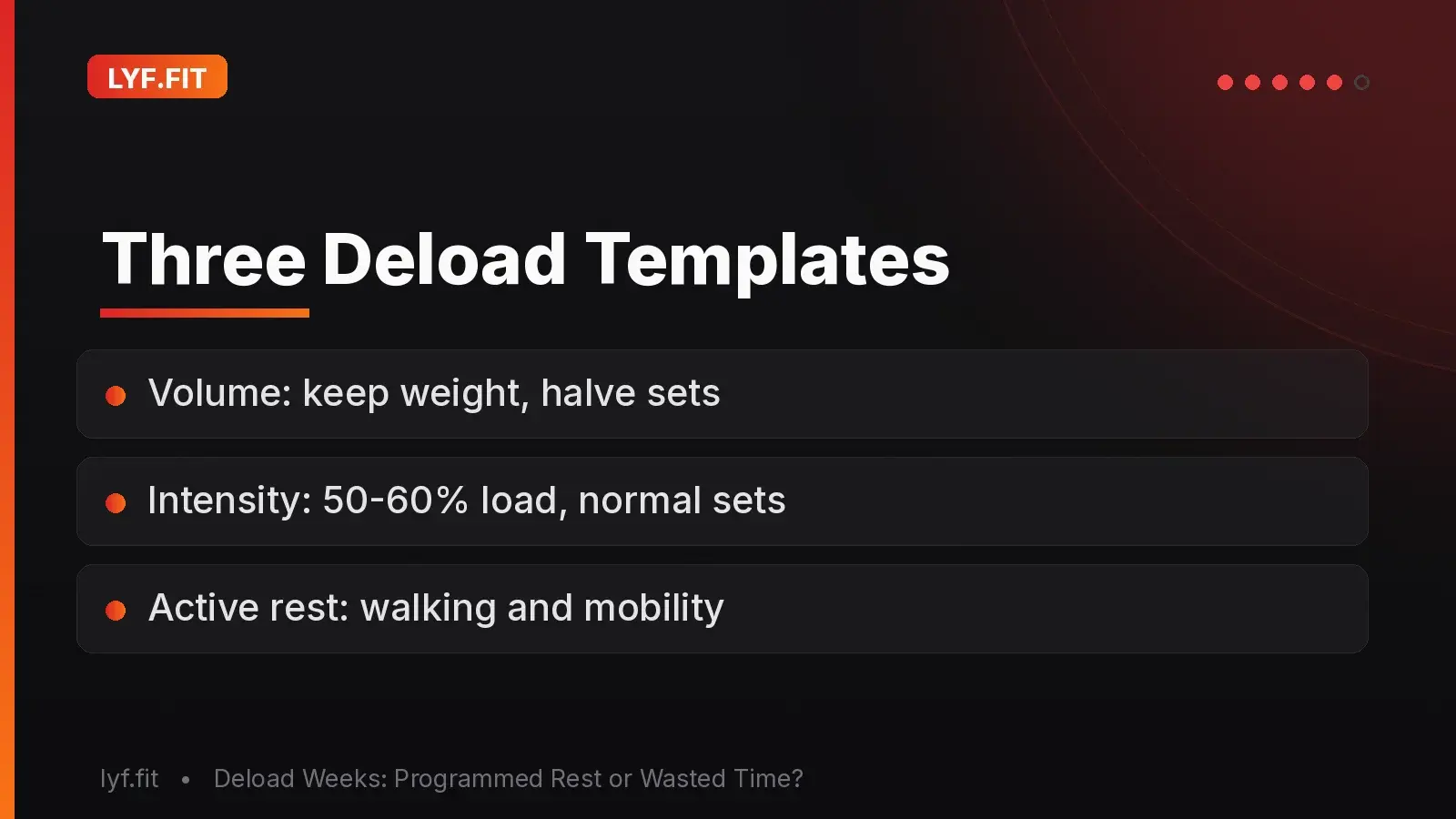
| Volume deload | Keep 80-90% of normal working weight | Cut sets by half | Strength-focused lifters who want to stay sharp under heavy weight |
| Intensity deload | Drop to 50-60% of normal load | Keep normal set counts | When lighter loading is preferred but movement practice still feels comfortable |
| Full active-rest week | No barbell work | Walking, mobility, easy cycling | Deep fatigue, life stress, or coming off a testing week |
A volume reduction preserves some exposure to familiar loads while lowering total work. A load reduction keeps movement practice with less external resistance. Complete rest from barbell training is another option when lifting itself feels poorly tolerated, paired with comfortable low-intensity activity such as the examples in the science of rest. None of these templates has proved universally superior.
Whichever you choose, resist the urge to "win" the deload. The week failed if you PR'd during it.
How should a deload fit into your program?
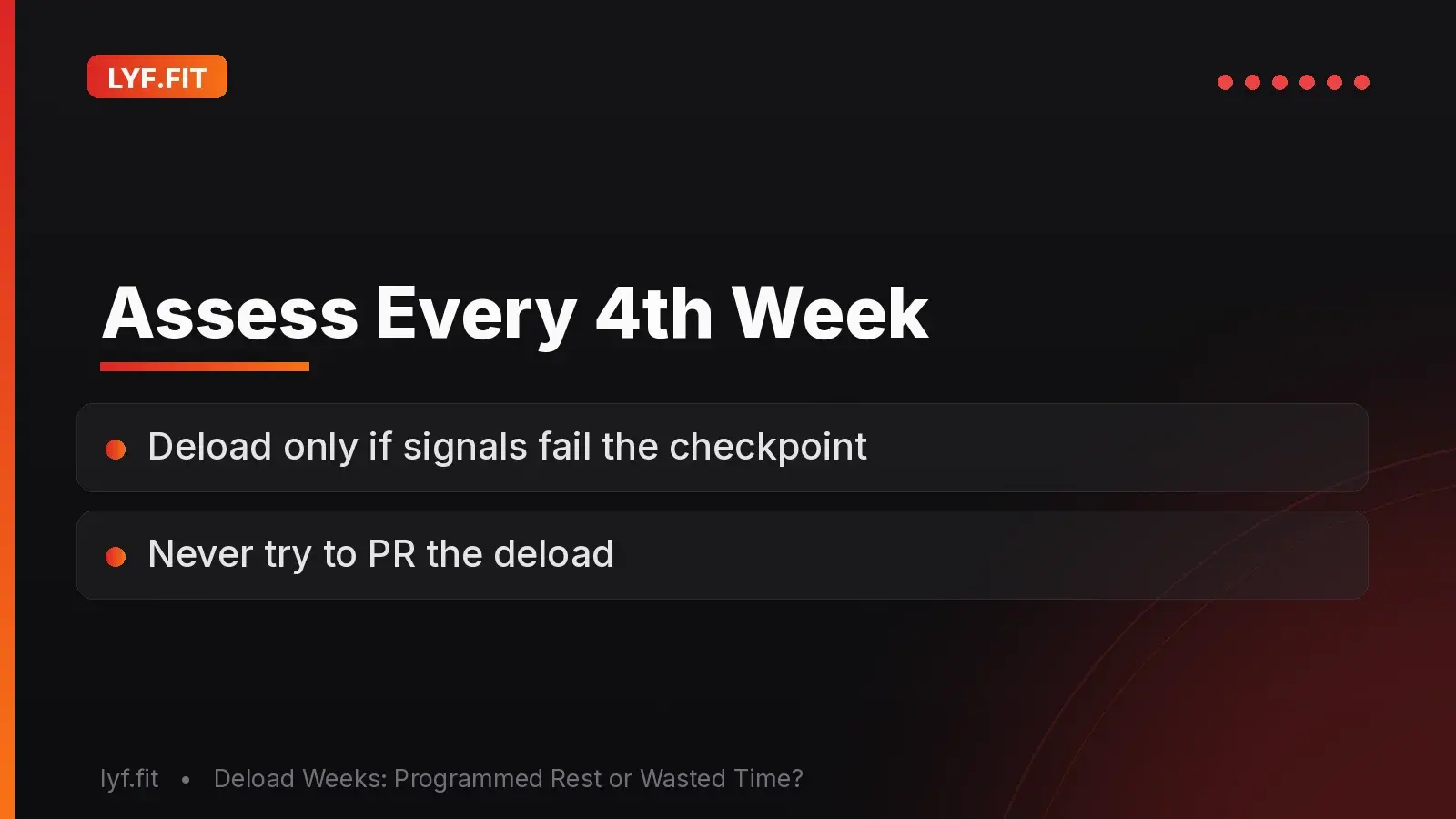
Structured programs often use either planned or reactive reductions. In the coach-interview study, proactive deloads were commonly placed about every 4-6 weeks and reactive deloads were based on perceived fatigue or performance; that describes reported practice, not a proven optimal schedule. A reactive plan can run a progression such as double progression, then reduce stress when several recovery and performance markers deteriorate.
A scheduled checkpoint is another coaching option: periodically review performance, pain, sleep, and life stress instead of automatically changing the program. No specific checkpoint interval or score has been validated as a universal rule. And remember the variables deloads cannot replace—adequate nutrition, sleep, and sane rest periods between sets affect recovery throughout the training block.
Test Your Knowledge
1 / 4In the fitness-fatigue model, what does a deload week primarily change?
What a deload won't fix
A deload treats accumulated training fatigue — nothing else. If your working weights have stalled for two months, the problem is usually programming or nutrition, not insufficient rest weeks. If you're under-eating through an aggressive cut, no deload frequency compensates for the missing recovery substrate. And if every block ends with the same shoulder complaint, the fix is exercise selection, not a quarterly truce with the movement that's grinding it.
Deloads also don't substitute for daily recovery practices. A lifter sleeping six hours a night is running a permanent recovery deficit that one easy week per month cannot amortize.
TriggerPoint GRID Foam Roller Sponsored
A deload week is the natural window for soft-tissue work and easy mobility sessions — a firm grid roller covers quads, lats, and thoracic spine without a gym.
Interactive Tools
Save these contextual tools to your profile for quick access.
Daily Lifting Log
A distraction-free tracker to log your exercises, sets, reps, and weights. Works offline; syncs to your account when you sign in.
Program Templates
Battle-tested workout routines — Push/Pull/Legs, Upper/Lower splits, and a boot camp conditioning circuit you can load straight into your Daily Lifting Log.
Workout Rest Timer
A customizable countdown timer designed specifically for your rest periods between lifting sets.
Frequently asked questions
There is no universal interval. Coach interviews report planned deloads around every 4-6 weeks in some demanding strength and physique programs, while other coaches use reactive timing. These are practice patterns, not proof that every lifter needs the same calendar. Review training demand and recovery regularly, and reduce stress when the total picture supports it.
A short reduction before testing is common coaching practice because the goal is to express performance with less accumulated fatigue. The appropriate length and load depend on the preceding block and the athlete; 4-7 easier days is an example, not a validated guarantee. See our guide to safely testing your 1RM for additional considerations.
A single lighter week is unlikely to erase meaningful muscle, especially when it still includes resistance training. In the 2024 trial above, a one-week midpoint cessation did not reduce lower-body muscle-size gains relative to continuous training, although lower-body strength gains favored continuous training. Individual responses vary, and longer layoffs are a different question.
Training energy expenditure may be lower during a deload, but that does not automatically require a large food cut. Keep protein and overall nutrition consistent, then adjust intake to the broader goal and observed weight trend. People with medical or sport-specific nutrition needs should use individualized guidance.
Deloads earn their keep when hard training has genuinely accumulated fatigue — and waste a week when it hasn't. Track your sessions in the workout log so rep drop-off and RPE drift are visible instead of vibes, and browse the program templates to see how structured plans build recovery checkpoints in from the start.
Stop completely guessing.
Use our interactive PWA tools to calculate your exact macros, 1RM, and running pace offline.
Sources
- Gaining more from doing less? The effects of a one-week deload period during supervised resistance training on muscular adaptations
- Modeling human performance in running
- Prevention, diagnosis, and treatment of the overtraining syndrome: joint consensus statement of the European College of Sport Science and the American College of Sports Medicine
- You can't shoot another bullet until you've reloaded the gun: Coaches' perceptions, practices and experiences of deloading in strength and physique sports