
Disclaimer: Some of the links on this page are affiliate links. As an Amazon Associate and affiliate for other networks, we may earn a commission from qualifying purchases at no additional cost to you.
Five movement patterns train nearly every muscle you own: a squat, a hip hinge, a horizontal press, a pull, and a loaded carry or overhead press. Master those five and you cover roughly 90% of the strength and muscle you can realistically build with limited time. The remaining 10% — biceps peaks, calf size, rear-delt detail — is polish, not foundation.
The logic is not motivational; it is anatomical. Human strength organizes around a short list of movement patterns, and each compound lift loads dozens of muscles simultaneously as prime movers, synergists, and stabilizers. Isolation work adds one muscle at a time. The big lifts add whole regions at once, which is exactly what a two- or three-day-per-week lifter needs.
Why do five patterns cover the whole body?
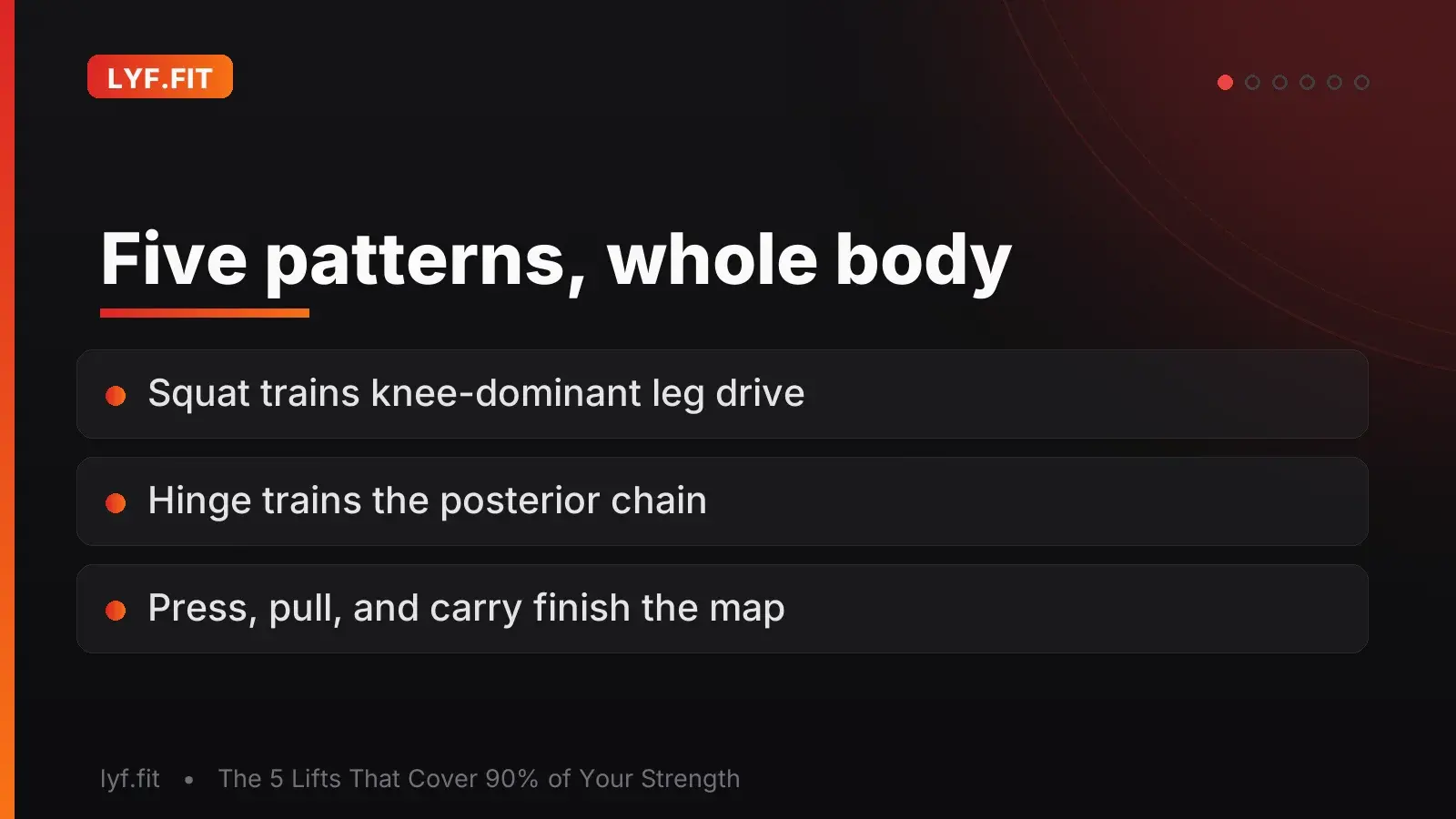
Strength coaches classify almost all resistance training into a handful of fundamental patterns: knee-dominant (squat), hip-dominant (hinge), upper-body push, upper-body pull, and loaded carry or bracing. Between them, these patterns recruit the quadriceps, hamstrings, glutes, erector spinae, lats, traps, chest, deltoids, and arms — essentially every muscle with meaningful cross-sectional area.
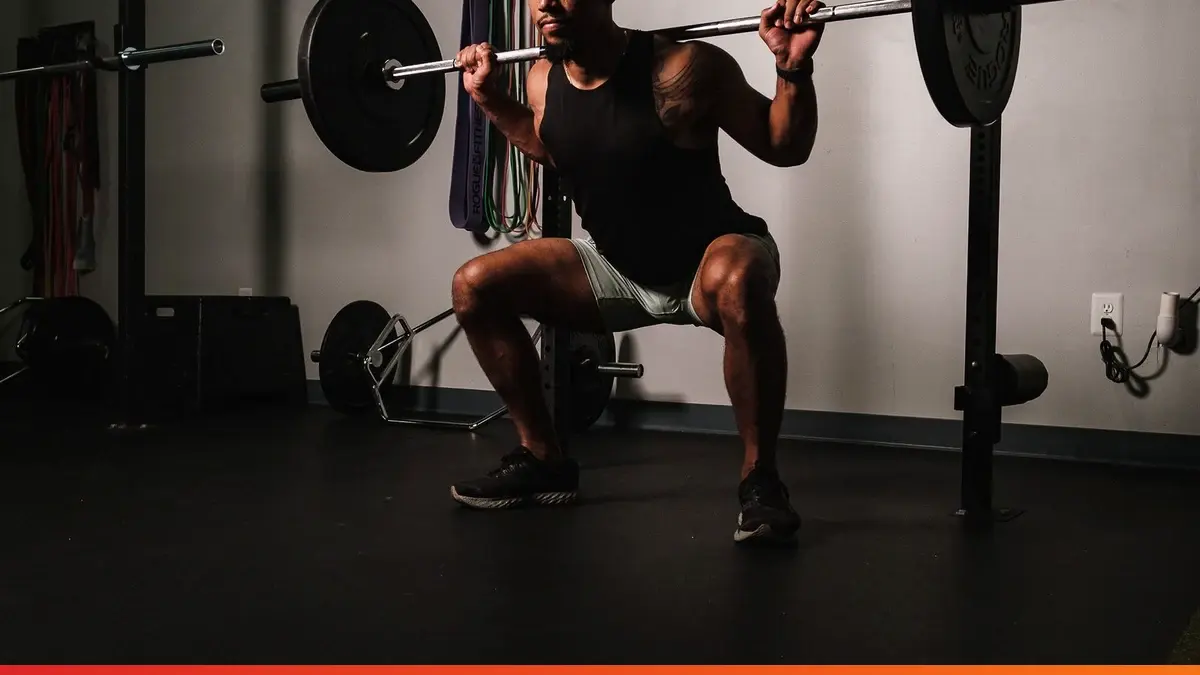
A back squat alone drives high electromyographic activity across the quadriceps, glutes, and hamstrings, exceeding the leg press in glute and quad activation in several EMG comparisons. Layer a hinge, a press, and a pull on top, and there is very little skeletal muscle left untrained. That overlap is why five lifts, not fifteen, form a complete base.
Which five lifts, specifically?
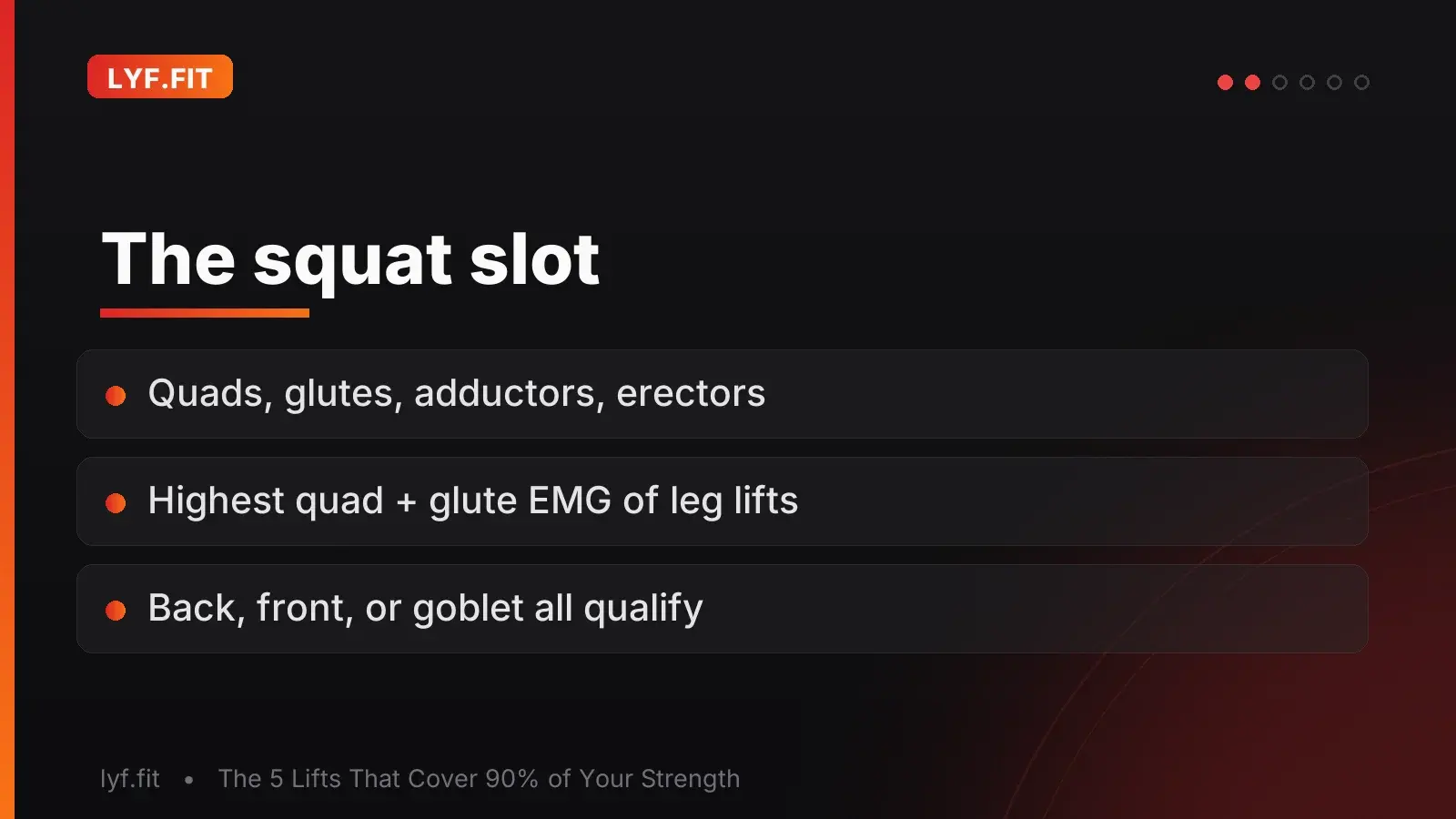
Pattern beats exercise, so treat each slot as a category with swappable options. Slot one is the squat (back, front, or goblet) for knee-dominant leg drive. Slot two is the hinge/deadlift (conventional, Romanian, or trap-bar) for the posterior chain. Slot three is a horizontal press (barbell or dumbbell bench, or a weighted push-up). Slot four is a pull — a vertical pull-up or a horizontal row — for the lats, mid-back, and biceps. Slot five is a loaded carry or overhead press, which trains the shoulders, traps, grip, and the entire trunk under load.
Rotate the variation to fit your equipment and joints, but keep all five patterns in the week. Missing one — usually the pull or the hinge — is how lifters build the postural imbalances that later cause pain. The exercise library muscle map lets you see exactly which fibers each variation lights up.
How much muscle does each lift actually reach?
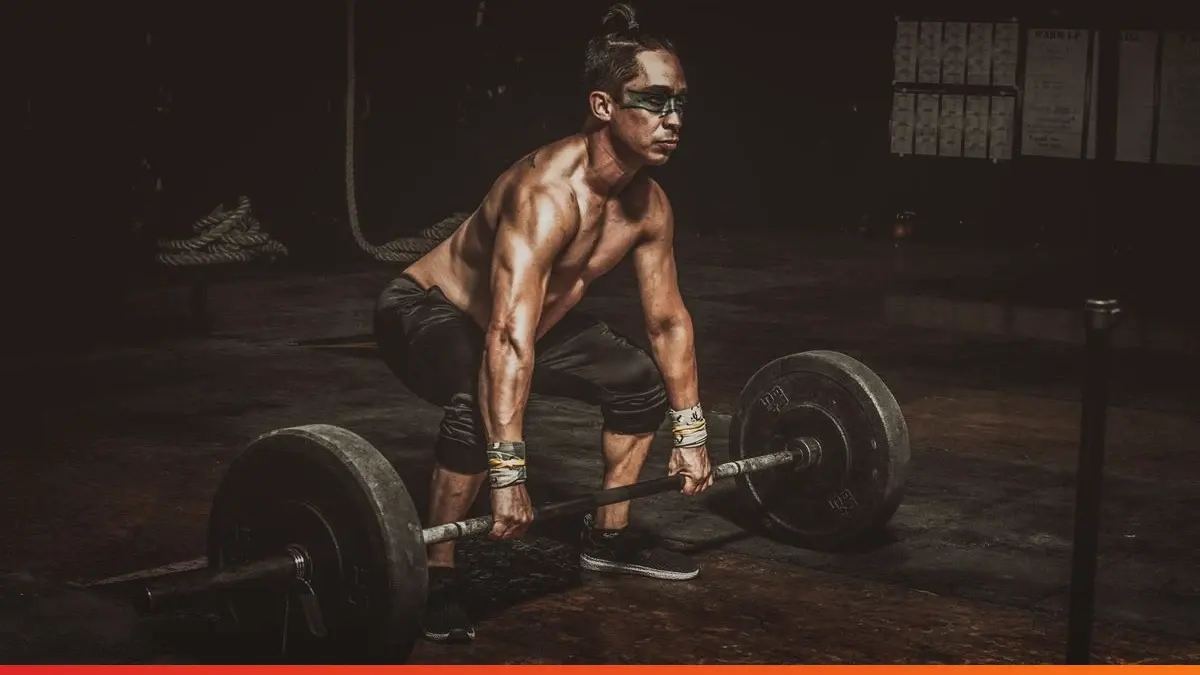
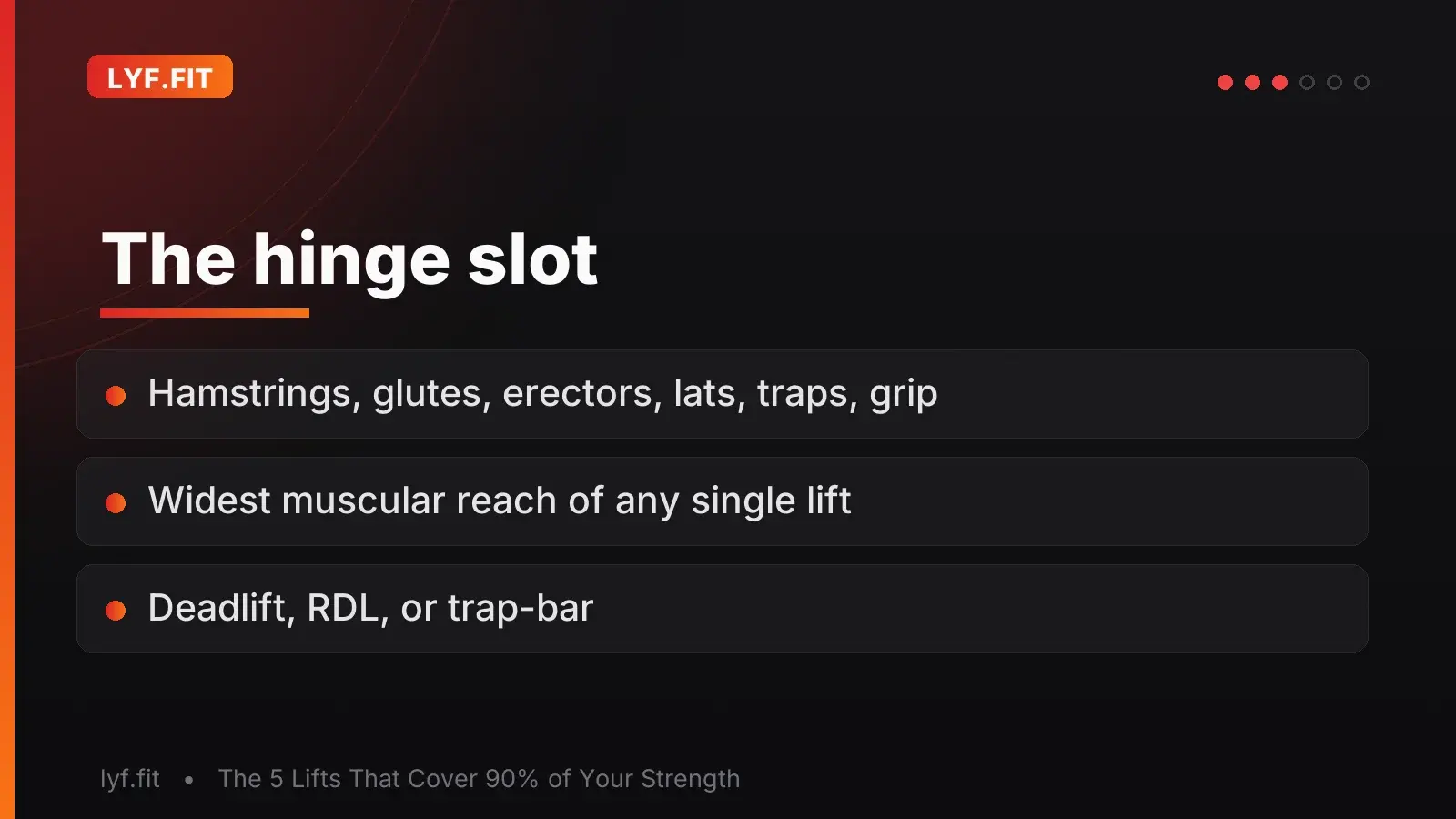
The deadlift is the widest-reaching single movement: it loads the hamstrings, gluteus maximus, erector spinae, lats, traps, and forearms in one rep, which is why it is often called a full-body posterior-chain builder. The bench press remains the reference lift for the pectoralis major, anterior deltoid, and triceps. The table below maps each pattern to its primary movers and the reason it earns a permanent roster spot.
| Pattern (example lift) | Primary muscles trained | Why it earns a slot |
|---|---|---|
| Squat (back/front squat) | Quadriceps, glutes, adductors, erectors | Highest quad + glute EMG of common leg lifts; whole lower-body base |
| Hinge (deadlift/RDL) | Hamstrings, glutes, erectors, lats, traps, grip | Widest muscular reach of any single lift; posterior chain |
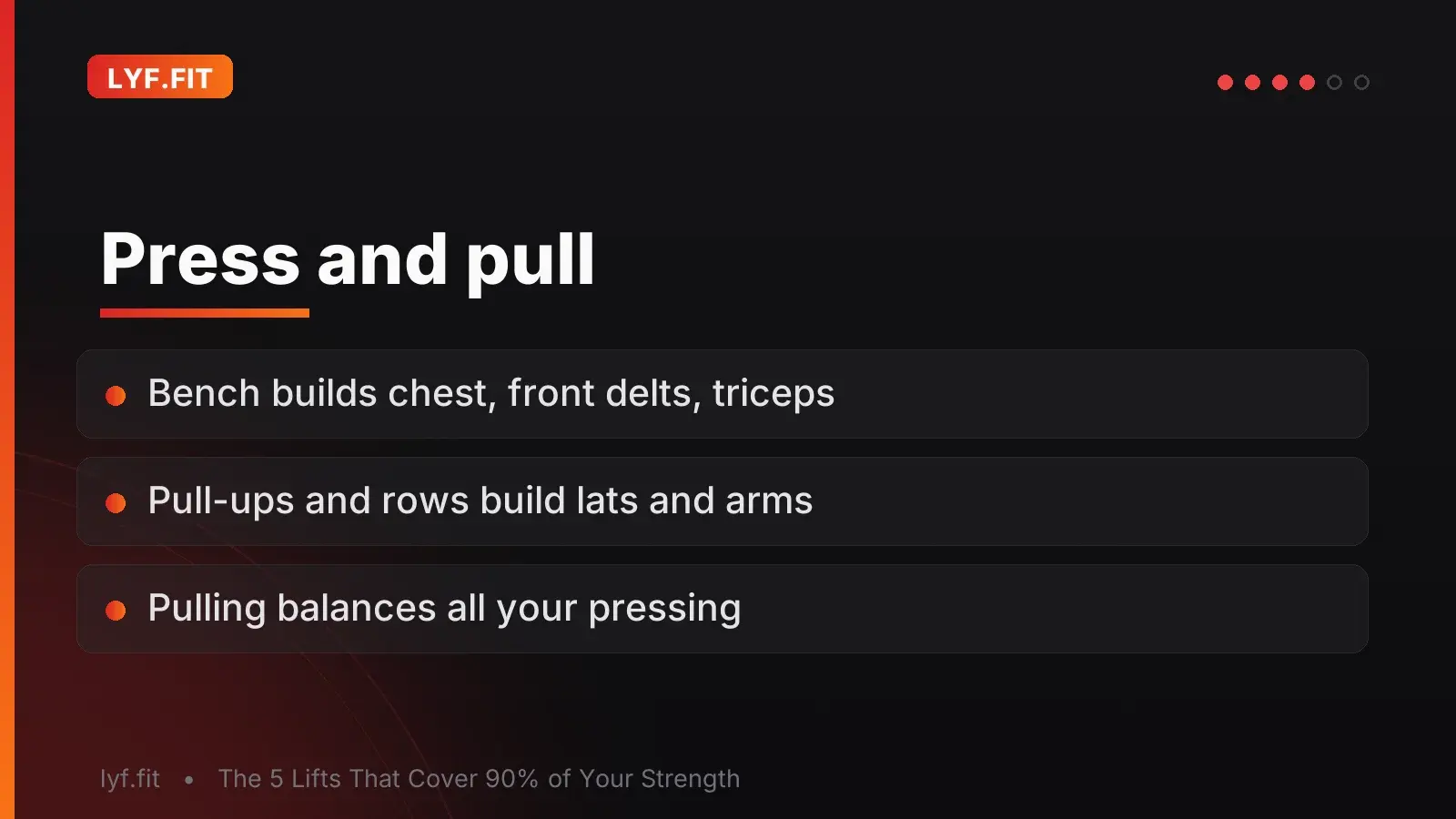
| Horizontal press (bench/push-up) | Pectoralis major, front delts, triceps | Reference lift for upper-body pushing strength and chest size |
| Pull (pull-up/row) | Lats, rhomboids, mid-traps, rear delts, biceps | Only pattern that balances all the pressing; back width + arm size |
| Carry / overhead press | Delts, upper traps, grip, deep core | Trains bracing and grip nothing else replicates; shoulder strength |
Is a five-lift routine enough to get strong?
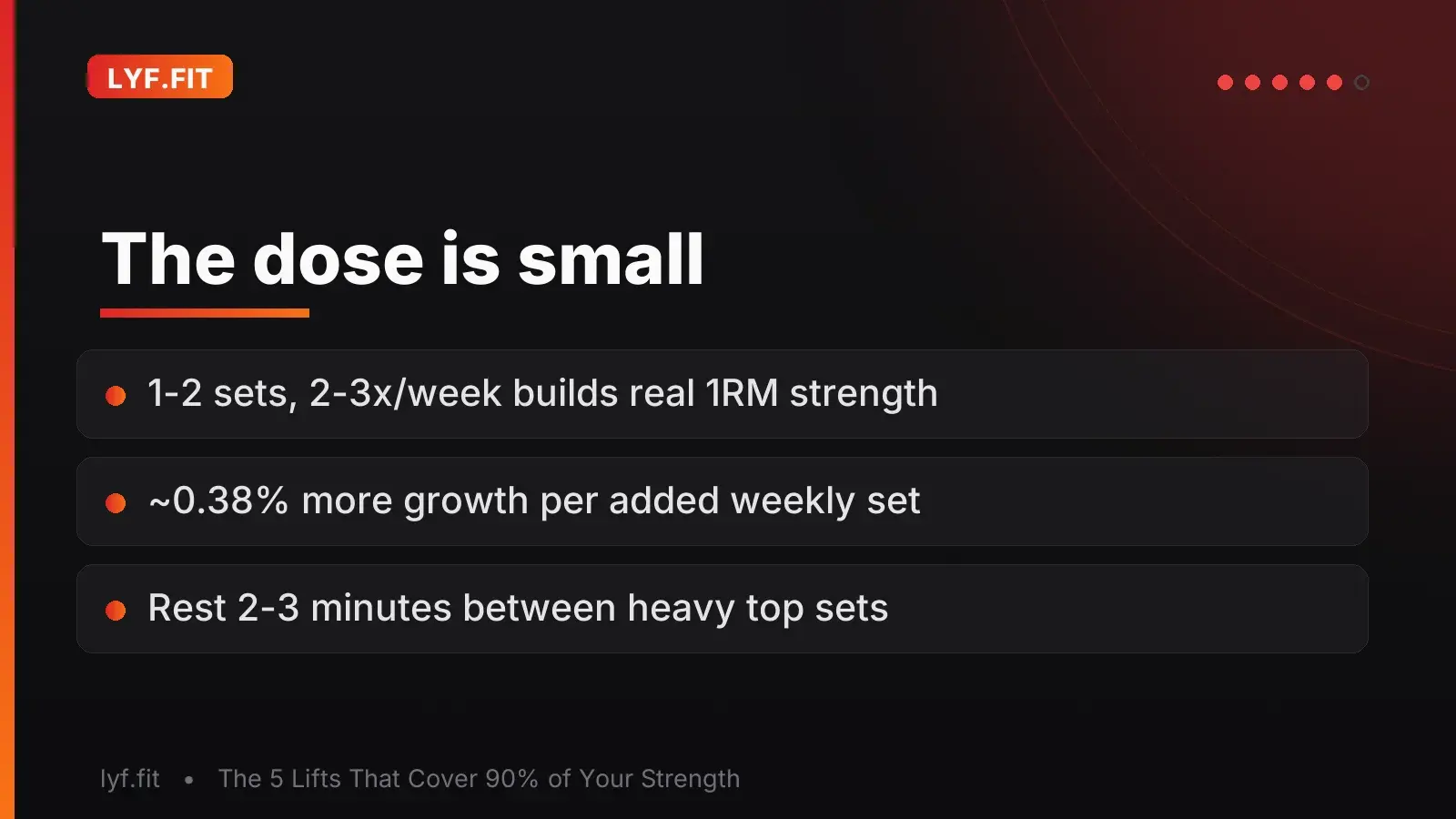
For most people, yes — and the dose required is smaller than gym culture implies. A 2024 research overview found that as little as 1–2 hard sets per exercise, performed 2–3 times per week, produces substantial 1RM strength gains, especially in beginners and returning lifters. Because compound lifts each cover several muscles, a handful of sets per pattern goes a long way.
Hypertrophy is more volume-sensitive: meta-regression data suggest roughly a 0.38% increase in muscle growth per additional weekly set, so size-focused lifters should push volume higher over time. But the pattern selection does not change — you simply add sets to the same five lifts. Track your top sets in the workout log so you can see whether load is trending up week over week.
How do you program the five lifts across a week?
The simplest structure is two full-body days hitting all five patterns, or three days split as lower / upper / full. Anchor each session with one heavy compound at 3–6 reps for strength, then add 2–3 back-off sets in the 6–12 range for size. Progress by adding about 2.5–5 lbs to the bar when you complete all prescribed reps — linear progression that works for months in newer lifters.
Because the lifts are heavy and neurologically demanding, rest 2–3 minutes between top sets; research on strength adaptations favors longer rests than the 60 seconds often prescribed for "toning." If you would rather follow a vetted template than build your own, the programs tool includes runnable full-body and 5/3/1-style plans built entirely around these patterns.
Test Your Knowledge
1 / 4Which single lift reaches the most muscle groups in one rep?
What about the missing 10%?
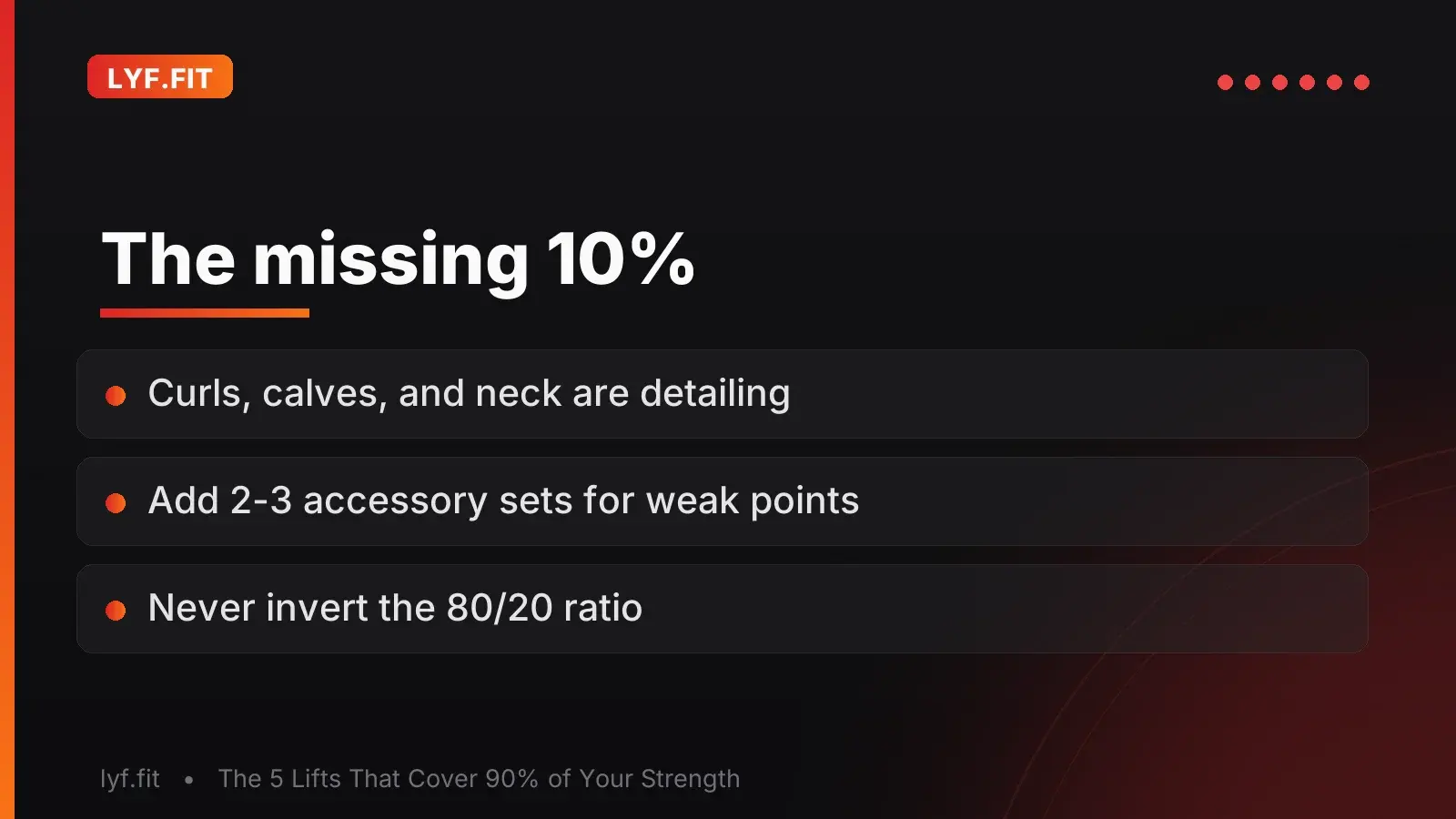
The five patterns build the engine; direct arm, calf, and neck work is detailing. If a muscle is a genuine weak point — biceps that lag despite heavy rows, or calves that never respond to walking — add two or three isolation sets at the end of a session. That is accessory work layered onto a complete base, not a replacement for it.
The mistake is inverting the ratio: spending 80% of gym time on curls, lateral raises, and machines while the squat and deadlift stagnate. If you only have 30 minutes, do the five. To know your true training loads, run a set through the 1RM calculator and program your percentages from there.
Interactive Tools
Save these contextual tools to your profile for quick access.
1RM Calculator
Estimate your One-Rep Max and generate precise training percentages for strength programming.
Frequently asked questions
No. Every pattern has a bodyweight or dumbbell version: goblet squats, dumbbell RDLs, push-ups, inverted rows or pull-ups, and farmer's carries with any heavy object. A barbell scales load more precisely and is ideal for long-term progression, but the patterns matter more than the implement.
Two to three sessions per week covers most people. Beginners can hit all five patterns each session in a full-body format; more advanced lifters often split them across an upper/lower or push/pull/legs structure and add volume per muscle. Aim to touch each pattern at least twice weekly.
Treat slot five as "vertical push or loaded carry" and rotate. The overhead press builds pressing strength through the delts and triceps, while carries emphasize grip, traps, and trunk bracing. Alternating them across the week captures both without adding a sixth training day.
It builds both, but hypertrophy is volume-driven, so a physique-focused lifter should progressively add sets to the same five lifts and layer in a few isolation moves for lagging muscles. Strength comes from heavy low-rep top sets; size comes from accumulating quality volume in the 6-12 rep range.
Five lifts will not fit on a magazine cover, but they will build a body that is strong, balanced, and resilient with the least wasted effort. Pick one variation per pattern, train each twice a week, and add load when you complete your reps. Map the muscles each lift reaches in the exercise library and load a ready-made plan from the programs tool to start this week.
Stop completely guessing.
Use our interactive PWA tools to calculate your exact macros, 1RM, and running pace offline.